Hauul Bio Incorporation, Chuncheon 24398, Korea.
College of Veterinary Medicine, Chungbuk National University, Cheongju, Chungbuk 28644, Korea.
Mol Cells. 2018 Jul 31;41(7):639-645. doi: 10.14348/molcells.2018.2353. Epub 2018 Jul 10.
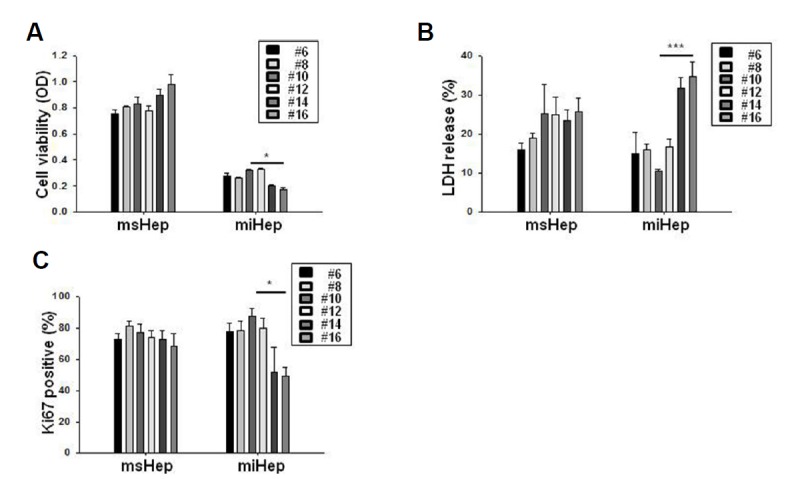
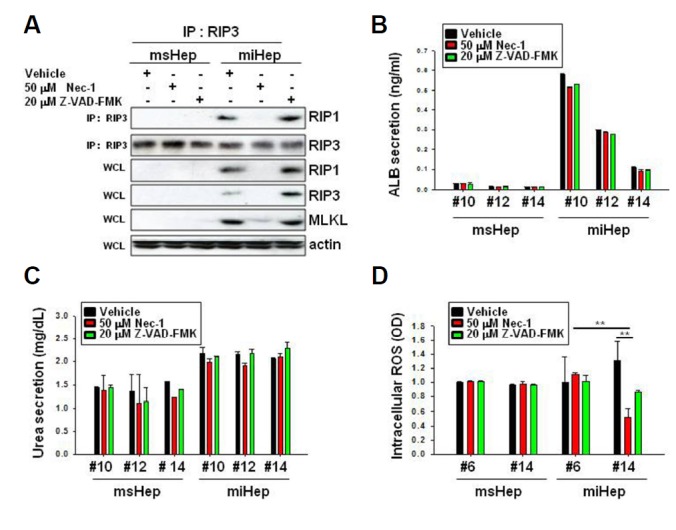
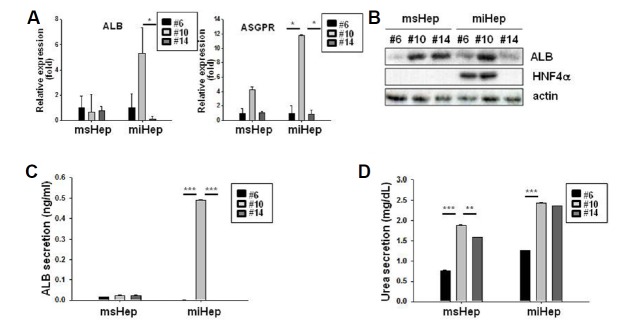
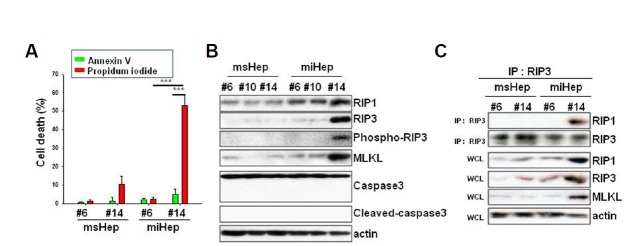
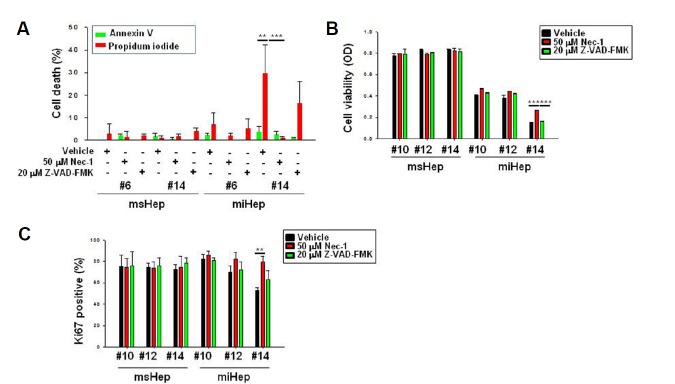
Liver transplantation is recommended for patients with liver failure, but liver donors are limited. This necessitates the development of artificial livers, and hepatocytes are necessary to develop such artificial livers. Although induced hepatocyte-like cells are used in artificial livers, the characteristics of mouse induced hepatocyte-like cells (miHeps) reprogrammed with embryonic fibroblasts have not yet been clarified. Therefore, this study investigated the mechanisms underlying the survival, function, and death of miHeps. miHeps showed decreased cell viability, increased cytotoxicity, decreased hepatic function, and albumin and urea secretion at passage 14. Addition of necrostatin-1 (NEC-1) to miHeps inhibited necrosome formation and reactive oxygen species generation and increased cell survival. However, NEC-1 did not affect the hepatic function of miHeps. These results provide a basis for development of artificial livers using hepatocytes.
肝移植是肝衰竭患者的推荐治疗方法,但肝源有限。这就需要开发人工肝脏,而肝细胞是开发此类人工肝脏所必需的。尽管在人工肝脏中使用了诱导的肝样细胞,但用胚胎成纤维细胞重编程的小鼠诱导的肝样细胞(miHeps)的特征尚未阐明。因此,本研究调查了 miHeps 的存活、功能和死亡的机制。miHeps 在第 14 代时表现出细胞活力降低、细胞毒性增加、肝功能下降以及白蛋白和尿素分泌减少。向 miHeps 中添加 Necrostatin-1(NEC-1)可抑制坏死小体的形成和活性氧的产生,从而增加细胞存活率。然而,NEC-1 并不影响 miHeps 的肝功能。这些结果为使用肝细胞开发人工肝脏提供了依据。