University Heart Center Freiburg-Bad Krozingen, Cardiology and Angiology I, University of Freiburg, Freiburg, Germany.
Ionis Pharmaceuticals, Carlsbad, California, USA.
Sci Rep. 2019 Nov 29;9(1):17937. doi: 10.1038/s41598-019-54224-9.
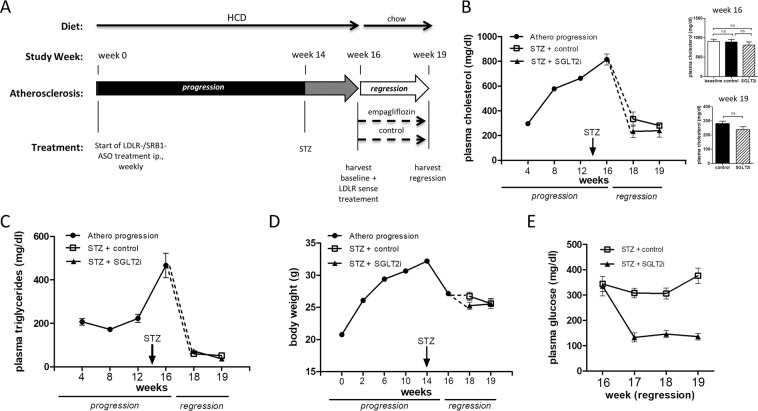
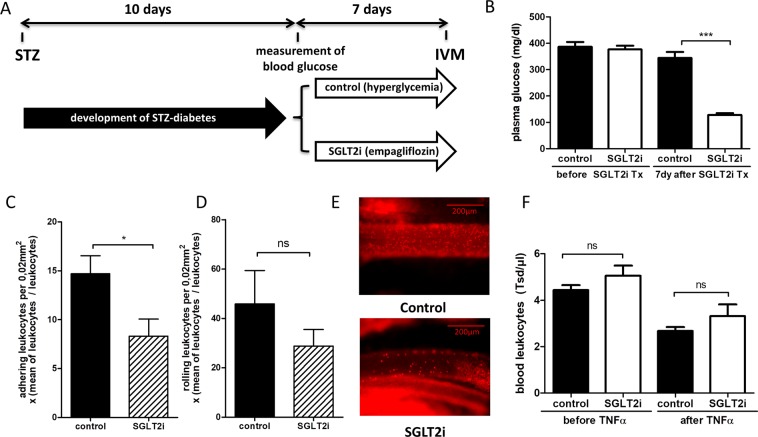
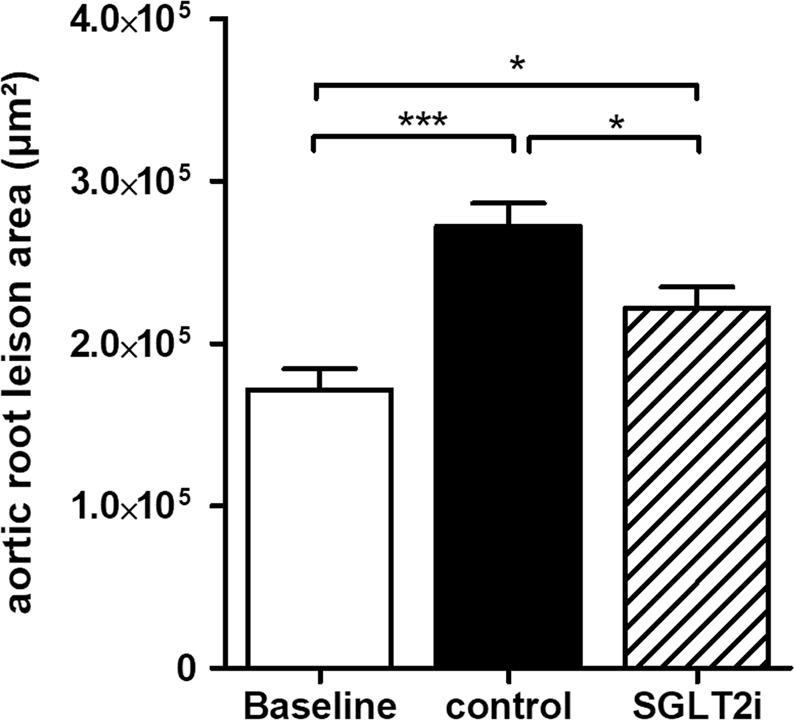
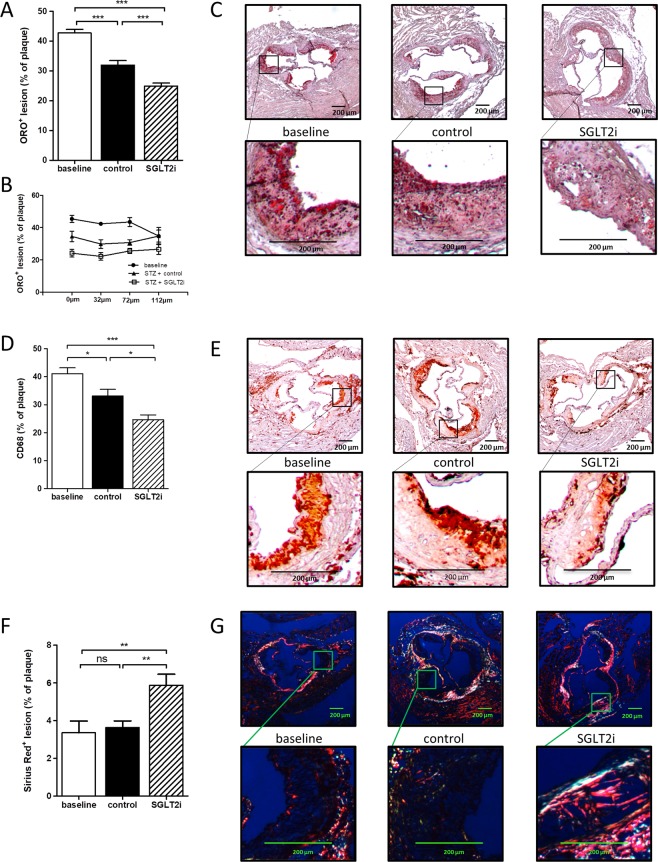
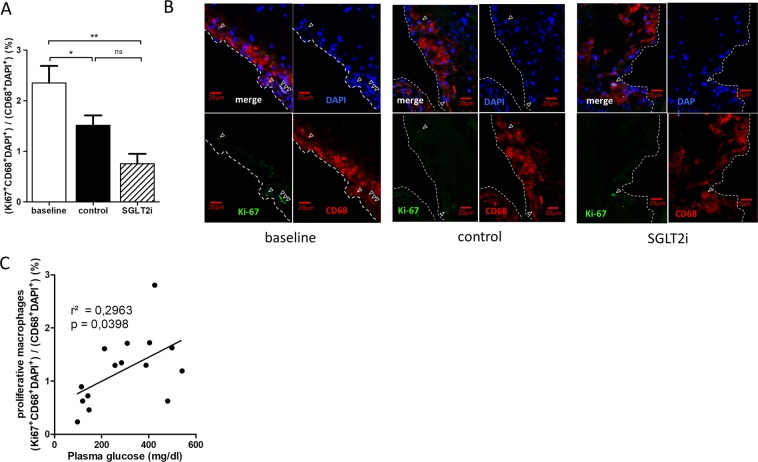
Diabetes worsens atherosclerosis progression and leads to a defect in repair of arteries after cholesterol reduction, a process termed regression. Empagliflozin reduces blood glucose levels via inhibition of the sodium glucose cotransporter 2 (SGLT-2) in the kidney and has been shown to lead to a marked reduction in cardiovascular events in humans. To determine whether glucose lowering by empagliflozin accelerates atherosclerosis regression in a mouse model, male C57BL/6J mice were treated intraperitoneally with LDLR- and SRB1- antisense oligonucleotides and fed a high cholesterol diet for 16 weeks to induce severe hypercholesterolemia and atherosclerosis progression. At week 14 all mice were rendered diabetic by streptozotocin (STZ) injections. At week 16 a baseline group was sacrificed and displayed substantial atherosclerosis of the aortic root. In the remaining mice, plasma cholesterol was lowered by switching to chow diet and treatment with LDLR sense oligonucleotides to induce atherosclerosis regression. These mice then received either empagliflozin or vehicle for three weeks. Atherosclerotic plaques in the empagliflozin treated mice were significantly smaller, showed decreased lipid and CD68 macrophage content, as well as greater collagen content. Proliferation of plaque resident macrophages and leukocyte adhesion to the vascular wall were significantly decreased in empagliflozin-treated mice. In summary, plasma glucose lowering by empagliflozin improves plaque regression in diabetic mice.
糖尿病会加重动脉粥样硬化的进展,并导致胆固醇降低后动脉的修复缺陷,这一过程称为消退。恩格列净通过抑制肾脏中的钠-葡萄糖协同转运蛋白 2(SGLT-2)来降低血糖水平,已被证明可显著减少人类的心血管事件。为了确定恩格列净降低血糖是否会加速小鼠模型中的动脉粥样硬化消退,雄性 C57BL/6J 小鼠经腹腔注射 LDLR 和 SRB1 反义寡核苷酸,并给予高胆固醇饮食 16 周,以诱导严重的高胆固醇血症和动脉粥样硬化进展。在第 14 周,所有小鼠均通过链脲佐菌素(STZ)注射致糖尿病。在第 16 周,一个基线组被处死,并显示出主动脉根部的大量动脉粥样硬化。在其余的小鼠中,通过切换到普通饮食和 LDLR 正义寡核苷酸治疗来降低血浆胆固醇,以诱导动脉粥样硬化消退。这些小鼠随后接受恩格列净或载体治疗 3 周。在恩格列净治疗的小鼠中,动脉粥样硬化斑块明显较小,脂质和 CD68 巨噬细胞含量减少,胶原含量增加。斑块内常驻巨噬细胞的增殖和白细胞黏附到血管壁的程度在恩格列净治疗的小鼠中明显降低。总之,恩格列净降低血浆葡萄糖水平可改善糖尿病小鼠的斑块消退。