Department of Primary Health Care, Medical School, University of Pécs, H-7623, Pécs, Rákóczi u 2, Hungary.
Doctoral School of Health Sciences, Faculty of Health Sciences, University of Pécs, H-7621, Pécs, Vörösmarty u 4, Hungary.
Pharmacogenomics J. 2020 Jun;20(3):380-387. doi: 10.1038/s41397-019-0123-z. Epub 2019 Dec 2.
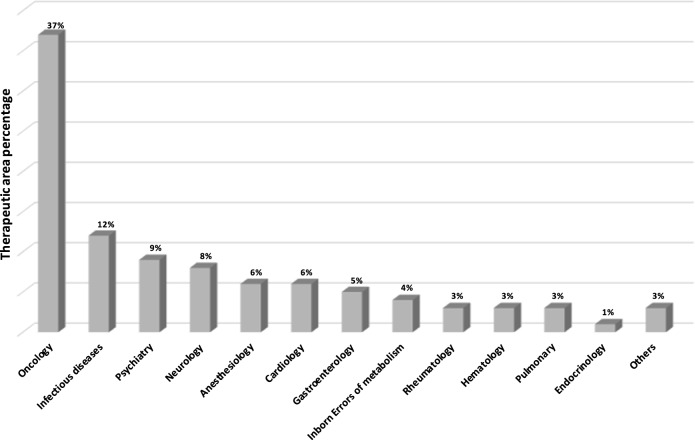
Pharmacogenomic biomarker availability of Hungarian Summaries of Product Characteristics (SmPC) was assembled and compared with the information in US Food and Drug Administration (FDA) drug labels of the same active substance (July 2019). The level of action of these biomarkers was assessed from The Pharmacogenomics Knowledgebase database. From the identified 264 FDA approved drugs with pharmacogenomic biomarkers in drug label, 195 are available in Hungary. From them, 165 drugs include pharmacogenomic data disposing 222 biomarkers. Most of them are metabolizing enzymes (46%) and pharmacological targets (41%). The most frequent therapeutic area is oncology (37%), followed by infectious diseases (12%) and psychiatry (9%) (p < 0.00001). Most common biomarkers in Hungarian SmPCs are CYP2D6, CYP2C19, estrogen and progesterone hormone receptor (ESR, PGS). Importantly, US labels present more specific pharmacogenomic subheadings, the level of action has a different prominence, and offer more applicable dose modifications than Hungarians (5% vs 3%). However, Hungarian SmPCs are at 9 oncology drugs stricter than FDA, testing is obligatory before treatment. Out of the biomarkers available in US drug labels, 62 are missing completely from Hungarian SmPCs (p < 0.00001). Most of these belong to oncology (42%) and in case of 11% of missing biomarkers testing is required before treatment. In conclusion, more factual, clear, clinically relevant pharmacogenomic information in Hungarian SmPCs would reinforce implementation of pharmacogenetics. Underpinning future perspective is to support regulatory stakeholders to enhance inclusion of pharmacogenomic biomarkers into Hungarian drug labels and consequently enhance personalized medicine in Hungary.
匈牙利药品说明书(SmPC)中的药物基因组生物标志物可用性已被整理并与同一活性物质的美国食品药品监督管理局(FDA)药物标签信息进行了比较(2019 年 7 月)。这些生物标志物的作用水平是从药物基因组学知识库数据库评估的。在确定的 264 种具有药物标签中药物基因组生物标志物的 FDA 批准药物中,有 195 种在匈牙利上市。其中,165 种药物包含处理 222 个生物标志物的药物基因组学数据。它们大多数是代谢酶(46%)和药理学靶点(41%)。最常见的治疗领域是肿瘤学(37%),其次是传染病(12%)和精神病学(9%)(p < 0.00001)。匈牙利 SmPC 中最常见的生物标志物是 CYP2D6、CYP2C19、雌激素和孕激素激素受体(ESR、PGS)。重要的是,美国标签提供了更具体的药物基因组学副标题,作用水平的突出程度不同,并且提供了比匈牙利人更多的适用剂量调整(5%对 3%)。然而,匈牙利 SmPC 在 9 种肿瘤药物方面比 FDA 更严格,在治疗前必须进行检测。在美国药物标签中可用的生物标志物中,有 62 种完全缺失(p < 0.00001)。其中大多数属于肿瘤学(42%),在 11%的缺失生物标志物的情况下,在治疗前需要进行检测。总之,在匈牙利 SmPC 中提供更真实、更清晰、更具临床相关性的药物基因组学信息,将加强药物遗传学的实施。未来的重点是支持监管利益相关者将药物基因组生物标志物纳入匈牙利药物标签,从而提高匈牙利的个体化医学水平。