Department of Pediatric Surgery, Shengjing Hospital of China Medical University, Shenyang, China.
Department of Rehabilitation, Shengjing Hospital of China Medical University, Shenyang, China.
Clin Transl Gastroenterol. 2019 Dec;10(12):e00093. doi: 10.14309/ctg.0000000000000093.
Intestinal neuronal dysplasia (IND) is a common malformation of the enteric nervous system. Diagnosis requires a full-thickness colonic specimen and an experienced pathologist, emphasizing the need for noninvasive analytical methods. Recently, the methylation level of the Sox10 promoter has been found to be critical for enteric nervous system development. However, whether it can be used for diagnostic purposes in IND is unclear.
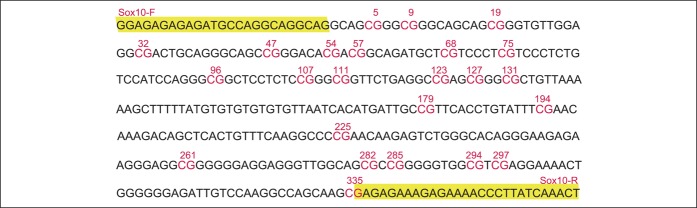
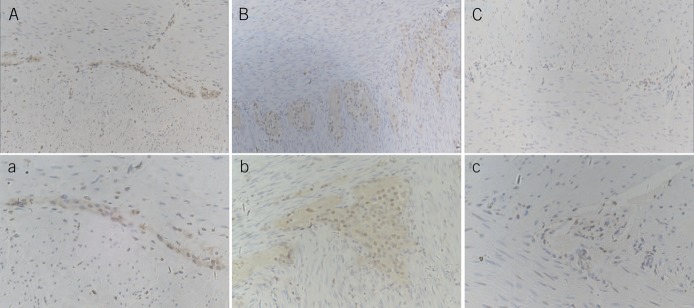
Blood and colon specimens were collected from 32 patients with IND, 60 patients with Hirschsprung disease (HD), and 60 controls. Sox10 promoter methylation in the blood and the Sox10 expression level in the colon were determined, and their correlation was analyzed. The diagnostic efficacy of blood Sox10 promoter methylation was analyzed by receiver operating characteristic curve.
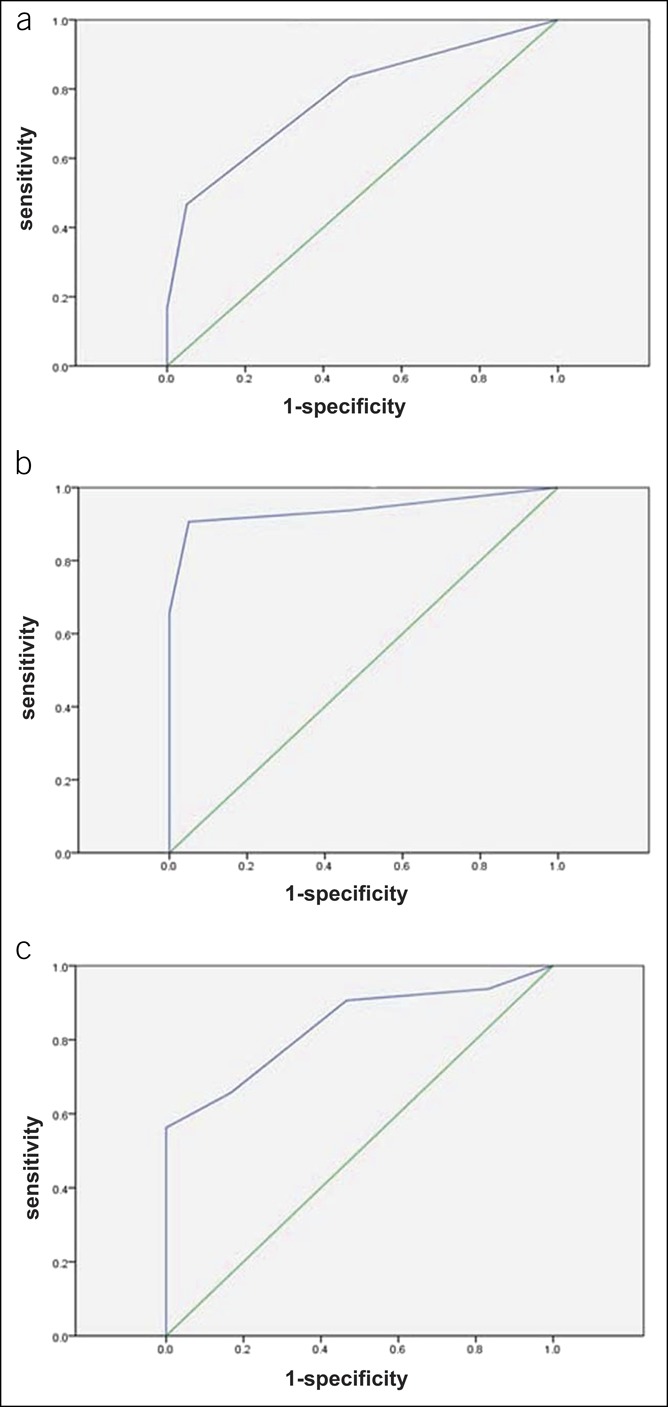
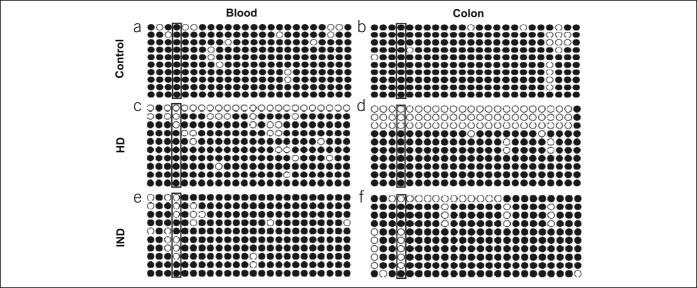
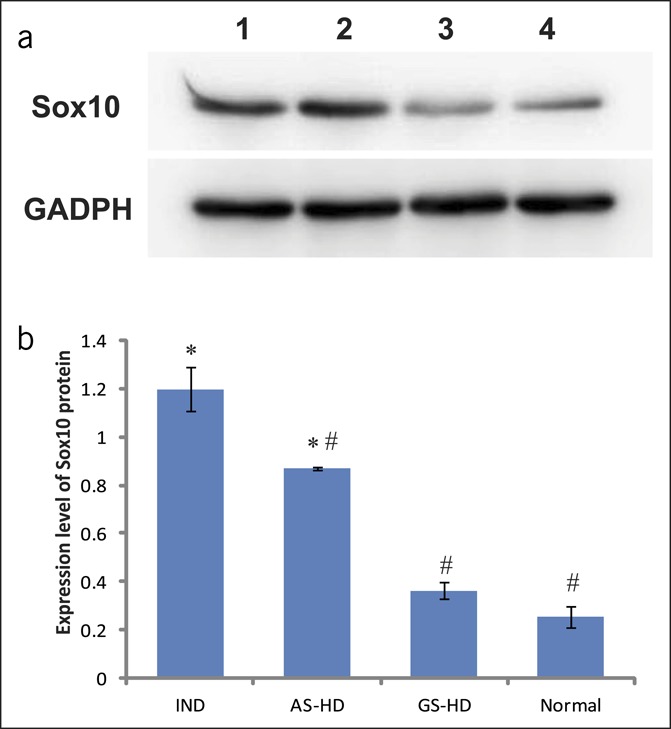
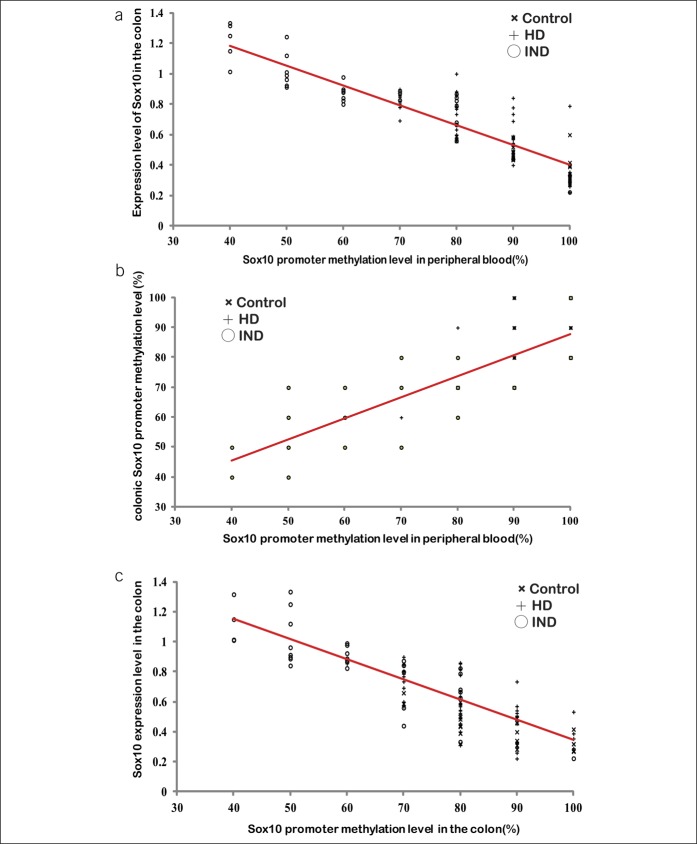
The blood level of Sox10 promoter methylation at the 32nd locus was 100% (90%-100%; 95% confidence interval [CI], 92.29%-96.37%) in control, 90% (80%-90%; 95% CI, 82.84%-87.83%) in HD, and 60% (50%-80%; 95% CI, 57.12%-69.76%) in IND specimens. Sox10 promoter methylation in the peripheral blood was negatively correlated with Sox10 expression in the colon, which was low in control, moderate in HD, and high in IND specimens (r = -0.89). The area under the curve of Sox10 promoter methylation in the diagnosis of IND was 0.94 (95% CI, 0.874-1.000, P = 0.000), with a cutoff value of 85% (sensitivity, 90.6%; specificity, 95.0%). By applying a cutoff value of 65%, promoter methylation was more indicative of IND than HD.
The analysis of Sox10 promoter methylation in the peripheral blood can be used as a noninvasive method for IND diagnosis.
肠神经元发育不良(IND)是肠神经系统的常见畸形。诊断需要全层结肠标本和经验丰富的病理学家,这强调了需要非侵入性分析方法。最近,发现 Sox10 启动子的甲基化水平对肠神经系统的发育至关重要。然而,它是否可用于 IND 的诊断目的尚不清楚。
收集 32 例 IND 患者、60 例先天性巨结肠(HD)患者和 60 例对照者的血液和结肠标本,检测血液 Sox10 启动子甲基化和结肠 Sox10 表达水平,并分析其相关性。采用受试者工作特征曲线分析血液 Sox10 启动子甲基化的诊断效能。
对照组、HD 组和 IND 组第 32 位 Sox10 启动子甲基化水平分别为 100%(90%-100%;95%可信区间[CI],92.29%-96.37%)、90%(80%-90%;95%CI,82.84%-87.83%)和 60%(50%-80%;95%CI,57.12%-69.76%)。外周血 Sox10 启动子甲基化与结肠 Sox10 表达呈负相关,对照组低,HD 组中等,IND 组高(r=-0.89)。Sox10 启动子甲基化在诊断 IND 中的曲线下面积为 0.94(95%CI,0.874-1.000,P=0.000),截断值为 85%(敏感度,90.6%;特异性,95.0%)。采用 65%的截断值,启动子甲基化对 IND 的诊断意义优于 HD。
外周血 Sox10 启动子甲基化分析可作为 IND 诊断的一种非侵入性方法。