The Jesse Z. and Sara Lea Shafer Institute for Endocrinology and Diabetes, National Center for Childhood Diabetes, Schneider Children's Medical Center, Petah-Tikva affiliated with Sackler School of Medicine, Tel Aviv University, Tel Aviv 6997801, Israel.
Pediatric Diabetes Unit, Soroka Medical Center, Beer-Sheva affiliated with Faculty of Health Sciences, Ben-Gurion University of the Negev, 8410501 Beer-Sheva, Israel.
Int J Mol Sci. 2019 Nov 29;20(23):6032. doi: 10.3390/ijms20236032.
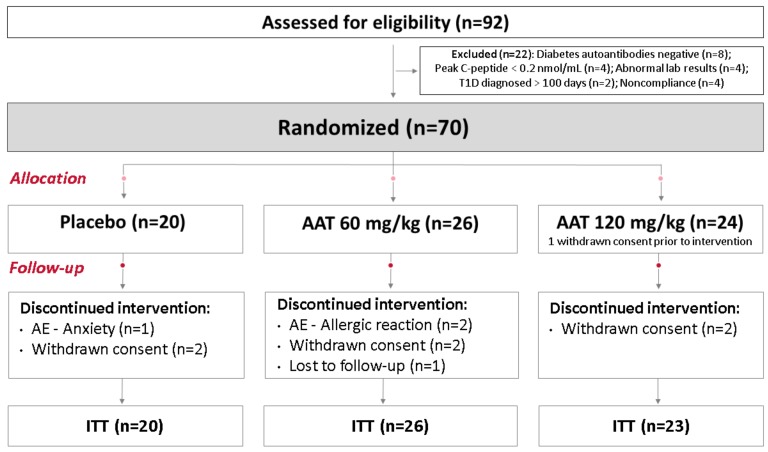
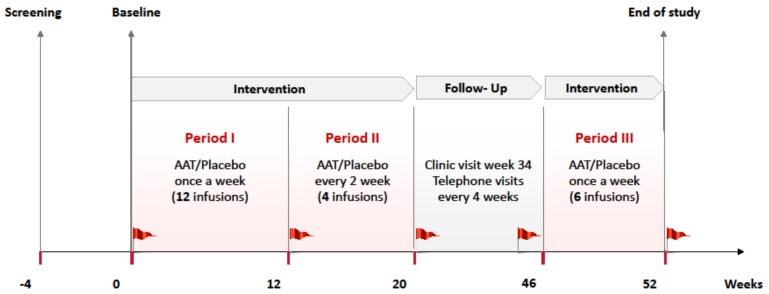
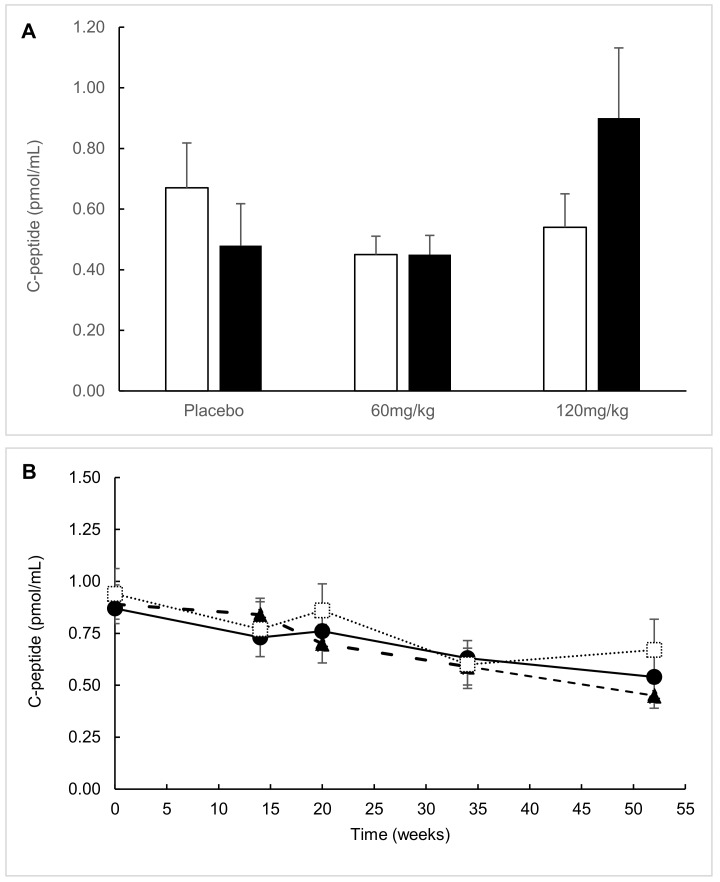
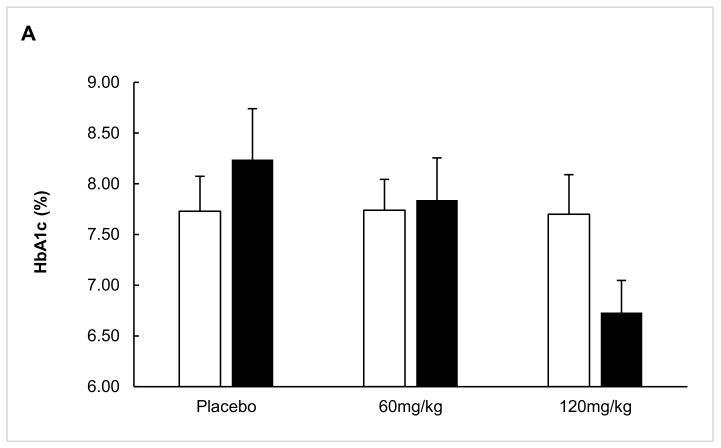
Our aim was to assess the efficacy, safety, and tolerability of alpha-1 antitrypsin (AAT) as a therapeutic modality for β-cell preservation in patients with recent-onset type 1 diabetes. Seventy type 1 diabetes patients (37 males; mean age 13.1 ± 4.1years) were randomized to treatment with 22 infusions of AAT (Glassia) (60 or 120 mg/kg) or placebo. The primary outcome was the area under the curve (AUC) of C-peptide from a 2-h mixed-meal tolerance test after 52 weeks. At week 52, C-peptide was 0.9, 0.45, and 0.48 pmol/mL in the AAT-120, AAT-60, and placebo groups ( = 0.170 and = 0.866 vs. placebo, respectively). The declines in C-peptide glycated hemoglobin (HbA1c) and the total insulin dose (U/kg) were similar across groups. Within the predefined 12-18-years subgroup, the C-peptide AUC decreased significantly in the placebo and AAT-60 groups (-0.34 and -0.54 pmol/mL, respectively, < 0.01), with a borderline decrease in the AAT-120 group (-0.29 pmol/mL, = 0.047). The mean HbA1c level was significantly lower in the AAT-120 group compared to the placebo (6.7% ± 0.9% vs. 8.2 ± 1.4%, = 0.05), and a higher percentage of patients attained HbA1c ≤ 7% (75% vs. 25%, = 0.05). AAT was tolerated well, with a similar safety profile between groups. The AAT intervention showed promise in the subgroup of adolescents with recent-onset type 1 diabetes. Further studies are warranted to determine the impact and proposed mechanism of action of AAT in β-cell preservation.
我们的目的是评估α-1 抗胰蛋白酶(AAT)作为一种治疗方法,对近期发病的 1 型糖尿病患者β细胞的保护作用、安全性和耐受性。70 例 1 型糖尿病患者(37 名男性;平均年龄 13.1 ± 4.1 岁)被随机分为 22 次 AAT(Glassia)(60 或 120mg/kg)或安慰剂治疗组。主要结局是 52 周后 2 小时混合餐耐量试验时 C 肽的曲线下面积(AUC)。在第 52 周时,AAT-120 组、AAT-60 组和安慰剂组的 C 肽分别为 0.9、0.45 和 0.48 pmol/mL( = 0.170 和 = 0.866 与安慰剂相比)。C 肽糖化血红蛋白(HbA1c)和总胰岛素剂量(U/kg)的下降在各组之间相似。在预先定义的 12-18 岁亚组中,安慰剂组和 AAT-60 组的 C 肽 AUC 显著下降(分别为-0.34 和-0.54 pmol/mL, < 0.01),AAT-120 组有下降的趋势(-0.29 pmol/mL, = 0.047)。与安慰剂组相比,AAT-120 组的平均 HbA1c 水平显著降低(6.7%±0.9% vs. 8.2%±1.4%, = 0.05),且更多的患者达到 HbA1c ≤ 7%(75% vs. 25%, = 0.05)。AAT 耐受性良好,各组之间的安全性相似。AAT 干预在近期发病的 1 型糖尿病青少年亚组中显示出一定的前景。需要进一步的研究来确定 AAT 在β细胞保护中的作用和潜在的作用机制。