Department of Biology, University of Pennsylvania, Philadelphia, PA, 19104, USA.
Curr Psychiatry Rep. 2019 Dec 5;21(12):134. doi: 10.1007/s11920-019-1122-0.
This review aims to summarize the current body of behavioral, physiological, and molecular knowledge concerning tactile sensitivity in autism spectrum disorder (ASD), with a focus on recent studies utilizing rodent models.
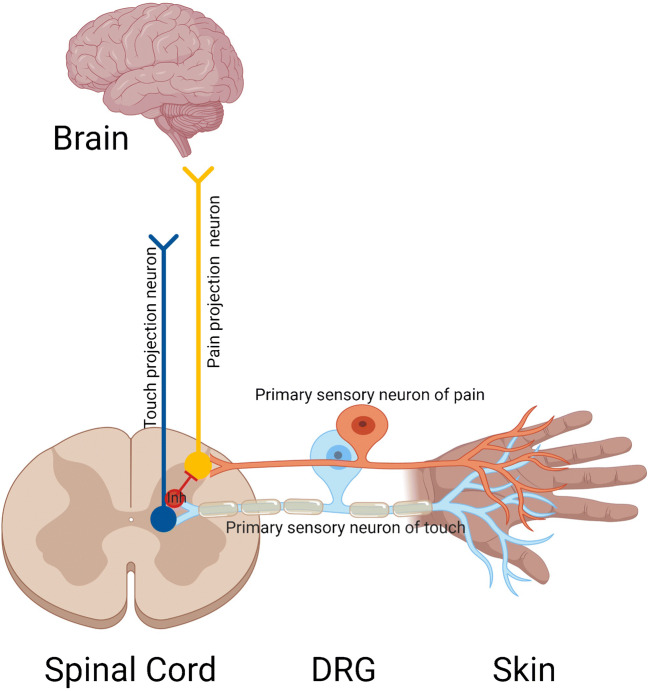
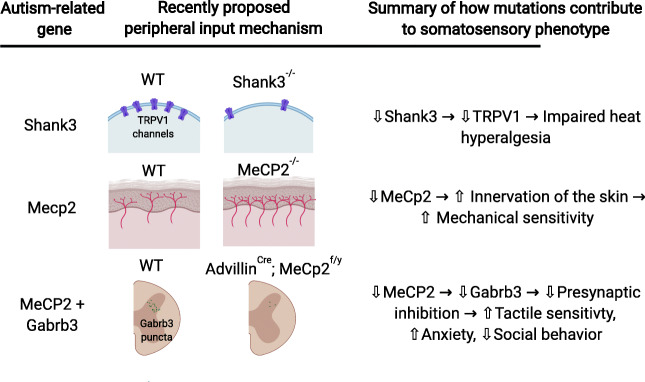
Mice with mutations in the ASD-related genes, Shank3, Fmr1, UBE3A, and Mecp2, display tactile abnormalities. Some of these abnormalities appear to be caused by mutation-related changes in the PNS, as opposed to changes in the processing of touch stimuli in the CNS, as previously thought. There is also growing evidence suggesting that peripheral mechanisms may contribute to some of the core symptoms and common comorbidities of ASD. Researchers are therefore beginning to assess the therapeutic potential of targeting the PNS in treating some of the core symptoms of ASD. Sensory abnormalities are common in rodent models of ASD. There is growing evidence that sensory hypersensitivity, especially tactile sensitivity, may contribute to social deficits and other autism-related behaviors.
本篇综述旨在总结自闭症谱系障碍(ASD)中触觉敏感性的行为、生理和分子知识的现状,重点关注最近利用啮齿动物模型的研究。
Shank3、Fmr1、UBE3A 和 Mecp2 等与 ASD 相关基因发生突变的小鼠表现出触觉异常。与之前认为的中枢神经系统处理触觉刺激的变化不同,其中一些异常似乎是由周围神经系统的突变相关变化引起的。越来越多的证据表明,外周机制可能与 ASD 的一些核心症状和常见合并症有关。因此,研究人员开始评估针对周围神经系统治疗 ASD 一些核心症状的治疗潜力。 感觉异常在 ASD 的啮齿动物模型中很常见。越来越多的证据表明,感觉过敏,特别是触觉敏感性,可能与社交缺陷和其他与自闭症相关的行为有关。