NHC Key Laboratory of Carcinogenesis and the Key Laboratory of Carcinogenesis and Cancer Invasion of the Chinese Ministry of Education, Xiangya Hospital, Central South University, Changsha, Hunan, China.
Cancer Research Institute, School of Basic Medical Science, Central South University, Changsha, Hunan, China.
Cell Death Dis. 2019 Dec 9;10(12):941. doi: 10.1038/s41419-019-2149-1.
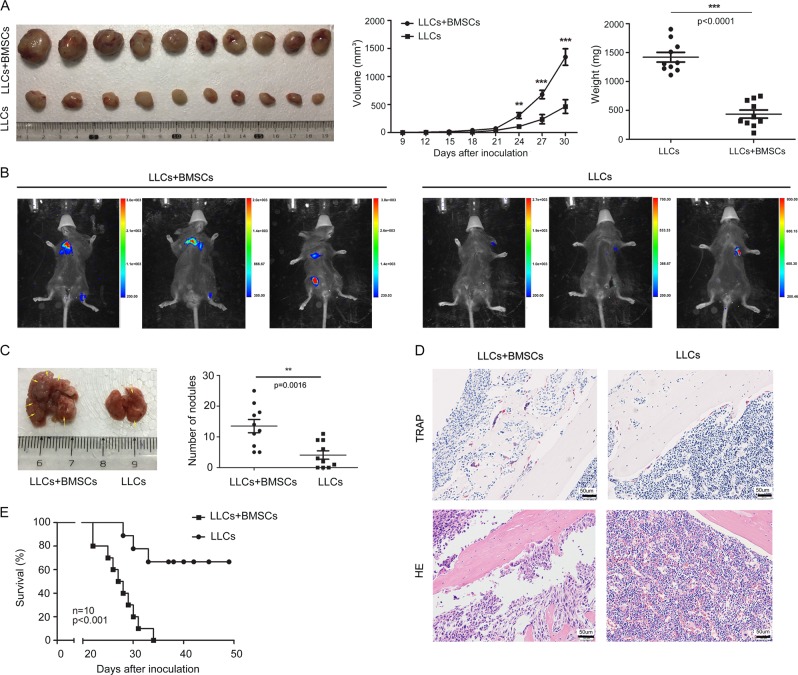
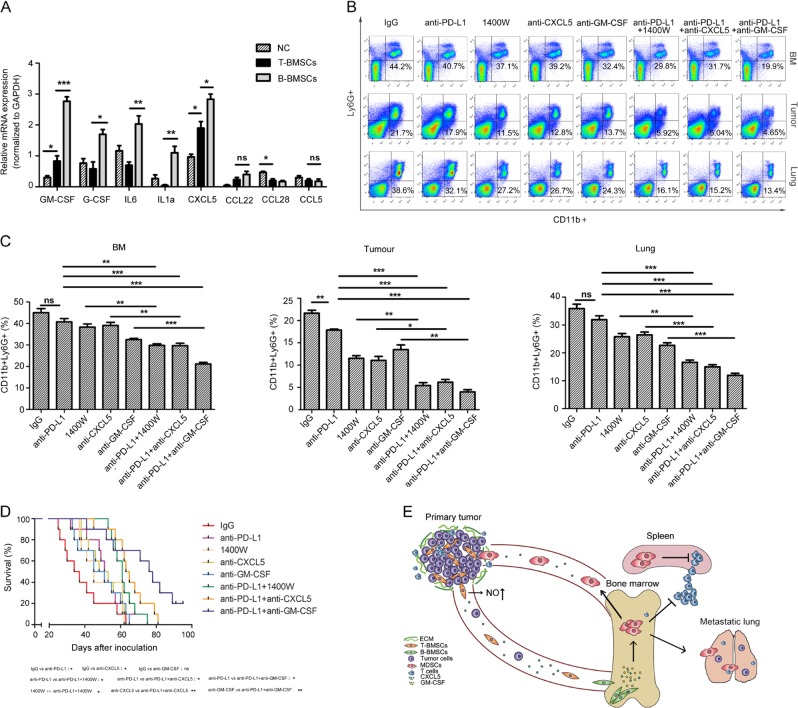
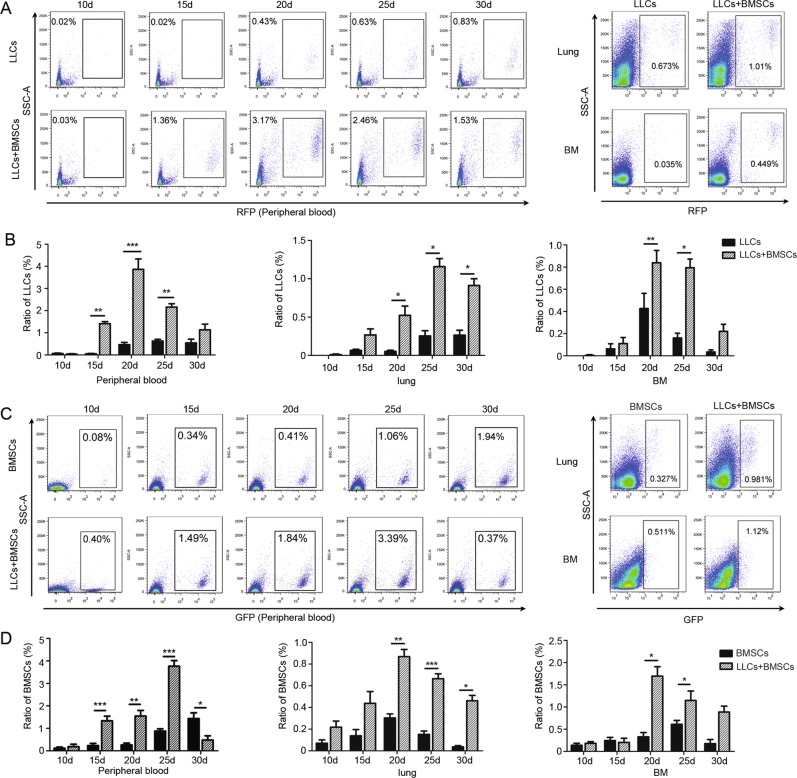
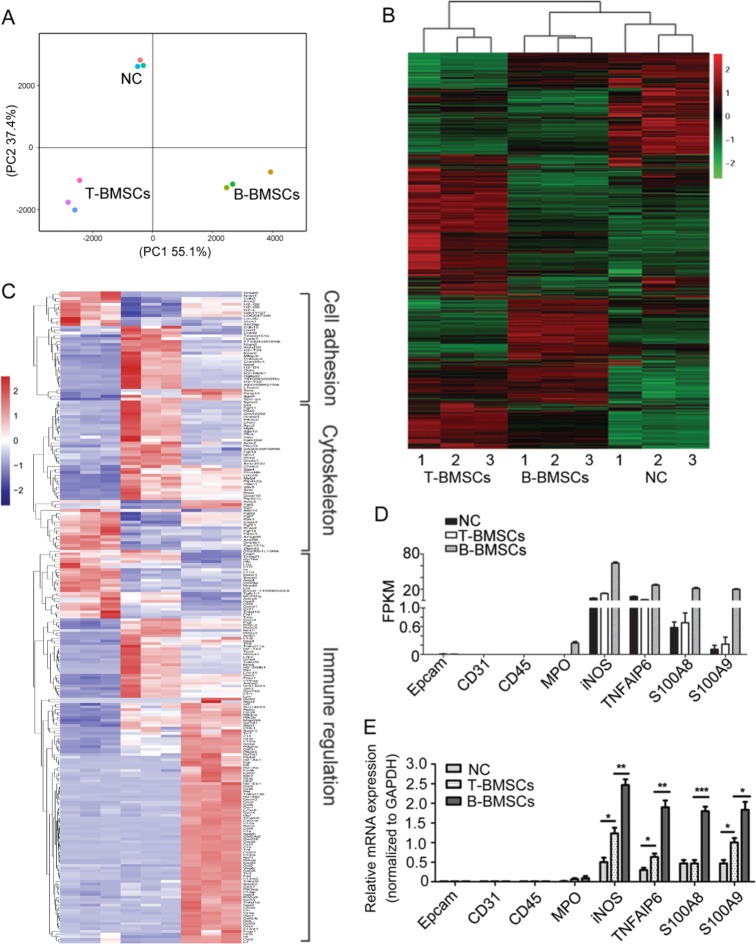
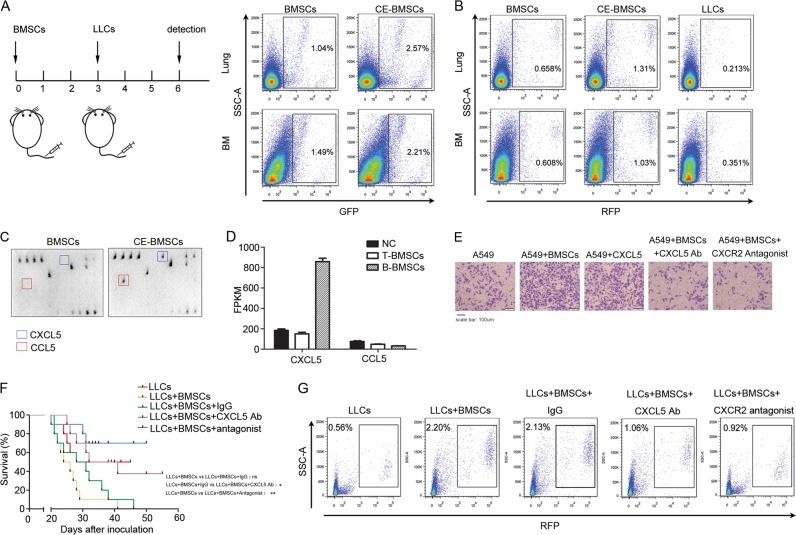
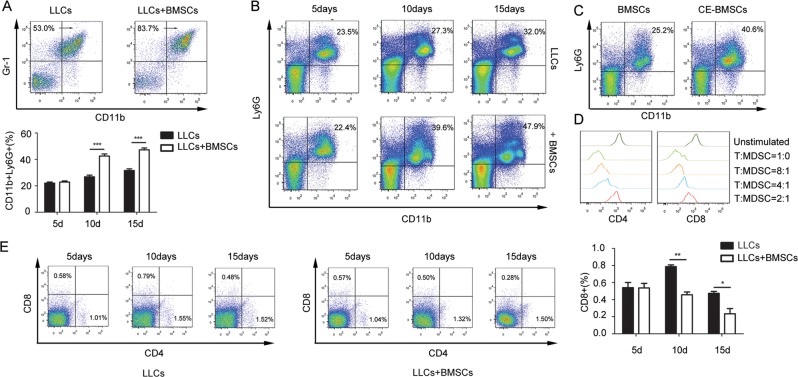
Bone marrow mesenchymal stem cells (BMSCs) are multipotent stromal cells that can differentiate into a variety of cell types. BMSCs are chemotactically guided towards the cancer cells and contribute to the formation of a cancer microenvironment. The homing of BMSCs was affected by various factors. Disseminated tumour cells (DTCs) in distant organs, especially in the bone marrow, are the source of cancer metastasis and cancer relapse. DTC survival is also determined by the microenvironment. Here we aim to elucidate how cancer-educated BMSCs promote the survival of cancer cells at primary tumour sites and distant sites. We highlight the dynamic change by identifying different gene expression signatures in intratumoral BMSCs and in BMSCs that move back in the bone marrow. Intratumoral BMSCs acquire high mobility and displayed immunosuppressive effects. Intratumoral BMSCs that ultimately home to the bone marrow exhibit a strong immunosuppressive function. Cancer-educated BMSCs promote the survival of lung cancer cells via expansion of MDSCs in bone marrow, primary tumour sites and metastatic sites. These Ly6G MDSCs suppress proliferation of T cells. CXCL5, nitric oxide and GM-CSF produced by cancer-educated BMSCs contribute to the formation of malignant microenvironments. Treatment with CXCL5 antibody, the iNOS inhibitor 1400w and GM-CSF antibody reduced MDSC expansion in the bone marrow, primary tumour sites and metastatic sites, and promoted the efficiency of PD-L1 antibody. Our study reveals that cancer-educated BMSCs are the component of the niche for primary lung cancer cells and DTCs, and that they can be the target for immunotherapy.
骨髓间充质干细胞(BMSCs)是多能基质细胞,可分化为多种细胞类型。BMSCs 被趋化性引导至癌细胞,并有助于形成癌症微环境。BMSCs 的归巢受到多种因素的影响。远处器官(尤其是骨髓)中的播散性肿瘤细胞(DTC)是癌症转移和癌症复发的根源。DTC 的存活也由微环境决定。在这里,我们旨在阐明受过癌症教育的 BMSCs 如何促进原发性肿瘤部位和远处部位的癌细胞存活。我们通过鉴定肿瘤内 BMSCs 和返回骨髓中的 BMSCs 中的不同基因表达特征来突出动态变化。肿瘤内 BMSCs 获得高迁移性,并表现出免疫抑制作用。最终归巢到骨髓中的肿瘤内 BMSCs 表现出强烈的免疫抑制功能。受过癌症教育的 BMSCs 通过在骨髓、原发性肿瘤部位和转移性部位扩增 MDSCs 来促进肺癌细胞的存活。这些 Ly6G MDSCs 抑制 T 细胞的增殖。受癌症教育的 BMSCs 产生的 CXCL5、一氧化氮和 GM-CSF 有助于恶性微环境的形成。用 CXCL5 抗体、iNOS 抑制剂 1400w 和 GM-CSF 抗体治疗可减少骨髓、原发性肿瘤部位和转移性部位的 MDSC 扩增,并提高 PD-L1 抗体的效率。我们的研究表明,受过癌症教育的 BMSCs 是原发性肺癌细胞和 DTC 生态位的组成部分,它们可以成为免疫治疗的靶点。