School of Physical Education, University of Campinas (UNICAMP), Campinas, SP, Brazil.
Ceuma University, São Luis, MA, Brazil.
Oxid Med Cell Longev. 2019 Nov 20;2019:5382843. doi: 10.1155/2019/5382843. eCollection 2019.
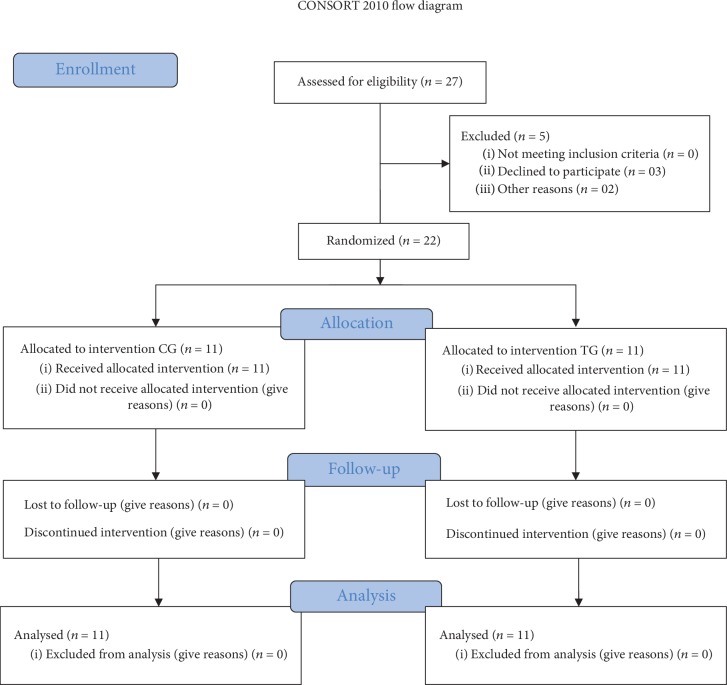
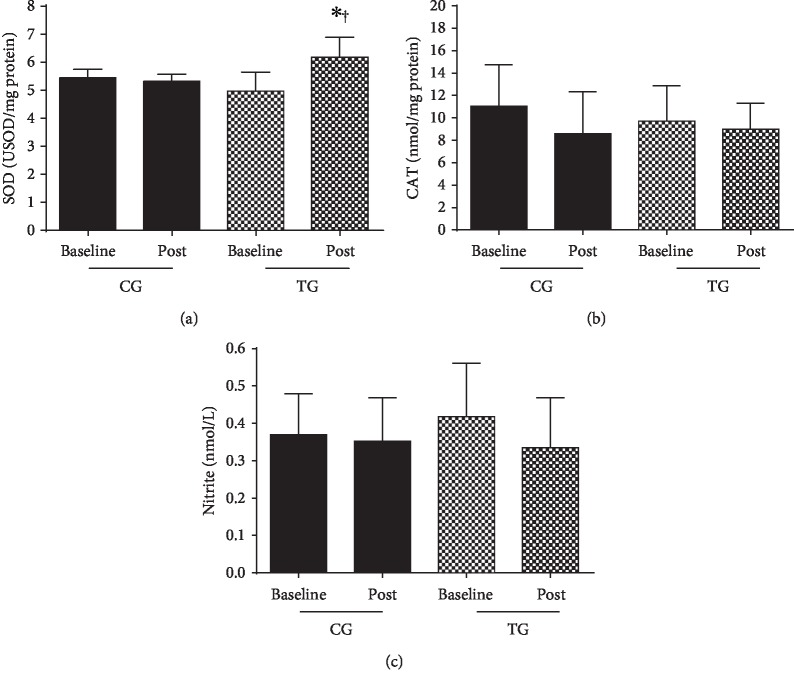
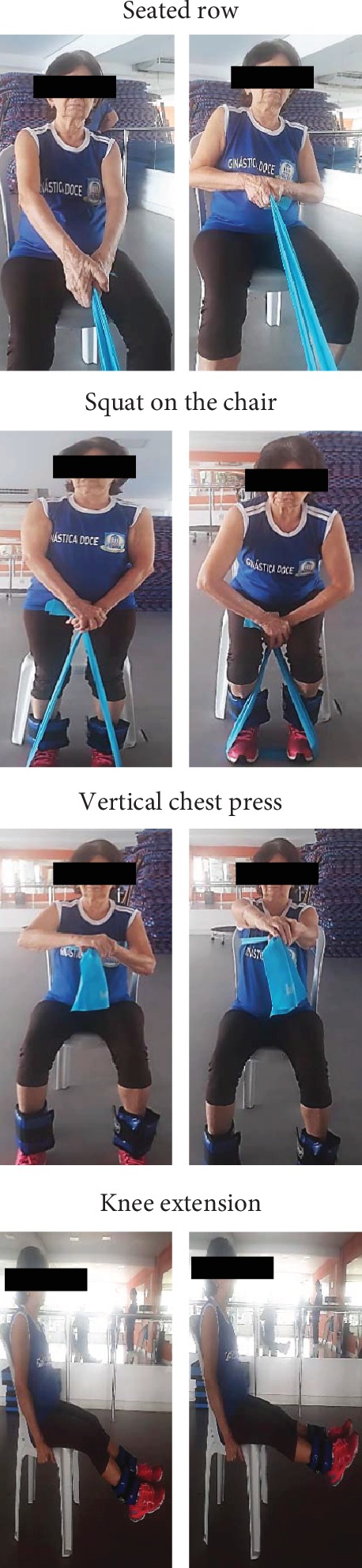
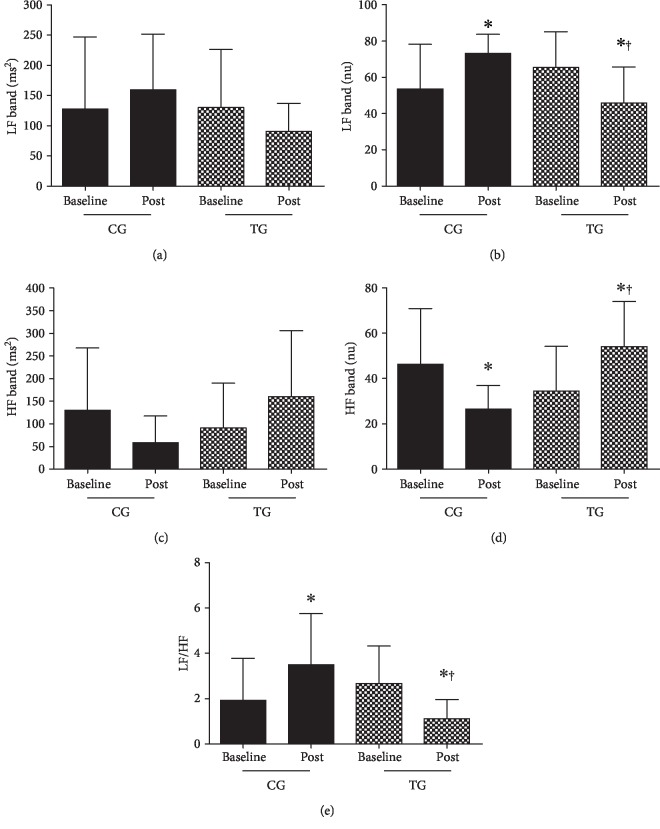
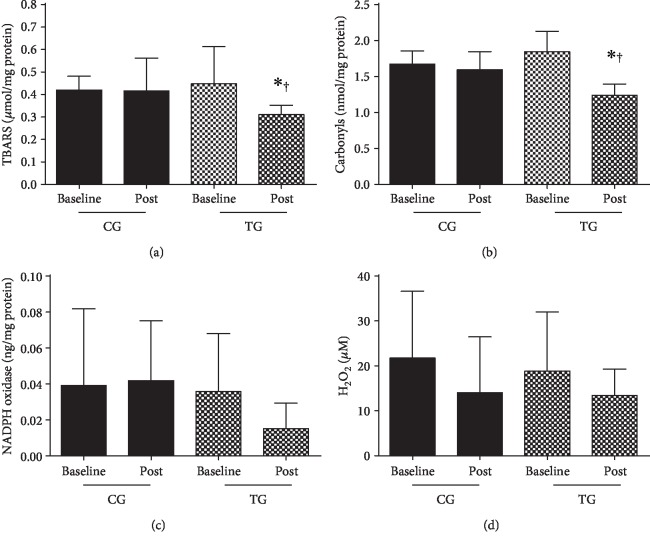
Stroke survivors are at substantial risk of recurrent cerebrovascular event or cardiovascular disease. Exercise training offers nonpharmacological treatment for these subjects; however, the execution of the traditional exercise protocols and adherence is constantly pointed out as obstacles. Based on these premises, the present study investigated the impact of an 8-week dynamic resistance training protocol with elastic bands on functional, hemodynamic, and cardiac autonomic modulation, oxidative stress markers, and plasma nitrite concentration in stroke survivors. Twenty-two patients with stroke were randomized into control group (CG, = 11) or training group (TG, = 11). Cardiac autonomic modulation, oxidative stress markers, plasma nitrite concentration, physical function and hemodynamic parameters were evaluated before and after 8 weeks. Results indicated that functional parameters (standing up from the sitting position ( = 0.011) and timed up and go ( = 0.042)) were significantly improved in TG. Although not statistically different, both systolic blood pressure (Δ = -10.41 mmHg) and diastolic blood pressure (Δ = -8.16 mmHg) were reduced in TG when compared to CG. Additionally, cardiac autonomic modulation (sympathovagal balance-LF/HF ratio) and superoxide dismutase were improved, while thiobarbituric acid reactive substances and carbonyl levels were reduced in TG when compared to the CG subjects. In conclusion, our findings support the hypothesis that dynamic resistance training with elastic bands may improve physical function, hemodynamic parameters, autonomic modulation, and oxidative stress markers in stroke survivors. These positive changes would be associated with a reduced risk of a recurrent stroke or cardiac event in these subjects.
中风幸存者存在发生复发性脑血管事件或心血管疾病的巨大风险。运动训练为这些患者提供了非药物治疗方法;然而,传统运动方案的执行和坚持常常被指出是障碍。基于这些前提,本研究调查了 8 周弹性带动态抗阻训练方案对中风幸存者的功能、血液动力学和心脏自主神经调节、氧化应激标志物和血浆硝酸盐浓度的影响。22 名中风患者被随机分为对照组(CG,n = 11)或训练组(TG,n = 11)。在 8 周后,评估了心脏自主神经调节、氧化应激标志物、血浆硝酸盐浓度、身体功能和血液动力学参数。结果表明,在 TG 中,功能参数(从坐姿站立( = 0.011)和计时站起行走( = 0.042))显著改善。尽管在统计学上没有差异,但与 CG 相比,TG 中收缩压(Δ = -10.41mmHg)和舒张压(Δ = -8.16mmHg)均降低。此外,与 CG 相比,TG 中的心脏自主神经调节(交感神经-迷走神经平衡-LF/HF 比值)和超氧化物歧化酶得到改善,而丙二醛和羰基水平降低。总之,我们的发现支持以下假设,即弹性带动态抗阻训练可以改善中风幸存者的身体功能、血液动力学参数、自主神经调节和氧化应激标志物。这些积极的变化可能与降低这些患者再次发生中风或心脏事件的风险有关。