Abobaker Halima, Hu Yun, Omer Nagmeldin A, Hou Zhen, Idriss Abdulrahman A, Zhao Ruqian
1MOE Joint International Research Laboratory of Animal Health & Food Safety, Nanjing Agricultural University, Nanjing, 210095 People's Republic of China.
2Key Laboratory of Animal Physiology & Biochemistry, Nanjing Agricultural University, Nanjing, 210095 People's Republic of China.
J Anim Sci Biotechnol. 2019 Nov 19;10:87. doi: 10.1186/s40104-019-0396-8. eCollection 2019.
Laying hens supplemented with betaine demonstrate activated adrenal steroidogenesis and deposit higher corticosterone (CORT) in the egg yolk. Here we further investigate the effect of maternal betaine on the plasma CORT concentration and adrenal expression of steroidogenic genes in offspring pullets.
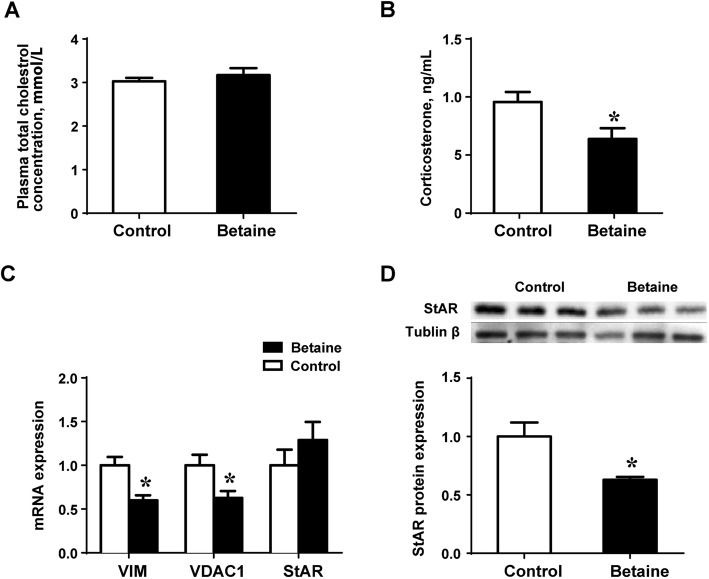
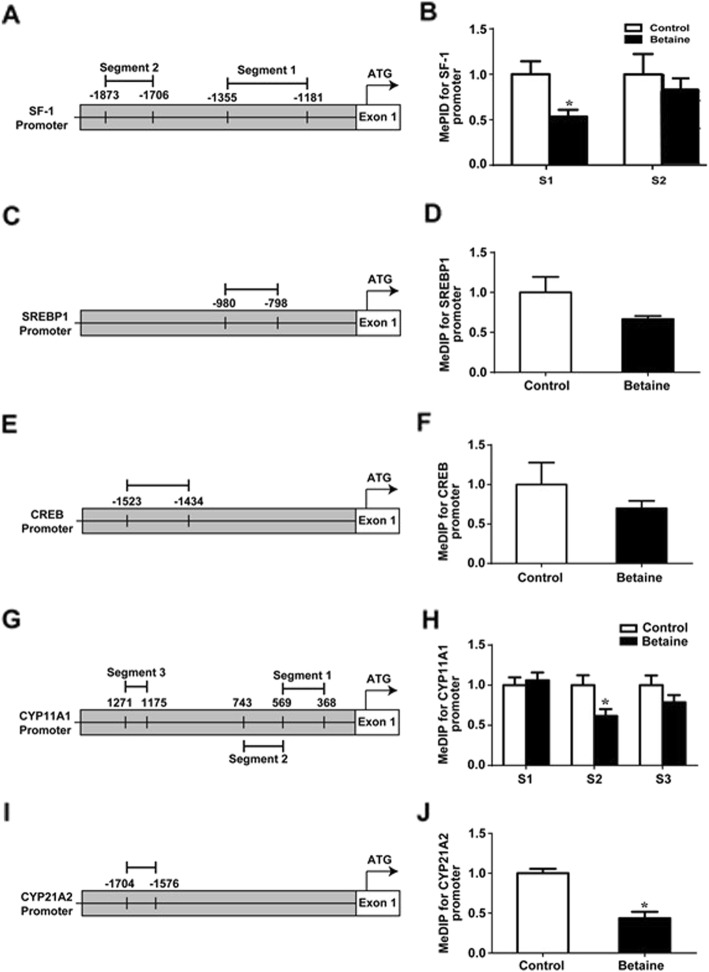
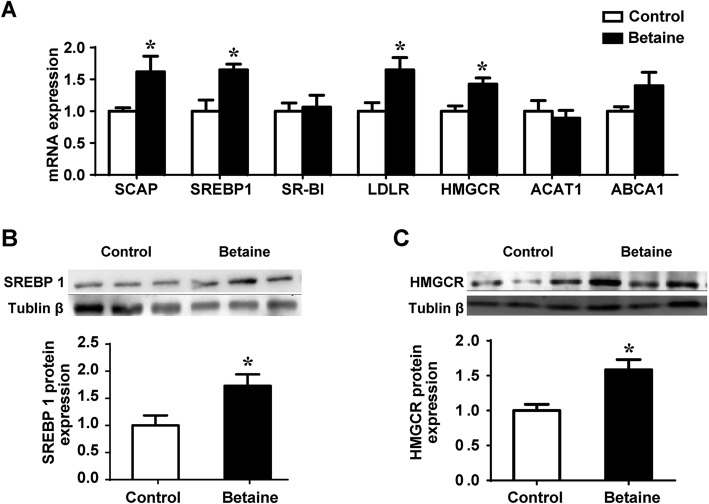
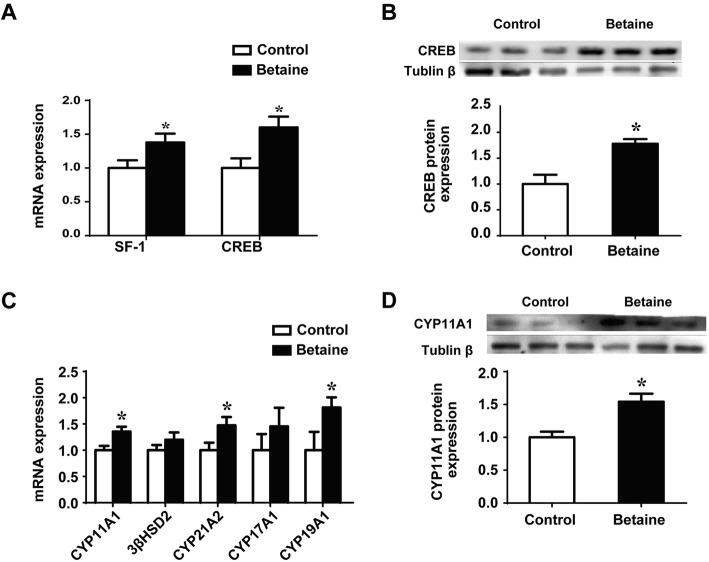
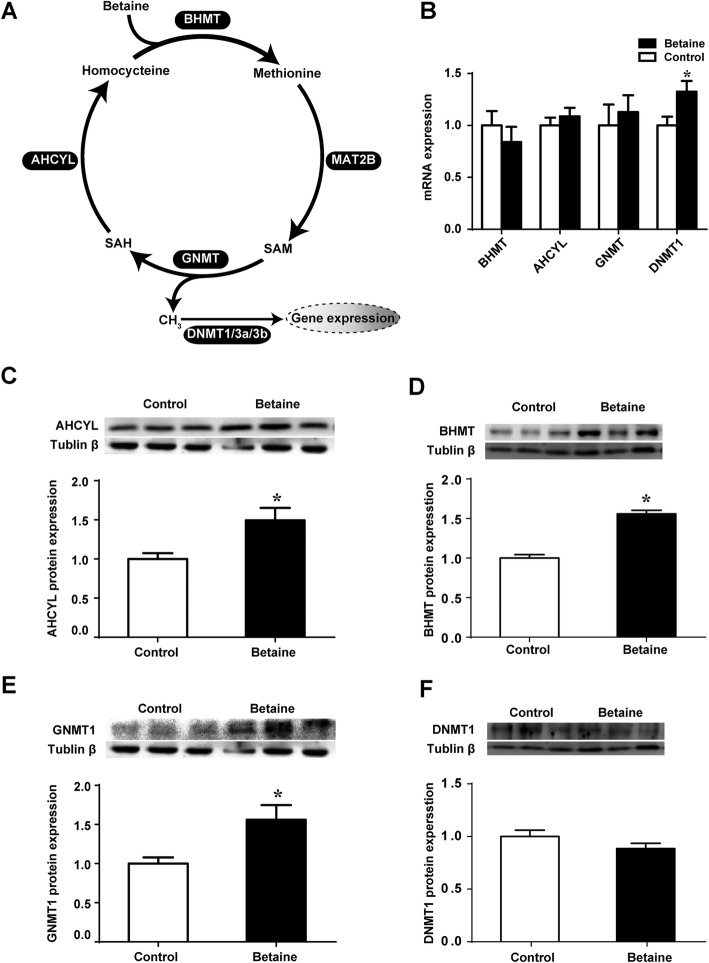
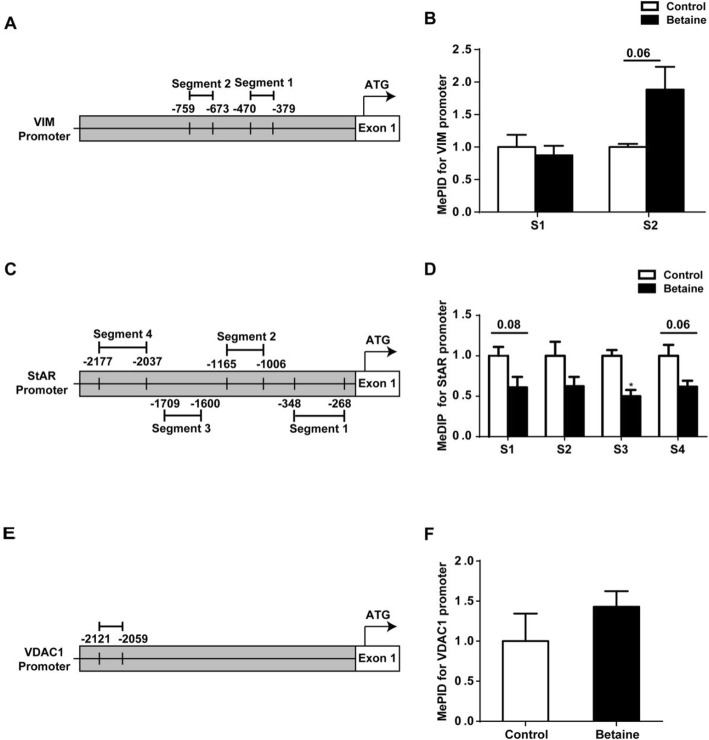
Maternal betaine significantly reduced ( < 0.05) plasma CORT concentration and the adrenal expression of vimentin that is involved in trafficking cholesterol to the mitochondria for utilization in offspring pullets. Concurrently, voltage-dependent anion channel 1 and steroidogenic acute regulatory protein, the two mitochondrial proteins involved in cholesterol influx, were both down-regulated at mRNA and protein levels. However, enzymes responsible for steroid syntheses, such as cytochrome P450 family 11 subfamily A member 1 and cytochrome P450 family 21 subfamily A member 2, were significantly ( < 0.05) up-regulated at mRNA or protein levels in the adrenal gland of pullets derived from betaine-supplemented hens. Furthermore, expression of transcription factors, such as steroidogenic factor-1, sterol regulatory element-binding protein 1 and cAMP response element-binding protein, was significantly ( < 0.05) enhanced, together with their downstream target genes, such as 3-hydroxy-3-methyl-glutaryl-coenzyme A reductase, LDL receptor and sterol regulatory element-binding protein cleavage-activating protein. The promoter regions of most steroidogenic genes were significantly ( < 0.05) hypomethylated, although methyl transfer enzymes, such as AHCYL, GNMT1 and BHMT were up-regulated.
These results indicate that the reduced plasma CORT in betaine-supplemented offspring pullets is linked to suppressed cholesterol trafficking into the mitochondria, despite the activation of cholesterol and corticosteroid synthetic genes associated with promoter hypomethylation.
补充甜菜碱的产蛋母鸡表现出肾上腺类固醇生成激活,并在蛋黄中沉积更高水平的皮质酮(CORT)。在此,我们进一步研究母体甜菜碱对后代小母鸡血浆CORT浓度和肾上腺类固醇生成基因表达的影响。
母体甜菜碱显著降低(<0.05)了后代小母鸡的血浆CORT浓度以及参与将胆固醇转运至线粒体以供利用的波形蛋白在肾上腺中的表达。同时,参与胆固醇内流的两种线粒体蛋白——电压依赖性阴离子通道1和类固醇生成急性调节蛋白,在mRNA和蛋白质水平均下调。然而,在补充甜菜碱母鸡所产小母鸡的肾上腺中,负责类固醇合成的酶,如细胞色素P450家族11亚家族A成员1和细胞色素P450家族21亚家族A成员2,在mRNA或蛋白质水平显著上调(<0.05)。此外,类固醇生成因子-1、固醇调节元件结合蛋白1和cAMP反应元件结合蛋白等转录因子及其下游靶基因,如3-羟基-3-甲基戊二酰辅酶A还原酶、低密度脂蛋白受体和固醇调节元件结合蛋白裂解激活蛋白的表达显著增强(<0.05)。尽管AHCYL、GNMT1和BHMT等甲基转移酶上调,但大多数类固醇生成基因的启动子区域显著低甲基化(<0.05)。
这些结果表明,尽管与启动子低甲基化相关的胆固醇和皮质类固醇合成基因被激活,但补充甜菜碱的后代小母鸡血浆CORT降低与胆固醇向线粒体的转运受抑制有关。