• 文献检索
  • 文档翻译
  • 深度研究
  • 学术资讯
  • Suppr Zotero 插件Zotero 插件
  • 邀请有礼
  • 套餐&价格
  • 历史记录
应用&插件
Suppr Zotero 插件Zotero 插件浏览器插件Mac 客户端Windows 客户端微信小程序
定价
高级版会员购买积分包购买API积分包
服务
文献检索文档翻译深度研究API 文档MCP 服务
关于我们
关于 Suppr公司介绍联系我们用户协议隐私条款
关注我们

Suppr 超能文献

核心技术专利:CN118964589B侵权必究
粤ICP备2023148730 号-1Suppr @ 2026

文献检索

告别复杂PubMed语法,用中文像聊天一样搜索,搜遍4000万医学文献。AI智能推荐,让科研检索更轻松。

立即免费搜索

文件翻译

保留排版,准确专业,支持PDF/Word/PPT等文件格式,支持 12+语言互译。

免费翻译文档

深度研究

AI帮你快速写综述,25分钟生成高质量综述,智能提取关键信息,辅助科研写作。

立即免费体验

理解可及性和使用率之间的差距:加纳一项关于杀虫剂处理蚊帐使用障碍和促进因素的定性研究。

Understanding the gap between access and use: a qualitative study on barriers and facilitators to insecticide-treated net use in Ghana.

机构信息

Department of Epidemiology, Noguchi Memorial Institute for Medical Research, College of Health Sciences, University of Ghana, Legon, Ghana.

Department of Social and Behavioral Science, School of Public Health, College of Health Sciences, University of Ghana, Legon, Ghana.

出版信息

Malar J. 2019 Dec 12;18(1):417. doi: 10.1186/s12936-019-3051-0.

DOI:10.1186/s12936-019-3051-0
PMID:31831004
原文链接:https://pmc.ncbi.nlm.nih.gov/articles/PMC6909499/
Abstract

BACKGROUND

Mass and continuous distribution channels have significantly increased access to insecticide-treated nets (ITNs) in Ghana since 2000. Despite these gains, a large gap remains between ITN access and use.

METHODS

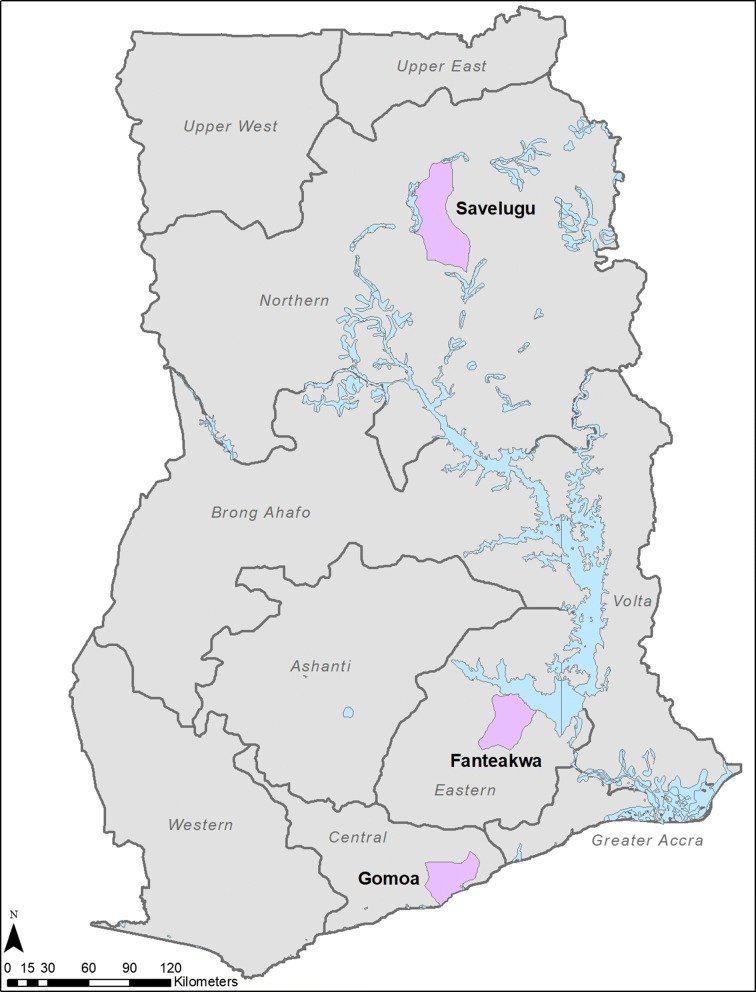
A qualitative research study was carried out to explore the individual and contextual factors influencing ITN use among those with access in three sites in Ghana. Eighteen focus group discussions, and free listing and ranking activities were carried out with 174 participants; seven of those participants were selected for in-depth case study. Focus group discussions and case study interviews were audio-recorded, transcribed verbatim, and analysed thematically.

RESULTS

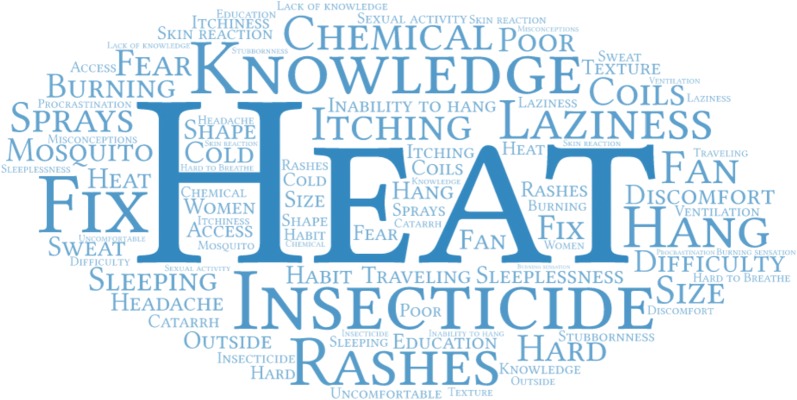
ITN use, as described by study participants, was not binary; it varied throughout the night, across seasons, and over time. Heat was the most commonly cited barrier to consistent ITN use and contributed to low reported ITN use during the dry season. Barriers to ITN use throughout the year included skin irritation; lack of airflow in the sleeping space; and, in some cases, a lack of information on the connection between the use of ITNs and malaria prevention. Falling ill or losing a loved one to malaria was the most powerful motivator for consistent ITN use. Participants also discussed developing a habit of ITN use and the economic benefit of prevention over treatment as facilitating factors. Participants reported gender differences in ITN use, noting that men were more likely than women and children to stay outdoors late at night and more likely to sleep outdoors without an ITN.

CONCLUSION

The study results suggest the greatest gains in ITN use among those with access could be made by promoting consistent use throughout the year among occasional and seasonal users. Opportunities for improving communication messages, such as increasing the time ITNs are aired before first use, as well as structural approaches to enhance the usability of ITNs in challenging contexts, such as promoting solutions for outdoor ITN use, were identified from this work. The information from this study can be used to inform social and behaviour change messaging and innovative approaches to closing the ITN use gap in Ghana.

摘要

背景

自 2000 年以来,大规模和连续的分销渠道极大地增加了加纳驱虫蚊帐(ITN)的可及性。尽管取得了这些进展,但 ITN 的可及性和使用率之间仍存在很大差距。

方法

本研究开展了一项定性研究,以探索在加纳三个地点具有 ITN 可及性的人群中,影响 ITN 使用的个人和环境因素。共进行了 18 次焦点小组讨论,以及自由列举和排序活动,参与者共有 174 人;其中 7 人被选为深入案例研究对象。对焦点小组讨论和案例研究访谈进行了录音、逐字转录,并进行了主题分析。

结果

正如研究参与者所描述的那样,ITN 使用并不是二元的;它会在整个晚上、不同季节和不同时间发生变化。热是导致 ITN 使用率低的最常见障碍,也是导致旱季 ITN 使用率低的原因。全年使用 ITN 的障碍包括皮肤刺激;睡眠空间内空气流通不畅;在某些情况下,缺乏关于使用 ITN 与疟疾预防之间联系的信息。生病或因疟疾失去亲人是坚持使用 ITN 的最有力动机。参与者还讨论了养成使用 ITN 的习惯以及预防胜于治疗的经济效益作为促进因素。参与者报告了 ITN 使用中的性别差异,指出男性比女性和儿童更有可能在深夜在户外逗留,更有可能在户外睡觉而不使用 ITN。

结论

研究结果表明,促进偶尔和季节性使用者全年持续使用 ITN,可能会使那些有 ITN 可及性的人最大程度地提高 ITN 使用量。本研究工作中确定了一些改进沟通信息的机会,例如增加 ITN 在首次使用前的通风时间,以及在具有挑战性的环境中提高 ITN 可用性的结构方法,例如推广户外使用 ITN 的解决方案。这项研究的信息可用于为加纳缩小 ITN 使用差距提供社会和行为改变信息以及创新方法。
https://cdn.ncbi.nlm.nih.gov/pmc/blobs/0b82/6909499/1e28b3880d34/12936_2019_3051_Fig3_HTML.jpg
https://cdn.ncbi.nlm.nih.gov/pmc/blobs/0b82/6909499/6bcdae706bea/12936_2019_3051_Fig1_HTML.jpg
https://cdn.ncbi.nlm.nih.gov/pmc/blobs/0b82/6909499/6c6fc48e8f66/12936_2019_3051_Fig2_HTML.jpg
https://cdn.ncbi.nlm.nih.gov/pmc/blobs/0b82/6909499/1e28b3880d34/12936_2019_3051_Fig3_HTML.jpg
https://cdn.ncbi.nlm.nih.gov/pmc/blobs/0b82/6909499/6bcdae706bea/12936_2019_3051_Fig1_HTML.jpg
https://cdn.ncbi.nlm.nih.gov/pmc/blobs/0b82/6909499/6c6fc48e8f66/12936_2019_3051_Fig2_HTML.jpg
https://cdn.ncbi.nlm.nih.gov/pmc/blobs/0b82/6909499/1e28b3880d34/12936_2019_3051_Fig3_HTML.jpg

相似文献

1
Understanding the gap between access and use: a qualitative study on barriers and facilitators to insecticide-treated net use in Ghana.理解可及性和使用率之间的差距:加纳一项关于杀虫剂处理蚊帐使用障碍和促进因素的定性研究。
Malar J. 2019 Dec 12;18(1):417. doi: 10.1186/s12936-019-3051-0.
2
Barriers in distribution, ownership and utilization of insecticide-treated mosquito nets among migrant population in Myanmar, 2016: a mixed methods study.2016 年缅甸流动人口中驱虫蚊帐的分发、拥有和使用障碍:混合方法研究。
Malar J. 2019 May 14;18(1):172. doi: 10.1186/s12936-019-2800-4.
3
A qualitative look at bed net access and use in Burkina Faso, Mozambique, Nigeria, and Rwanda following piloted distributions of dual-active ingredient insecticide-treated nets.对布基纳法索、莫桑比克、尼日利亚和卢旺达在试点分发双效活性成分驱虫蚊帐后获得和使用蚊帐的情况进行定性研究。
Malar J. 2024 May 7;23(1):137. doi: 10.1186/s12936-024-04868-4.
4
Outdoor-sleeping and other night-time activities in northern Ghana: implications for residual transmission and malaria prevention.加纳北部的户外睡眠及其他夜间活动:对残余传播和疟疾预防的影响
Malar J. 2015 Jan 28;14:35. doi: 10.1186/s12936-015-0543-4.
5
Individual and Community Factors Associated with Household Insecticide-Treated Bednet Usage in the Sunyani West District of Ghana Two Years after Mass Distribution.加纳萨凡纳西部地区大规模分发两年后,与家庭使用经杀虫剂处理的蚊帐相关的个人和社区因素。
J Environ Public Health. 2020 Sep 24;2020:7054383. doi: 10.1155/2020/7054383. eCollection 2020.
6
Malaria control under the Taliban regime: insecticide-treated net purchasing, coverage, and usage among men and women in eastern Afghanistan.塔利班政权下的疟疾控制:阿富汗东部男女使用杀虫剂处理过的蚊帐的购买、覆盖和使用情况。
Malar J. 2010 Jan 6;9:7. doi: 10.1186/1475-2875-9-7.
7
Impact of malaria related messages on insecticide-treated net (ITN) use for malaria prevention in Ghana.疟疾相关信息对加纳使用杀虫剂处理过的蚊帐预防疟疾的影响。
Malar J. 2014 Mar 28;13:123. doi: 10.1186/1475-2875-13-123.
8
Age and gender trends in insecticide-treated net use in sub-Saharan Africa: a multi-country analysis.撒哈拉以南非洲地区经杀虫剂处理的蚊帐使用的年龄和性别趋势:多国分析。
Malar J. 2018 Nov 14;17(1):423. doi: 10.1186/s12936-018-2575-z.
9
Assessing the ownership, usage and knowledge of Insecticide Treated Nets (ITNs) in Malaria Prevention in the Hohoe Municipality, Ghana.评估加纳霍霍埃市用于疟疾预防的经杀虫剂处理蚊帐(ITN)的所有权、使用情况和相关知识。
Pan Afr Med J. 2017 Sep 22;28:67. doi: 10.11604/pamj.2017.28.67.9934. eCollection 2017.
10
Determinants of insecticide-treated net ownership and utilization among pregnant women in Nigeria.尼日利亚孕妇使用驱虫蚊帐的决定因素。
BMC Public Health. 2012 Feb 6;12:105. doi: 10.1186/1471-2458-12-105.

引用本文的文献

1
Barriers to effective usage of insecticide-treated mosquito nets (ITNS) among women of reproductive age in Tanzania: a national cross-sectional survey.坦桑尼亚育龄妇女有效使用经杀虫剂处理的蚊帐(ITN)的障碍:一项全国横断面调查。
Malar J. 2025 Jul 17;24(1):234. doi: 10.1186/s12936-025-05417-3.
2
Knowledge, attitudes, and practices regarding malaria in rural Uganda: a cross-sectional study.乌干达农村地区关于疟疾的知识、态度和行为:一项横断面研究。
Malariaworld J. 2025 Jun 30;16:14. doi: 10.5281/zenodo.15776707. eCollection 2025.
3
Malaria prevention in the age of climate change: A community survey in rural Senegal.

本文引用的文献

1
Human behaviour and residual malaria transmission in Zanzibar: findings from in-depth interviews and direct observation of community events.坦桑尼亚桑给巴尔的人类行为与残留疟疾传播:深入访谈和社区活动直接观察结果。
Malar J. 2019 Jul 1;18(1):220. doi: 10.1186/s12936-019-2855-2.
2
Measuring and characterizing night time human behaviour as it relates to residual malaria transmission in sub-Saharan Africa: a review of the published literature.衡量和描述与撒哈拉以南非洲残留疟疾传播有关的夜间人类行为:对已发表文献的综述。
Malar J. 2019 Jan 11;18(1):6. doi: 10.1186/s12936-019-2638-9.
3
A reduction in malaria transmission intensity in Northern Ghana after 7 years of indoor residual spraying.
气候变化时代的疟疾预防:塞内加尔农村地区的一项社区调查。
PLoS One. 2025 Jun 30;20(6):e0313456. doi: 10.1371/journal.pone.0313456. eCollection 2025.
4
Determinants of adverse birth outcomes among pregnant women in Kintampo municipal hospital, Ghana.加纳金坦波市立医院孕妇不良分娩结局的决定因素
Front Glob Womens Health. 2025 Mar 17;6:1444566. doi: 10.3389/fgwh.2025.1444566. eCollection 2025.
5
Insecticide-treated bed nets (ITN) ownership and utilization patterns among caregivers with children under five years: A community-based cross-sectional study in Battor, North Tongu District, Ghana.五岁以下儿童看护者中经杀虫剂处理的蚊帐(ITN)的拥有和使用模式:加纳北通古区巴托尔的一项基于社区的横断面研究。
PLOS Glob Public Health. 2025 Feb 6;5(2):e0004228. doi: 10.1371/journal.pgph.0004228. eCollection 2025.
6
Malaria Prevention for Pregnant Women and Under-Five Children in 10 Sub-Saharan Africa Countries: Socioeconomic and Temporal Inequality Analysis.撒哈拉以南非洲10个国家孕妇和五岁以下儿童的疟疾预防:社会经济和时间不平等分析
Int J Environ Res Public Health. 2024 Dec 11;21(12):1656. doi: 10.3390/ijerph21121656.
7
Pilot introduction of long-lasting insecticidal nets and hammock nets in the indigenous Comarca of Guna Yala, Panama.在巴拿马的库纳亚拉原住民自治区试点引入长效驱虫蚊帐和吊床蚊帐。
Malar J. 2024 Dec 18;23(1):383. doi: 10.1186/s12936-024-05208-2.
8
Socio-demographic factors, housing characteristics, and clinical symptoms associated with falciparum malaria in two rapidly urbanizing areas in the Ashanti region of Ghana.加纳阿散蒂地区两个快速城市化地区与恶性疟原虫疟疾相关的社会人口因素、住房特征和临床症状。
Malar J. 2024 Nov 21;23(1):354. doi: 10.1186/s12936-024-05185-6.
9
Unveiling the significance of women's role in health-seeking behavior during suspected malaria fever in risk populations of Nepal: Mixed methods cross-sectional study.揭示尼泊尔高危人群疑似疟疾发热期间女性在寻求医疗行为中的作用:混合方法横断面研究。
PLOS Glob Public Health. 2024 Sep 4;4(9):e0003697. doi: 10.1371/journal.pgph.0003697. eCollection 2024.
10
Assessing LLIN distribution implementation using evidence-informed intervention core elements: a qualitative study in a resource-constrained setting.利用循证干预核心要素评估长效驱虫蚊帐的分发实施情况:资源有限环境下的定性研究。
BMC Health Serv Res. 2024 Jul 9;24(1):790. doi: 10.1186/s12913-024-11223-5.
加纳北部经过 7 年室内残留喷洒后疟疾传播强度降低。
Malar J. 2017 Aug 10;16(1):324. doi: 10.1186/s12936-017-1971-0.
4
Prevalence of Plasmodium falciparum and non-P. falciparum infections in a highland district in Ghana, and the influence of HIV and sickle cell disease.加纳一个高地地区恶性疟原虫和非恶性疟原虫感染的流行情况,以及艾滋病毒和镰状细胞病的影响。
Malar J. 2017 Apr 24;16(1):167. doi: 10.1186/s12936-017-1823-y.
5
Outdoor-sleeping and other night-time activities in northern Ghana: implications for residual transmission and malaria prevention.加纳北部的户外睡眠及其他夜间活动:对残余传播和疟疾预防的影响
Malar J. 2015 Jan 28;14:35. doi: 10.1186/s12936-015-0543-4.
6
Characterizing, controlling and eliminating residual malaria transmission.表征、控制和消除残余疟疾传播。
Malar J. 2014 Aug 23;13:330. doi: 10.1186/1475-2875-13-330.
7
"People will say that I am proud": a qualitative study of barriers to bed net use away from home in four Ugandan districts.“人们会说我骄傲”:乌干达四个地区中离家使用蚊帐障碍的定性研究。
Malar J. 2014 Mar 6;13:82. doi: 10.1186/1475-2875-13-82.
8
Estimating population access to insecticide-treated nets from administrative data: correction factor is needed.从行政数据估计人群获得驱虫蚊帐的情况:需要校正系数。
Malar J. 2013 Jul 26;12:259. doi: 10.1186/1475-2875-12-259.
9
A good night's sleep and the habit of net use: perceptions of risk and reasons for bed net use in Bukoba and Zanzibar.良好的睡眠和上网习惯:布科巴和桑给巴尔对蚊帐使用风险的认知和使用原因。
Malar J. 2013 Jun 13;12:203. doi: 10.1186/1475-2875-12-203.
10
Why Use of Interventions Targeting Outdoor Biting Mosquitoes will be Necessary to Achieve Malaria Elimination.为何针对户外叮咬蚊子的干预措施对于实现疟疾消除至关重要。
Front Physiol. 2012 Jun 12;3:199. doi: 10.3389/fphys.2012.00199. eCollection 2012.