González A Oscar E, Perez Carmen, Blanco Tania, Ayarza Cipriano, Chérigo Santiago, Ávila Mario, Montoya Lucía Fernández, Presley Nicholas A, Espinosa Bernardo García, Renteria Mariela Mosquera
Departamento de Control de Vectores, Ministry of Health of the Republic of Panama, Panama City, Panama.
Clinton Health Access Initiative (CHAI), Boston, USA.
Malar J. 2024 Dec 18;23(1):383. doi: 10.1186/s12936-024-05208-2.
After almost 70 years of using indoor residual spraying (IRS) as the primary intervention for malaria vector control, the Republic of Panama wanted to evaluate the operational feasibility and acceptability of distributing long-lasting insecticidal hammock nets (LLIHNs) and long-lasting insecticidal nets (LLINs) in the country.
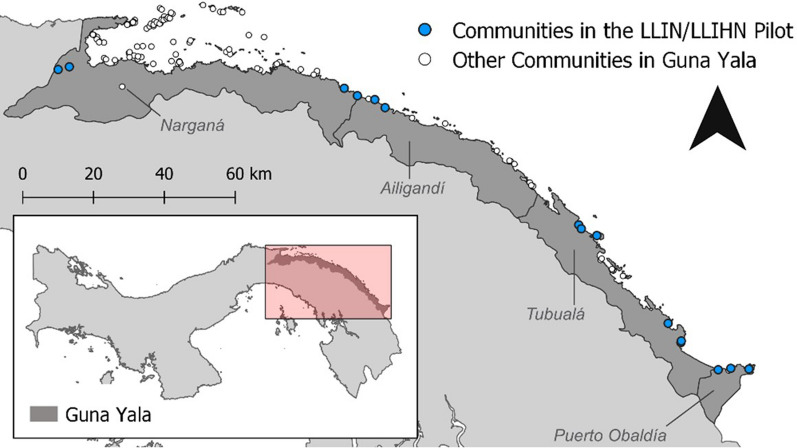
A pilot study conducted in 2019 distributed LLINs and LLIHNs to cover all sleeping spaces in 15 high burden localities of the indigenous Comarca of Guna Yala and measured retention, coverage, use and physical deterioration, washing and drying practices, as well as people's satisfaction with product characteristics post-distribution.
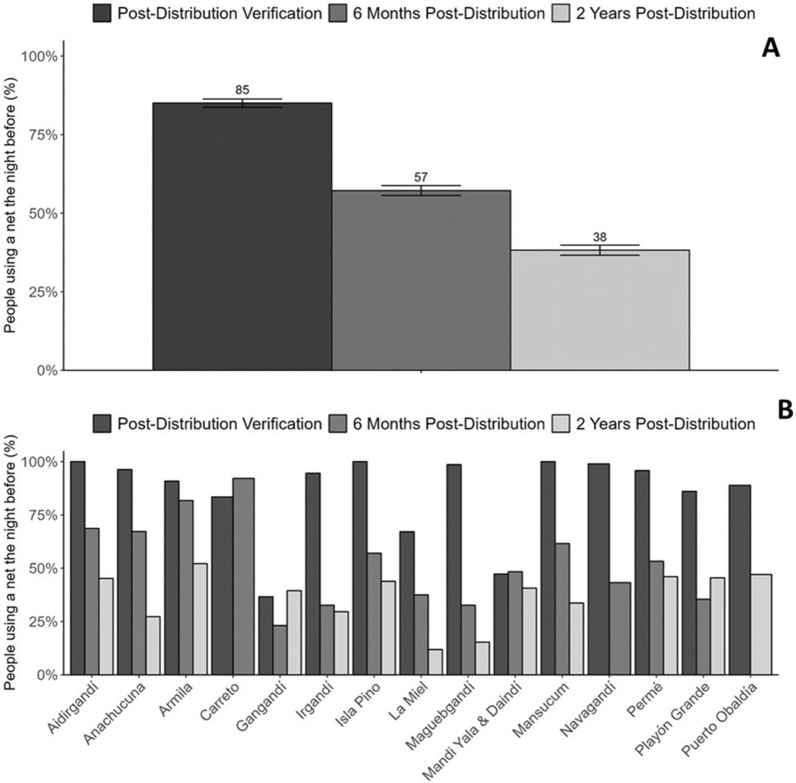
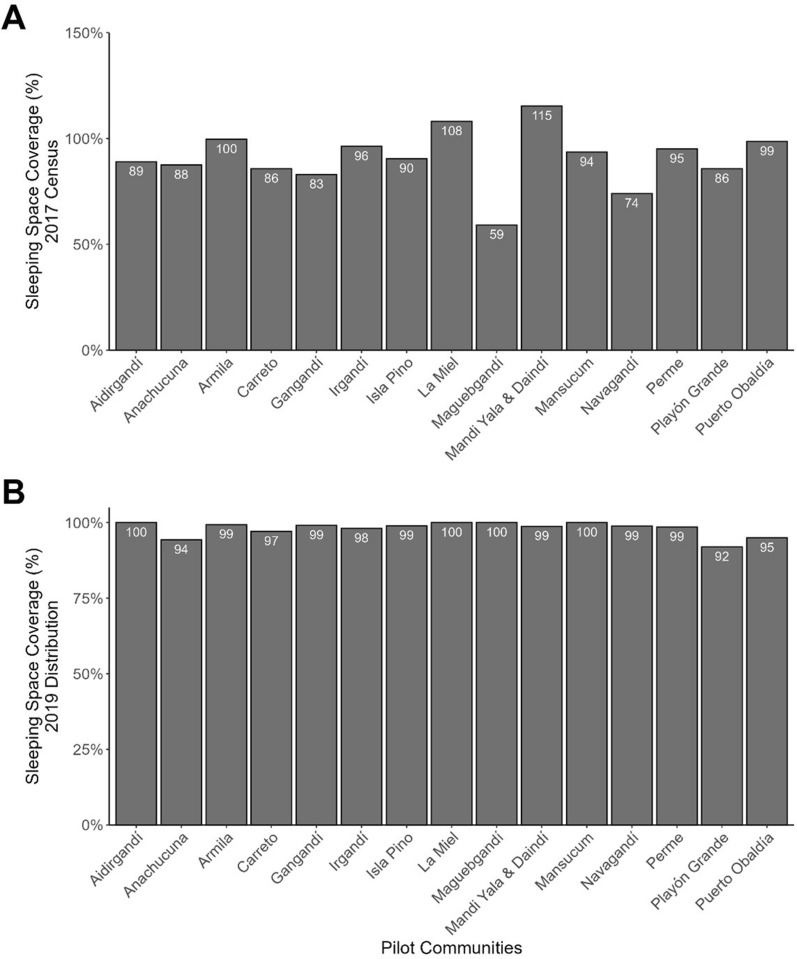
Overall, 89.9% of enumerated sleeping spaces were covered during the campaign. Monitoring post-distribution showed that 82.7% of the population received messages about the campaign before it happened and 92.4% claimed to know the purpose of the net and how to care for and repair it. Mild adverse reactions, specifically skin irritation associated with the insecticide in LLINs and LLIHNs, were reported by 38.4% of households. Two years after distribution, 86.3% of the LLIHN/LLINs were retained. Use was very high right after distribution (85%) but decreased to 57% six months after distribution and to 38% two years after distribution. The main reason for not using the LLIHN/LLINs was the reported absence of mosquitoes. Two years post-distribution, LLIHN/LLINs were preserved in good physical condition (4% torn), very few were washed with insecticide-damaging products (chlorine or detergent) (9%) or dried under the sun (15%), and LLIHN/LLINs were washed on average less than once every two months. The average number of people per sleeping space was 1.34.
Although the distribution of LLIHN/LLINs was operationally feasible and LLIHN/LLINs were initially well-accepted and cared for by these communities, use decreased drastically over the two years of follow up after distribution. Hence, should there be future LLIHN/LLIN distributions in this area, sufficient resources and efforts need to be allocated to promoting LLIHN/LLIN use. Further investigation into the reasons for low LLIHN/LLIN use are needed to guide such efforts.
在将室内滞留喷洒(IRS)作为疟疾媒介控制的主要干预措施使用了近70年后,巴拿马共和国希望评估在该国分发长效杀虫吊床蚊帐(LLIHN)和长效驱虫蚊帐(LLIN)的操作可行性和可接受性。
2019年进行的一项试点研究在库纳亚拉原住民自治区的15个高负担地区分发了LLIN和LLIHN,以覆盖所有睡眠空间,并测量了留存率、覆盖率、使用率以及物理损坏情况、洗涤和干燥习惯,以及分发后人们对产品特性的满意度。
总体而言,在活动期间89.9%的已清点睡眠空间得到了覆盖。分发后的监测显示,82.7%的人口在活动开展前收到了有关该活动的信息,92.4%的人声称知道蚊帐的用途以及如何保养和维修。38.4%的家庭报告了轻微不良反应,特别是与LLIN和LLIHN中的杀虫剂相关的皮肤刺激。分发两年后,86.3%的LLIHN/LLIN被留存下来。分发后立即使用率很高(85%),但分发六个月后降至57%,两年后降至38%。不使用LLIHN/LLIN的主要原因是报告称没有蚊子。分发两年后,LLIHN/LLIN的物理状况良好(4%有破损),很少用会损坏杀虫剂的产品(氯或洗涤剂)洗涤(9%)或在阳光下干燥(15%),LLIHN/LLIN平均每两个月洗涤不到一次。每个睡眠空间的平均人数为1.34。
尽管LLIHN/LLIN的分发在操作上是可行的,并且LLIHN/LLIN最初得到了这些社区的良好接受和保养,但在分发后的两年随访中使用率急剧下降。因此,如果该地区未来要分发LLIHN/LLIN,需要分配足够的资源和努力来促进LLIHN/LLIN的使用。需要进一步调查LLIHN/LLIN使用率低的原因,以指导此类工作。