Ahishakiye Jeanine, Bouwman Laura, Brouwer Inge D, Matsiko Eric, Armar-Klemesu Margaret, Koelen Maria
Health and Society Chair Group, Wageningen University, Wageningen, The Netherlands.
Human Nutrition and Dietetics Department, College of Medicine and Health Sciences, University of Rwanda, Kigali, Rwanda.
J Health Popul Nutr. 2019 Dec 12;38(1):43. doi: 10.1186/s41043-019-0207-z.
Despite different interventions to improve child nutrition conditions, chronic malnutrition is still a public health concern in Rwanda, with a high stunting prevalence of 38% among under 5-year-olds children. In Rwanda, only 18% of children aged 6-23 months are fed in accordance with the recommendations for infant and young child feeding practices. The aim of this study was to explore challenges to infant and young child feeding practices and the responses applied to overcome these challenges in Muhanga District, Southern province of Rwanda.
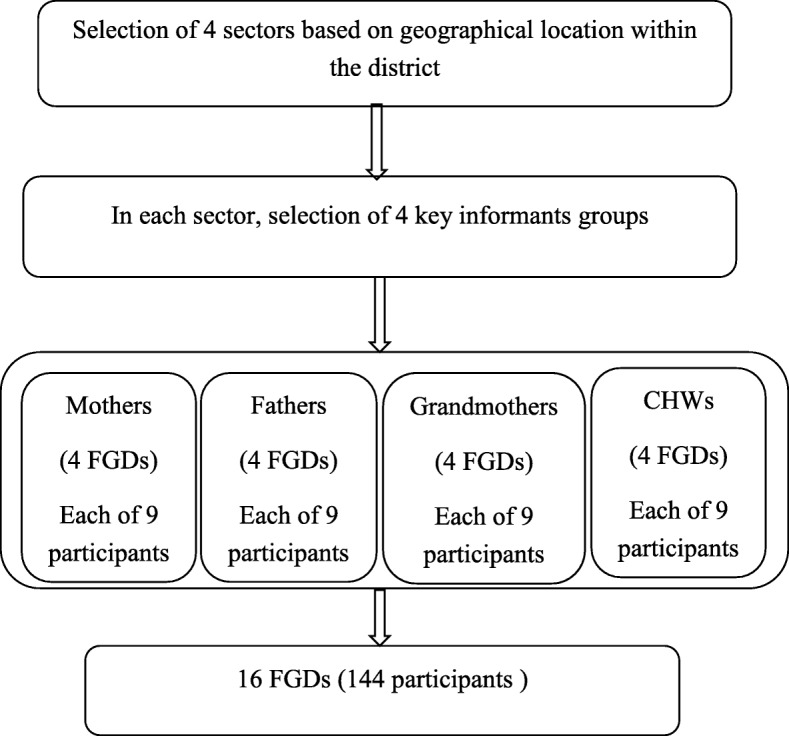
Sixteen (16) focus group discussions were held with mothers, fathers, grandmothers, and community health workers from 4 rural sectors of Muhanga District. The discussions were recorded, transcribed verbatim, and thematically analyzed using qualitative data analysis software, Atlas.ti.
Two main themes emerged from the data. Firstly, there was a discourse on optimal infant and young child feeding (IYCF) practices that reflects the knowledge and efforts to align with early initiation of breastfeeding, exclusive breastfeeding for the first 6 months, as well as initiation of complementary foods at 6 months recommendations. Secondly, challenging situations against optimal practices and coping responses applied were presented in a discourse on struggling with everyday reality. The challenging situations that emerged as impeding appropriate IYCF practices included perceived lack of breast milk, infant cues, women's heavy workload, partner relations and living in poverty. Family and social support from community health workers and health facility staff, financial support through casual labor, and mothers saving and lending groups, as well as kitchen gardens, were used to cope with challenges.
Factors influencing IYCF practices are multifaceted. Hence, intervention strategies to improve child nutrition should acknowledge the socially embedded nature of IYCF and address economic and social environmental constraints and opportunities, in addition and above knowledge only.
尽管采取了各种不同的干预措施来改善儿童营养状况,但慢性营养不良仍是卢旺达的一个公共卫生问题,五岁以下儿童的发育迟缓患病率高达38%。在卢旺达,只有18%的6至23个月大的儿童按照婴幼儿喂养实践建议进行喂养。本研究的目的是探讨卢旺达南部省份穆汉加区婴幼儿喂养实践面临的挑战以及为克服这些挑战所采取的应对措施。
与穆汉加区4个农村地区的母亲、父亲、祖母和社区卫生工作者进行了16次焦点小组讨论。讨论内容被记录下来,逐字转录,并使用定性数据分析软件Atlas.ti进行主题分析。
数据中出现了两个主要主题。首先,有关于最佳婴幼儿喂养(IYCF)实践的论述,反映了与尽早开始母乳喂养、前6个月纯母乳喂养以及6个月开始添加辅食建议相一致的知识和努力。其次,在关于应对日常现实的论述中呈现了针对最佳实践的挑战情况及所采取的应对措施。出现的阻碍适当婴幼儿喂养实践的挑战情况包括母乳不足感、婴儿信号、女性繁重的工作量、伴侣关系以及生活贫困。社区卫生工作者和医疗机构工作人员提供的家庭和社会支持、通过零工获得的经济支持、母亲储蓄和借贷团体以及家庭菜园被用来应对挑战。
影响婴幼儿喂养实践的因素是多方面的。因此,改善儿童营养的干预策略应认识到婴幼儿喂养在社会中的内在本质,除了知识之外,还要解决经济和社会环境方面的限制因素及机遇。