Paleoecological Environmental Assessment and Research Laboratory (PEARL), Department of Biology, Queen's University, Kingston, Ontario, Canada.
Geotic Solutions, Boulder, Colorado, USA.
Sci Rep. 2019 Dec 16;9(1):19193. doi: 10.1038/s41598-019-55422-1.
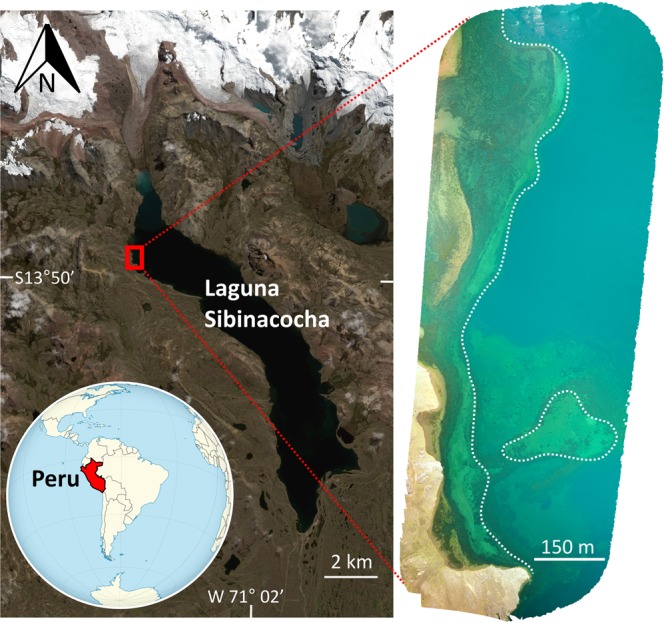
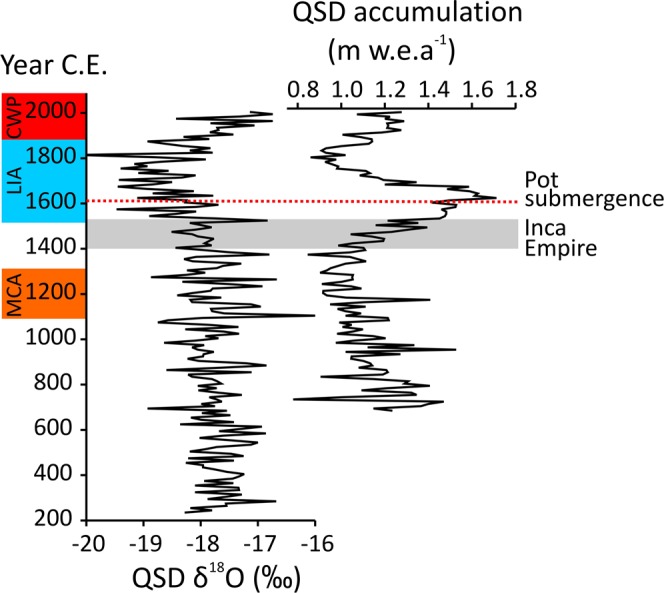
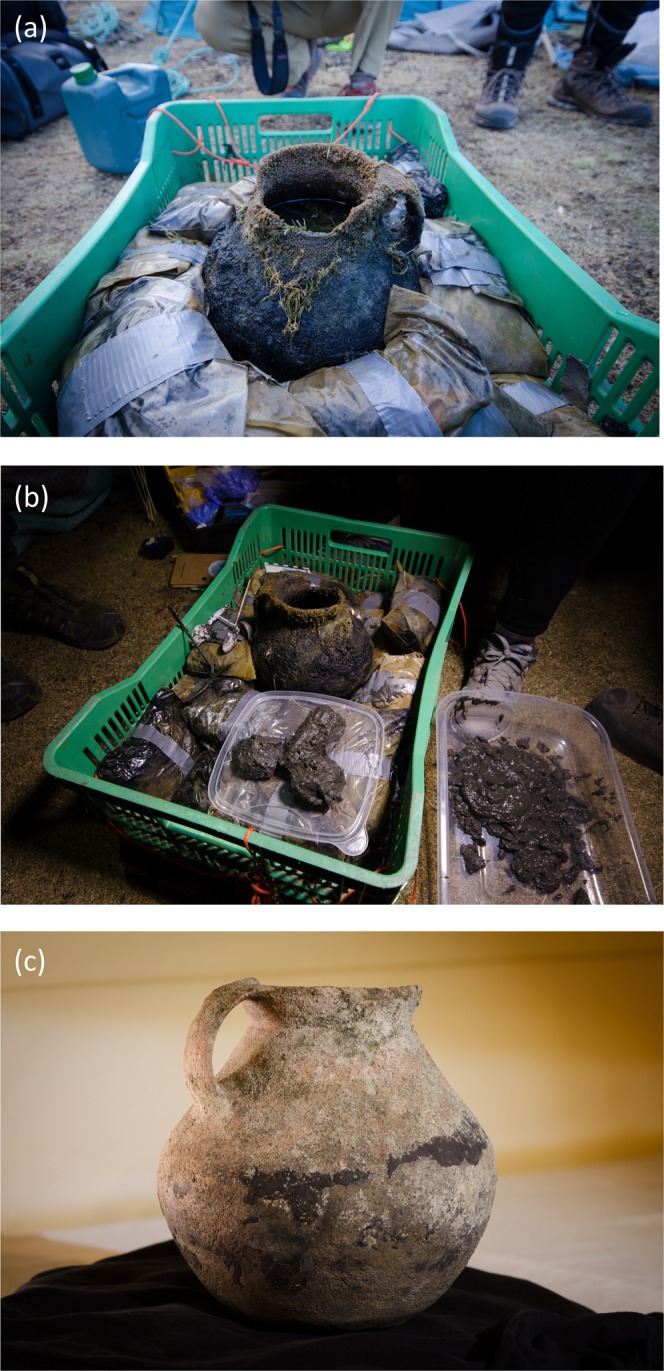
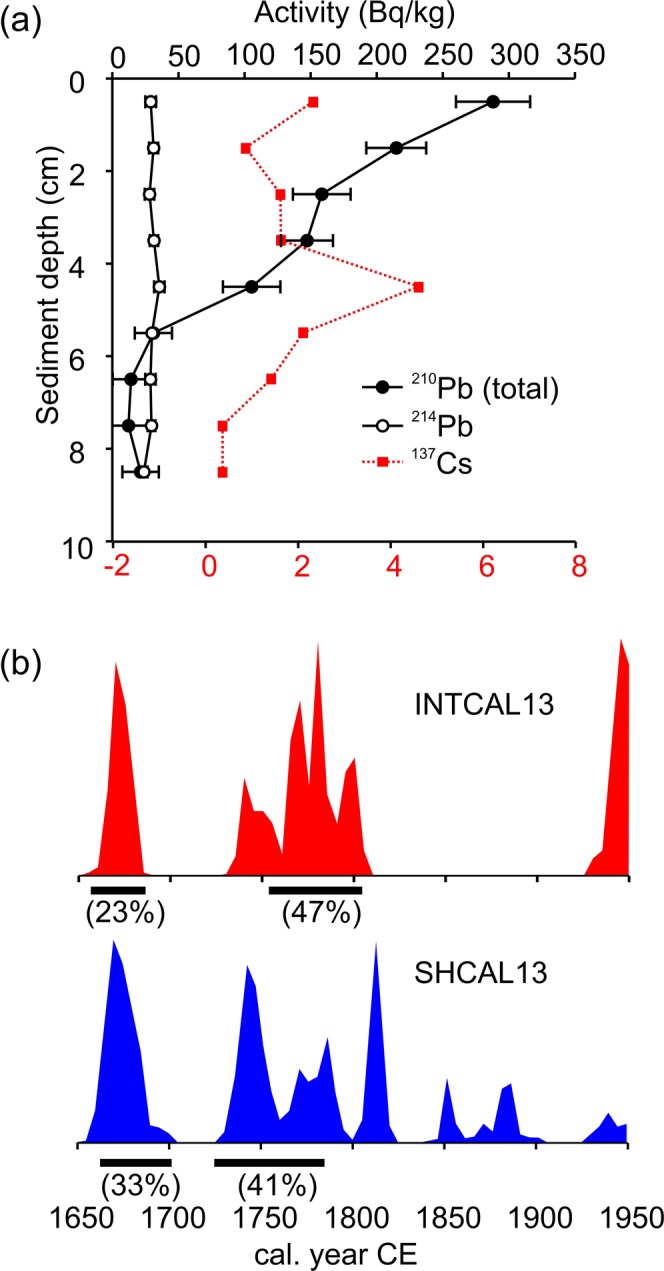
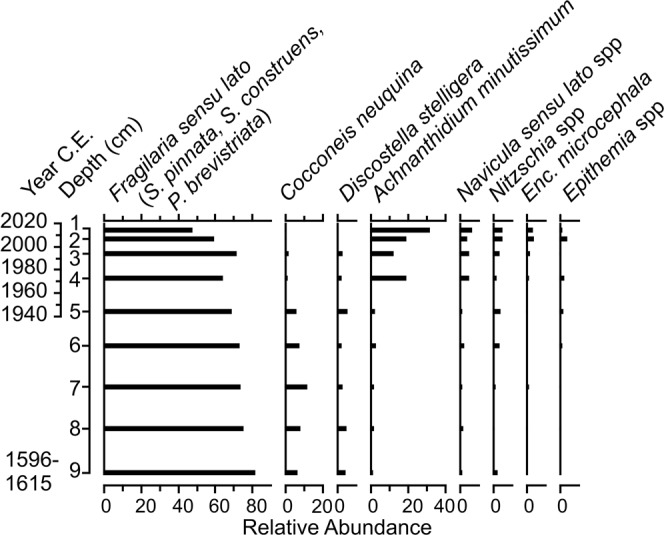
Pre-Hispanic artifacts and sacred architecture were recently discovered submerged in a large lake (Laguna Sibinacocha) in the Peruvian Andes. The underwater ruins indicate a dramatic shift in the region's hydrology but the timing and triggers of this shift remain unknown. In a novel approach blending archaeology and paleoecology, we analyzed a sediment sequence from within one of the recovered artifacts, specifically a pot from the Late Intermediate Period (~1000-1400 CE). Radioisotopic dating of discrete sediment intervals sampled from the pot show a stratigraphically intact profile that preserves a history of change at this site. The pot's basal sediment age places the timing of lake-level rise at ~1600 CE, which post-dates the end of the Inca Empire (1400-1532 CE) by several decades. The ubiquity of planktonic algae throughout the sediment profile suggests water levels remained high above the pot since its submergence. Paleoclimate data from the nearby Quelccaya ice core records indicate lake flooding followed a pronounced wet period beginning ~1520 CE. These data show the permanence of mean state changes in climate on the region's hydrology, with clear implications for the study site (an important water resource for ~500,000 people) and other lakes in the rapidly warming Andes.
最近,在秘鲁安第斯山脉的一个大型湖泊(锡比纳科查湖)中发现了一些前西班牙时期的文物和神圣建筑。水下遗迹表明该地区的水文学发生了巨大变化,但这种变化的时间和触发因素尚不清楚。在一种融合考古学和古生态学的新方法中,我们分析了从一个回收文物(具体来说是来自晚期中间时期的一个罐子)内部的沉积物序列。从罐子里采集的离散沉积物间隔的放射性同位素测年显示,一个地层完整的剖面,保存了该地点变化的历史。罐底沉积物的年龄表明,湖水位上升的时间约为公元 1600 年,比印加帝国(公元 1400-1532 年)的结束晚了几十年。浮游藻类在整个沉积物剖面中的普遍存在表明,自罐子被淹没以来,水位一直保持在罐子上方较高的位置。来自附近奎尔卡亚冰芯记录的古气候数据表明,湖泊泛滥紧随公元 1520 年左右开始的一个明显湿润期之后。这些数据表明,该地区水文学上的气候均值变化是持久的,这对研究地点(约 50 万人的重要水资源)和安第斯山脉迅速变暖的其他湖泊都有明确的影响。