Griffiths Katherine, Michelutti Neal, Sugar Madeline, Douglas Marianne S V, Smol John P
Paleoecological Environmental Assessment and Research Laboratory (PEARL), Department of Biology, Queen's University, Kingston, Ontario, Canada.
PLoS One. 2017 Mar 15;12(3):e0172989. doi: 10.1371/journal.pone.0172989. eCollection 2017.
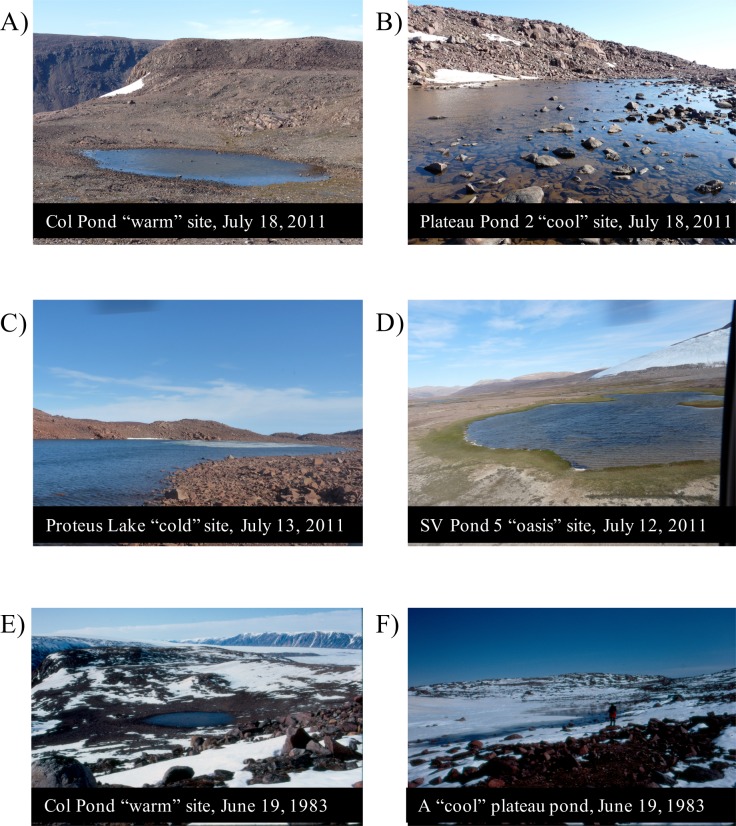
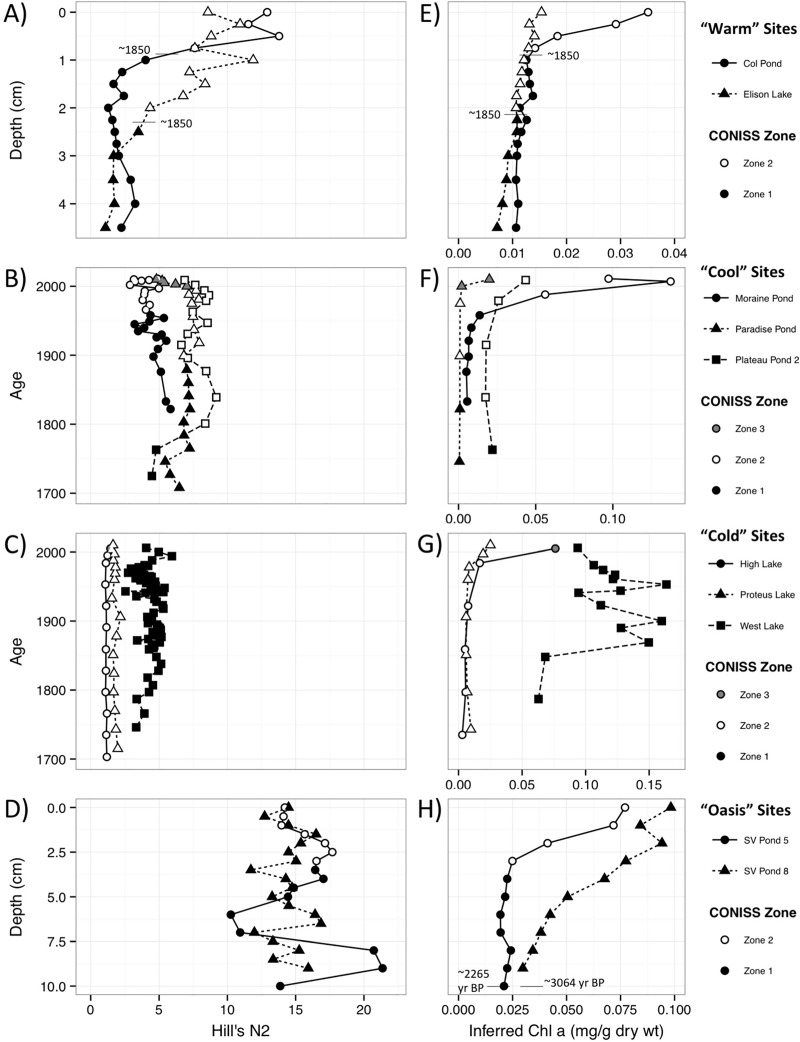
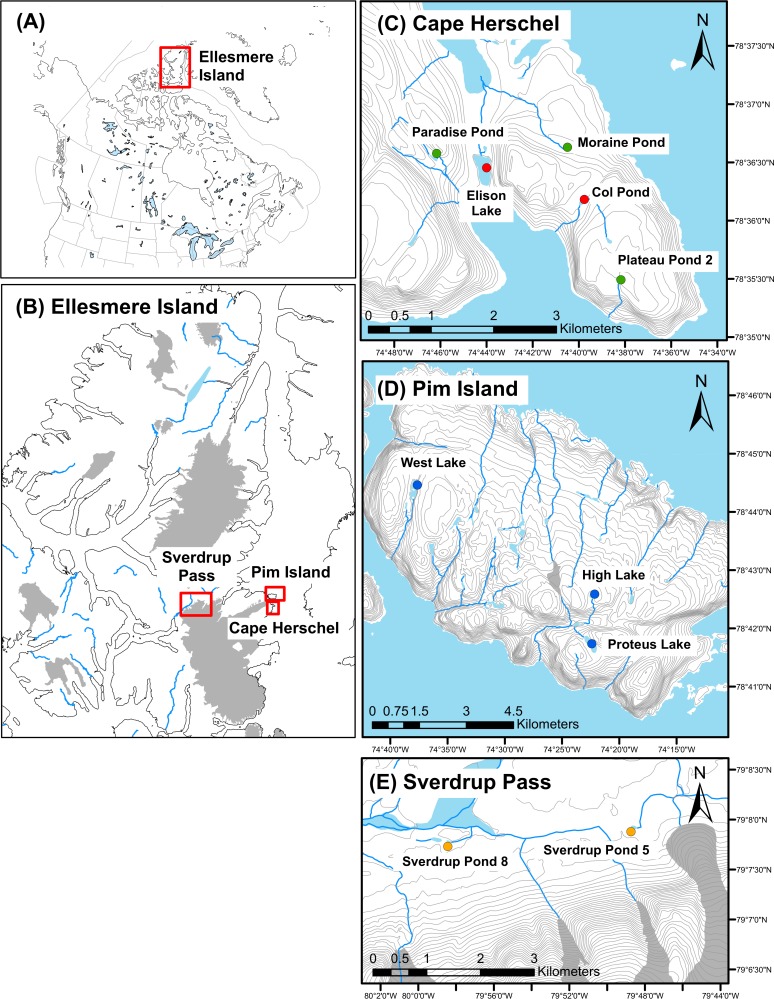
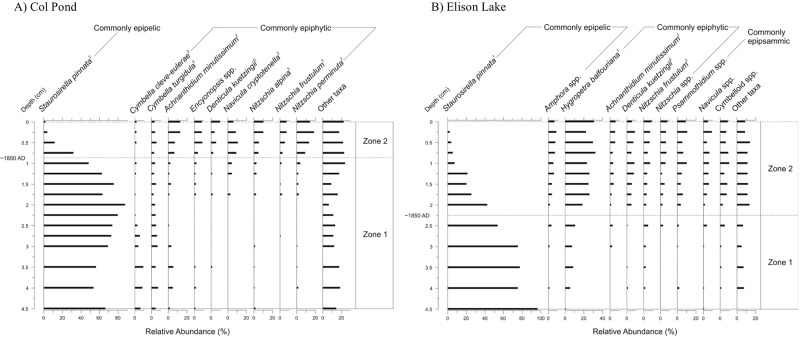
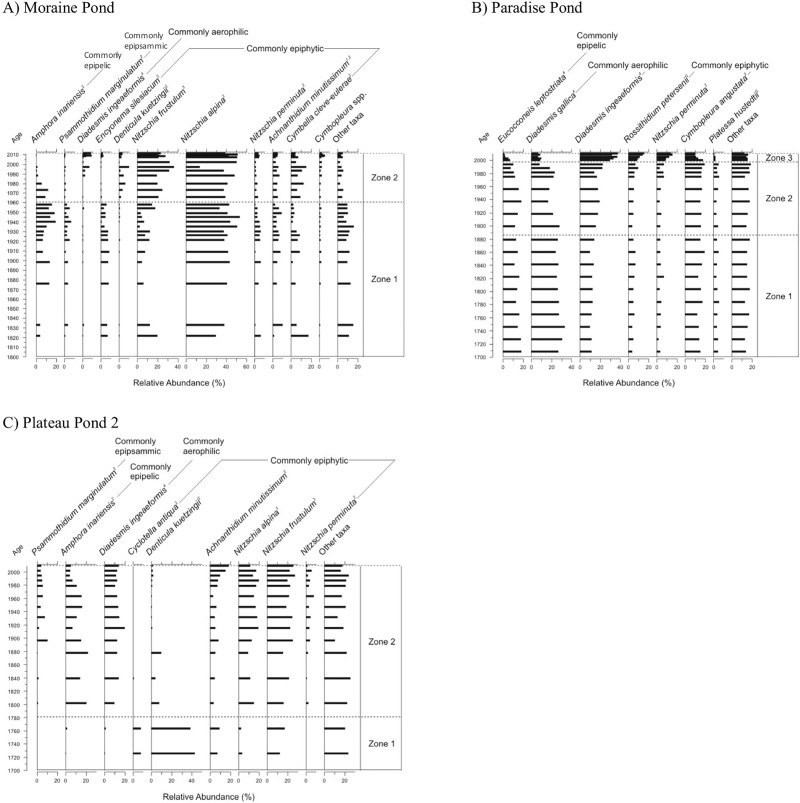
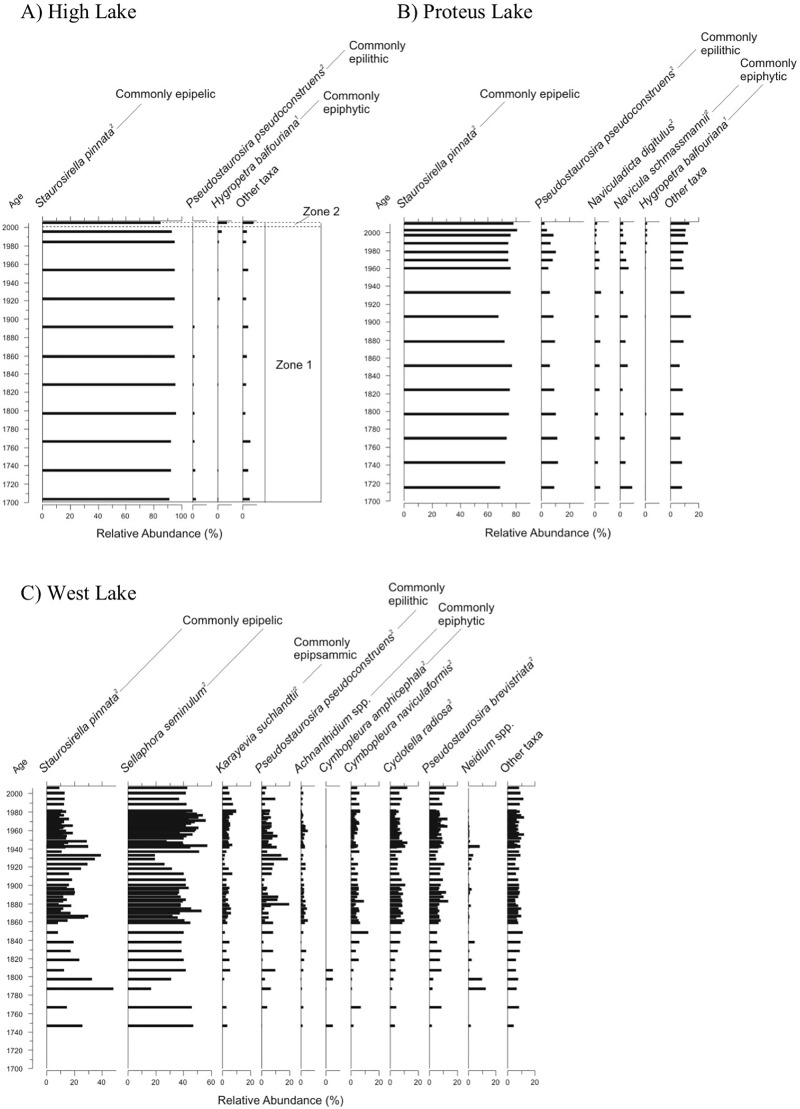
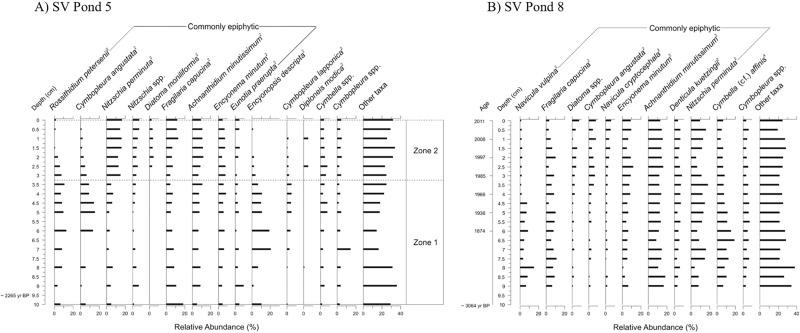
Recent climate change has been especially pronounced in the High Arctic, however, the responses of aquatic biota, such as diatoms, can be modified by site-specific environmental characteristics. To assess if climate-mediated ice cover changes affect the diatom response to climate, we used paleolimnological techniques to examine shifts in diatom assemblages from ten High Arctic lakes and ponds from Ellesmere Island and nearby Pim Island (Nunavut, Canada). The sites were divided a priori into four groups ("warm", "cool", "cold", and "oasis") based on local elevation and microclimatic differences that result in differing lengths of the ice-free season, as well as about three decades of personal observations. We characterized the species changes as a shift from Condition 1 (i.e. a generally low diversity, predominantly epipelic and epilithic diatom assemblage) to Condition 2 (i.e. a typically more diverse and ecologically complex assemblage with an increasing proportion of epiphytic species). This shift from Condition 1 to Condition 2 was a consistent pattern recorded across the sites that experienced a change in ice cover with warming. The "warm" sites are amongst the first to lose their ice covers in summer and recorded the earliest and highest magnitude changes. The "cool" sites also exhibited a shift from Condition 1 to Condition 2, but, as predicted, the timing of the response lagged the "warm" sites. Meanwhile some of the "cold" sites, which until recently still retained an ice raft in summer, only exhibited this shift in the upper-most sediments. The warmer "oasis" ponds likely supported aquatic vegetation throughout their records. Consequently, the diatoms of the "oasis" sites were characterized as high-diversity, Condition 2 assemblages throughout the record. Our results support the hypothesis that the length of the ice-free season is the principal driver of diatom assemblage responses to climate in the High Arctic, largely driven by the establishment of new aquatic habitats, resulting in increased diversity and the emergence of novel growth forms and epiphytic species.
然而,近期气候变化在北极地区尤为显著,而水生生物群落(如硅藻)的反应可能会因特定地点的环境特征而有所改变。为了评估气候介导的冰盖变化是否会影响硅藻对气候的反应,我们运用古湖沼学技术,研究了来自埃尔斯米尔岛和附近皮姆岛(加拿大努纳武特地区)的十个北极地区湖泊和池塘中硅藻组合的变化。根据当地海拔和微气候差异(这些差异导致无冰期长度不同)以及约三十年的个人观察,这些地点被预先分为四组(“温暖”、“凉爽”、“寒冷”和“绿洲”)。我们将物种变化描述为从状态1(即通常多样性较低、主要为附泥型和附石型硅藻组合)到状态2(即通常更多样化且生态更复杂、附生物种比例增加的组合)的转变。从状态1到状态2的这种转变是在经历冰盖随变暖而变化的各个地点记录到的一致模式。“温暖”地点是夏季最早失去冰盖的地点之一,记录到的变化最早且幅度最大。“凉爽”地点也表现出从状态1到状态2的转变,但正如预期那样,反应时间滞后于“温暖”地点。同时,一些“寒冷”地点直到最近夏季仍保留着冰筏,仅在最上层沉积物中表现出这种转变。较温暖的“绿洲”池塘在其整个记录期内可能都有水生植被。因此,“绿洲”地点的硅藻在整个记录期内都具有高多样性的状态2组合特征。我们的结果支持这样一种假设,即无冰期的长度是北极地区硅藻组合对气候变化反应的主要驱动因素,这在很大程度上是由新的水生栖息地的形成所驱动的,导致多样性增加以及新的生长形式和附生物种的出现。