Loosli Frederic, Wang Jingjing, Rothenberg Sarah, Bizimis Michael, Winkler Christopher, Borovinskaya Olga, Flamigni Luca, Baalousha Mohammed
Department of Environmental Health Sciences, Center for Environmental Nanoscience and Risk, Arnold School of Public Health, University of South Carolina, Columbia, South Carolina, United States.
School of Biological and Population Health Sciences, Oregon State University, Corvallis, Oregon, USA.
Environ Sci Nano. 2019 Mar 1;6(3):763-777. doi: 10.1039/C8EN01376D. Epub 2019 Jan 28.
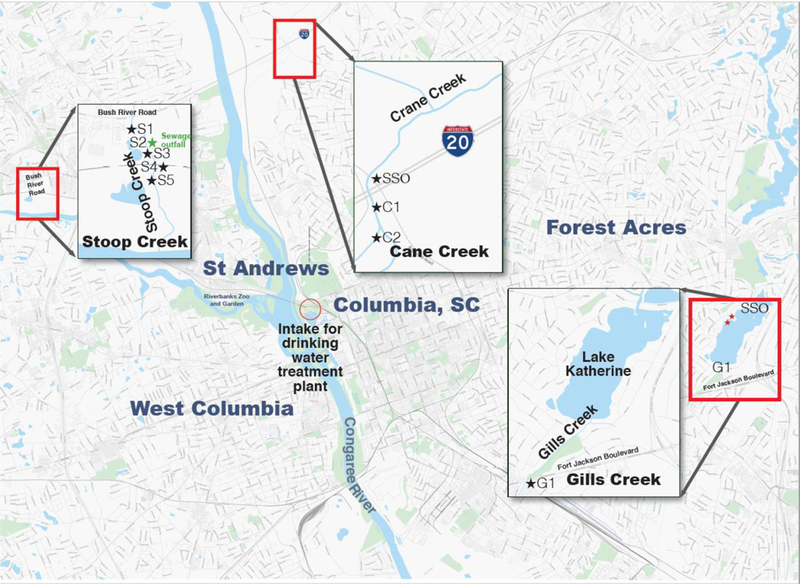
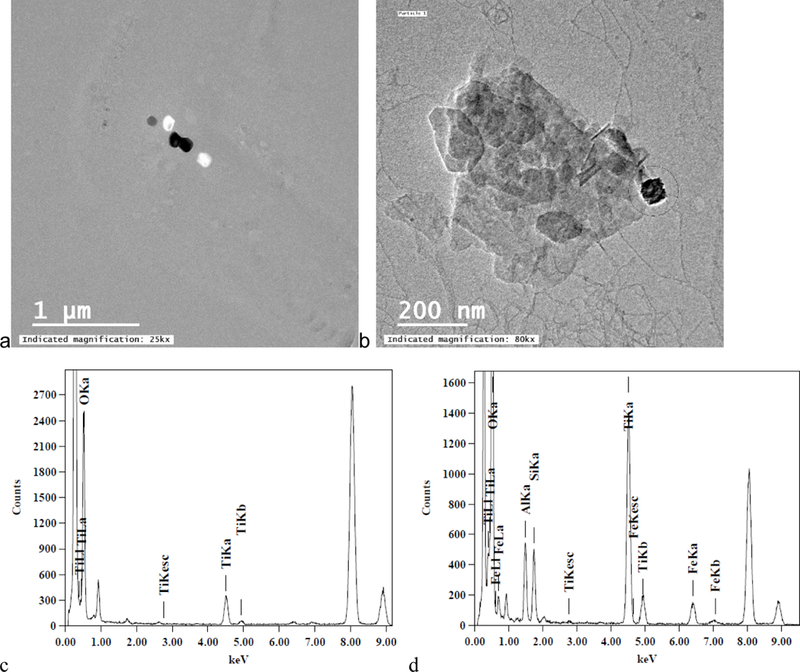
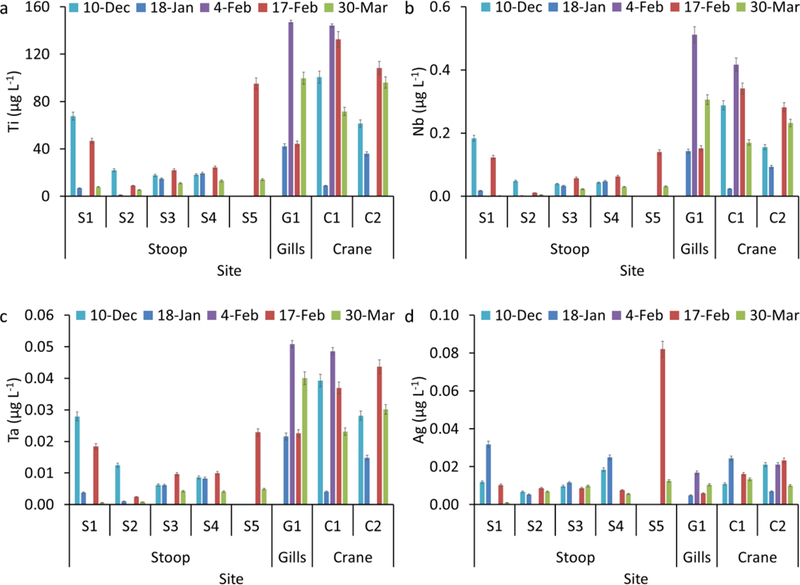
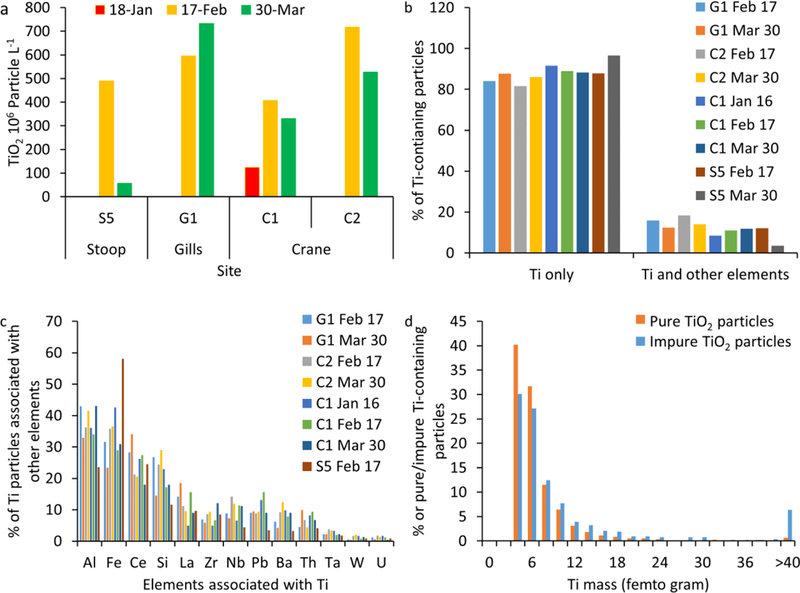
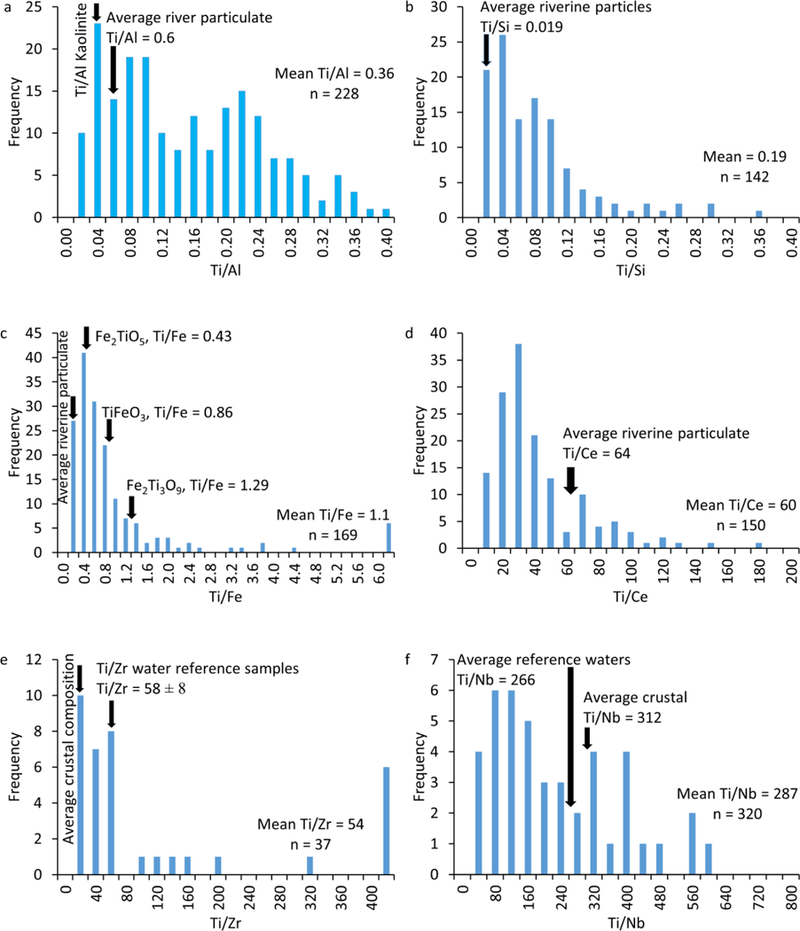
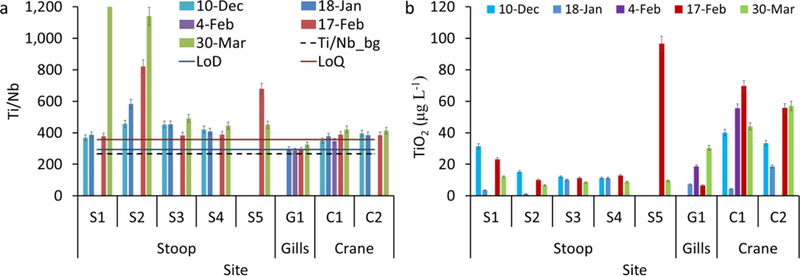
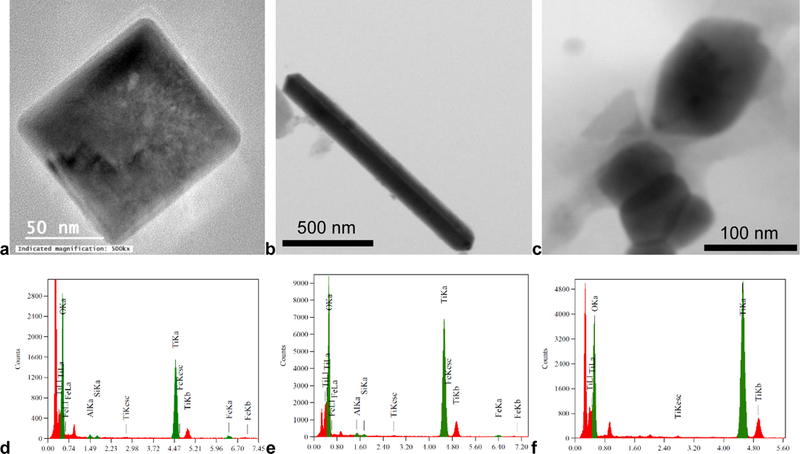
Sanitary sewer overflows (SSOs) are a common problem across the United States. An estimated 23,000-75,000 SSOs occurred annually in 2004 discharging between 11 and 38 billion liters of untreated wastewater to receiving waters. SSOs release many contaminants, including engineered nanomaterials (ENMs), to receiving water bodies. Measuring ENM concentrations in environmental samples remains a key challenge in environmental nanotechnology and requires the distinction between natural and engineered particles. This distinction between natural and engineered particles is often hampered by the similarities in the intrinsic properties of natural and engineered particles such as particle size, composition, density, surface chemistry, and by the limitations of the available nanometrology tools. To overcome these challenges, we applied a multi-method approach to measure the concentrations and properties of TiO engineered particles ( ENMs and pigments) including 1) multi-element single particle-inductively coupled plasma-mass spectrometry (ME-SP-ICP-MS) to identify elemental associations and to determine elemental ratios in natural particles, 2) total elemental concentrations and ratios calculated from total metal concentrations measured following total sample digestion to estimate engineered particle concentrations, and 3) transmission electron microscopy (TEM) to characterize engineered particle size and morphology. ME-SP-ICP-MS analysis revealed that natural TiO particles are often associated with at least one of the following elements Al, Fe, Ce, Si, La, Zr, Nb, Pb, Ba, Th, Ta, W and U, and that elemental ratios of Ti to these elements is typical of riverine particulates and the average crustal ratios, except for Pb likely due to anthropogenic Pb contamination. High TiO engineered particle concentrations up to 100 μg L were found in SSOs-impacted surface waters. TEM analysis demonstrated the presence of regular-shape TiO particles in SSOs-impacted surface waters. This study provides a comprehensive approach for measuring TiO engineered particle concentrations in surface waters. The quantitative data produced in this work can be used as input for modeling studies and pave the road toward routine monitoring of ENMs in environmental systems, validation of ENM fate models, and more accurate ENM exposure and risk assessment.
生活污水溢流(SSOs)是美国普遍存在的问题。2004年,估计每年发生23000 - 75000次生活污水溢流,向受纳水体排放110亿至380亿升未经处理的废水。生活污水溢流会向受纳水体释放许多污染物,包括工程纳米材料(ENMs)。测量环境样品中的工程纳米材料浓度仍然是环境纳米技术中的一项关键挑战,并且需要区分天然颗粒和工程颗粒。天然颗粒和工程颗粒在诸如粒径、组成、密度、表面化学等固有特性方面的相似性,以及现有纳米计量工具的局限性,常常阻碍了这种天然颗粒与工程颗粒之间的区分。为了克服这些挑战,我们应用了一种多方法来测量二氧化钛工程颗粒(工程纳米材料和颜料)的浓度和特性,包括:1)多元素单颗粒电感耦合等离子体质谱法(ME-SP-ICP-MS),以识别元素关联并确定天然颗粒中的元素比率;2)根据总样品消解后测得的总金属浓度计算总元素浓度和比率,以估计工程颗粒浓度;3)透射电子显微镜(TEM),以表征工程颗粒的大小和形态。ME-SP-ICP-MS分析表明,天然二氧化钛颗粒通常与以下至少一种元素相关联:铝、铁、铈、硅、镧、锆、铌、铅、钡、钍、钽、钨和铀,并且钛与这些元素的元素比率是典型的河流颗粒物和平均地壳比率,铅可能是由于人为铅污染除外。在受生活污水溢流影响的地表水中发现了高达100μg/L的高浓度二氧化钛工程颗粒。TEM分析表明,在受生活污水溢流影响的地表水中存在形状规则的二氧化钛颗粒。本研究提供了一种测量地表水中二氧化钛工程颗粒浓度的综合方法。这项工作产生的定量数据可作为模型研究的输入,并为环境系统中工程纳米材料的常规监测、工程纳米材料归宿模型的验证以及更准确的工程纳米材料暴露和风险评估铺平道路。