Department of Regional Medicine and Education, Asahikawa Medical University, 2-1-1-1 Midorigaoka-Higashi, Asahikawa, Hokkaido, 078-8510, Japan.
Division of Gastroenterology and Hematology/Oncology, Department of Medicine, Asahikawa Medical University, 2-1-1-1 Midorigaoka-Higashi, Asahikawa, Hokkaido, 078-8510, Japan.
Sci Rep. 2019 Dec 20;9(1):19603. doi: 10.1038/s41598-019-56132-4.
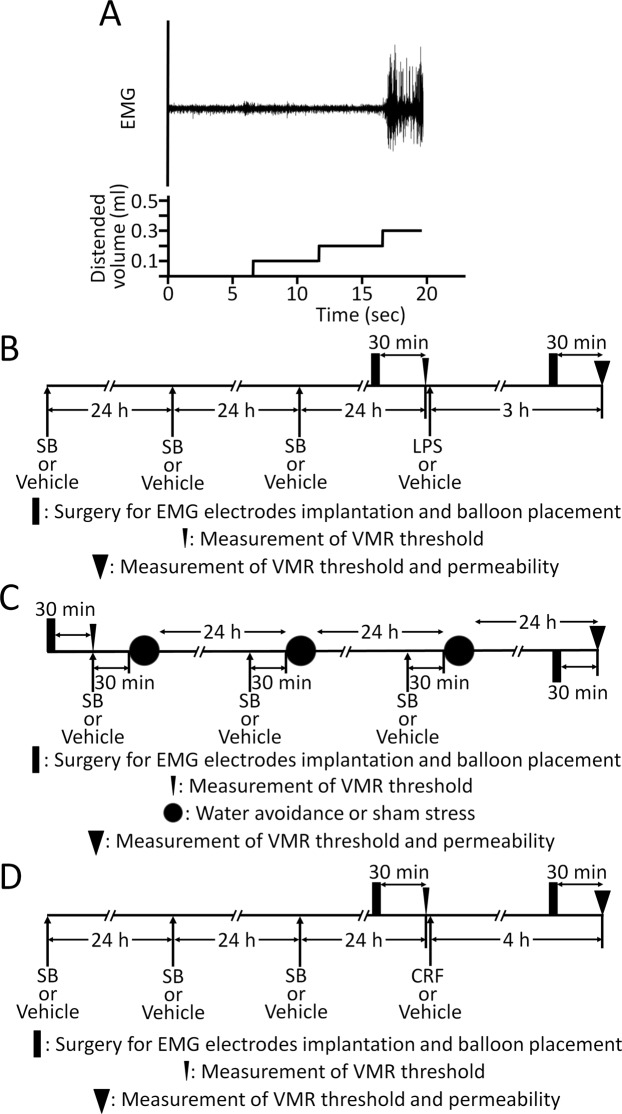
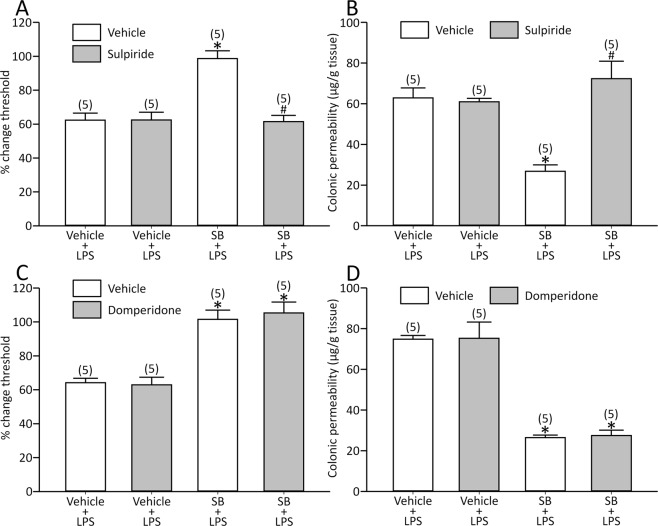
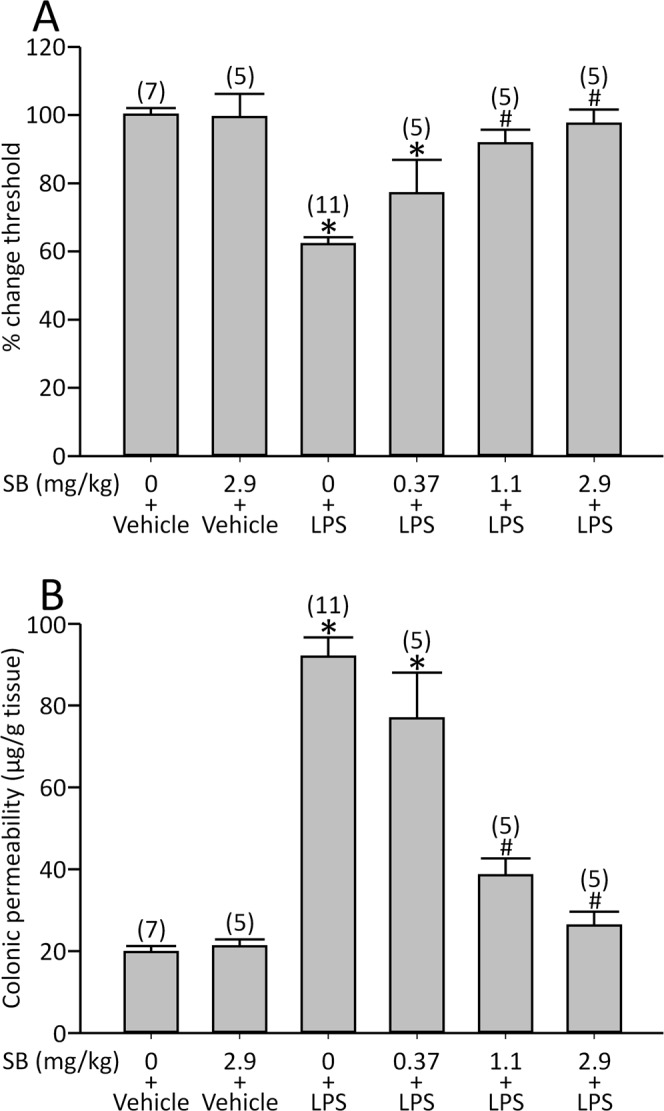
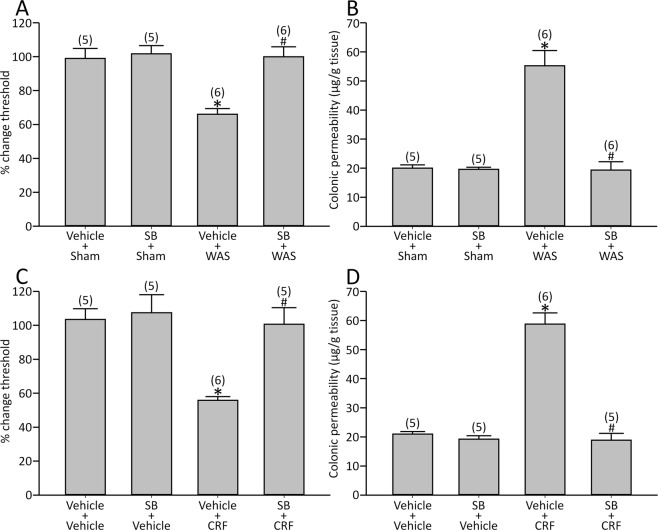
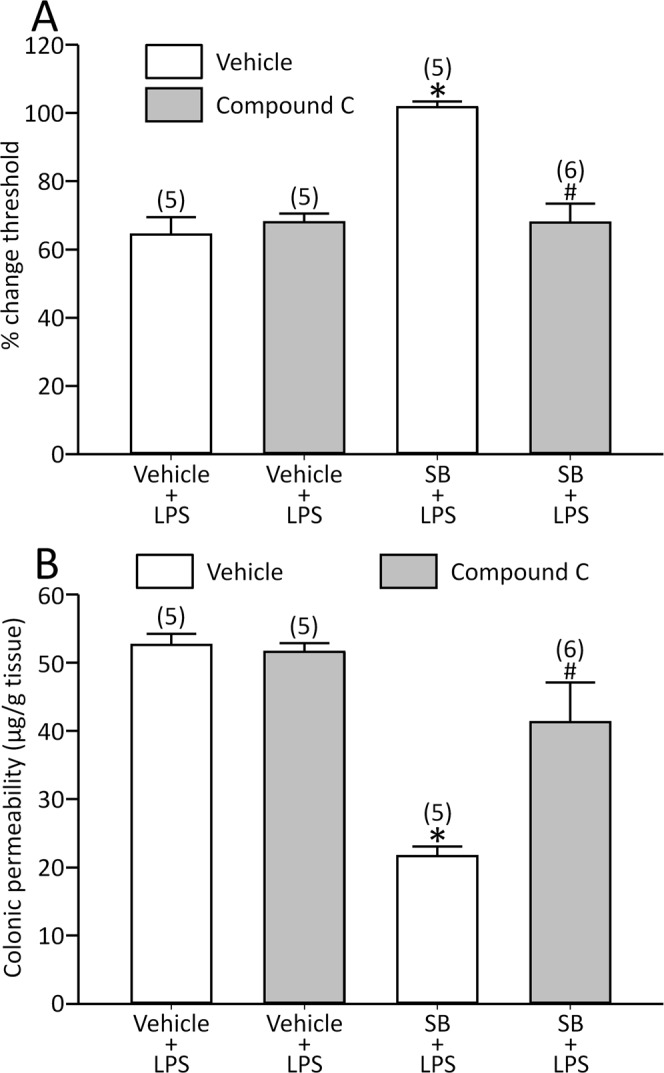
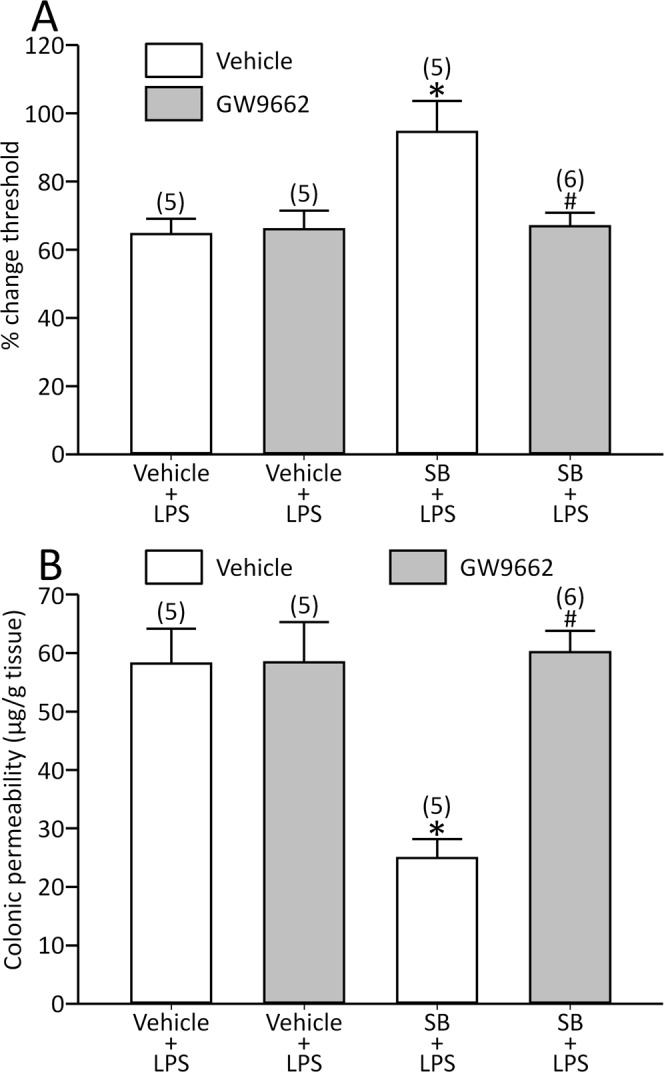
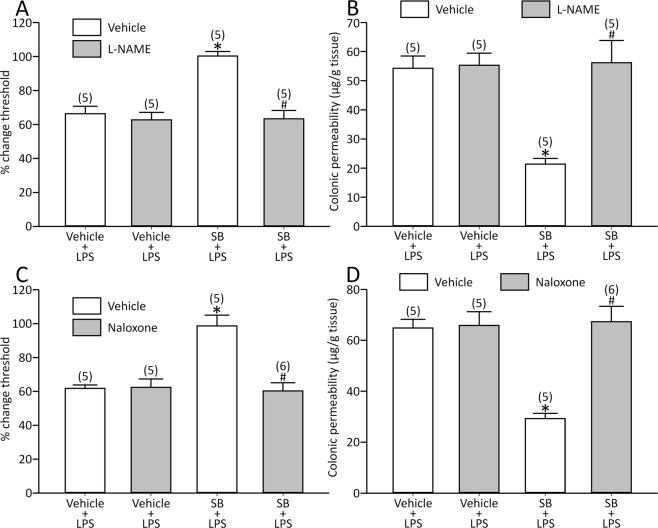
Lipopolysaccharide (LPS) or repeated water avoidance stress (WAS) induces visceral allodynia and gut hyperpermeability via corticotropin-releasing factor (CRF) and proinflammatory cytokines, which is a rat irritable bowel syndrome (IBS) model. As butyrate is known to suppress the release of proinflammatory cytokine, we hypothesized that butyrate alleviates these colonic changes in IBS models. The visceral pain was assessed by electrophysiologically measuring the threshold of abdominal muscle contractions in response to colonic distention. Colonic permeability was determined by measuring the absorbance of Evans blue in colonic tissue. Colonic instillation of sodium butyrate (SB; 0.37-2.9 mg/kg) for 3 days inhibited LPS (1 mg/kg)-induced visceral allodynia and colonic hyperpermeability dose-dependently. Additionally, the visceral changes induced by repeated WAS (1 h for 3 days) or CRF (50 µg/kg) were also blocked by SB. These effects of SB in the LPS model were eliminated by compound C, an AMPK inhibitor, or GW9662, a PPAR-γ antagonist, N-nitro-L-arginine methyl ester, a NO synthesis inhibitor, naloxone or sulpiride. SB attenuated visceral allodynia and colonic hyperpermeability in animal IBS models. These actions may be AMPK and PPAR-γ dependent and also mediated by the NO, opioid and central dopamine D pathways. Butyrate may be effective for the treatment of IBS.
脂多糖(LPS)或反复水回避应激(WAS)通过促肾上腺皮质释放因子(CRF)和促炎细胞因子诱导内脏痛觉过敏和肠道通透性增加,这是一种大鼠肠易激综合征(IBS)模型。由于丁酸盐已知可抑制促炎细胞因子的释放,我们假设丁酸盐可缓解 IBS 模型中的这些结肠变化。通过电生理测量对结肠扩张反应的腹肌收缩阈值来评估内脏疼痛。通过测量结肠组织中 Evans 蓝的吸光度来确定结肠通透性。连续 3 天结肠内灌注丁酸钠(SB;0.37-2.9mg/kg)可剂量依赖性抑制 LPS(1mg/kg)诱导的内脏痛觉过敏和结肠高通透性。此外,反复 WAS(3 天 1 小时)或 CRF(50µg/kg)引起的内脏变化也被 SB 阻断。在 LPS 模型中,SB 的这些作用被 AMPK 抑制剂化合物 C 或 PPAR-γ 拮抗剂 GW9662、NO 合成抑制剂 N-硝基-L-精氨酸甲酯、纳洛酮或舒必利消除。SB 减轻了动物 IBS 模型中的内脏痛觉过敏和结肠高通透性。这些作用可能依赖于 AMPK 和 PPAR-γ,并且还通过 NO、阿片和中枢多巴胺 D 途径介导。丁酸盐可能对治疗 IBS 有效。