Department of Anesthesia, Perioperative and Pain Medicine, Stanford University, School of Medicine, Stanford, CA, 94305, USA.
Anesthesiology Service, Veterans Affairs Palo Alto Health Care System, 3801 Miranda Ave (112-A), Palo Alto, CA, 94304, USA.
Sci Rep. 2019 Dec 20;9(1):19500. doi: 10.1038/s41598-019-55739-x.
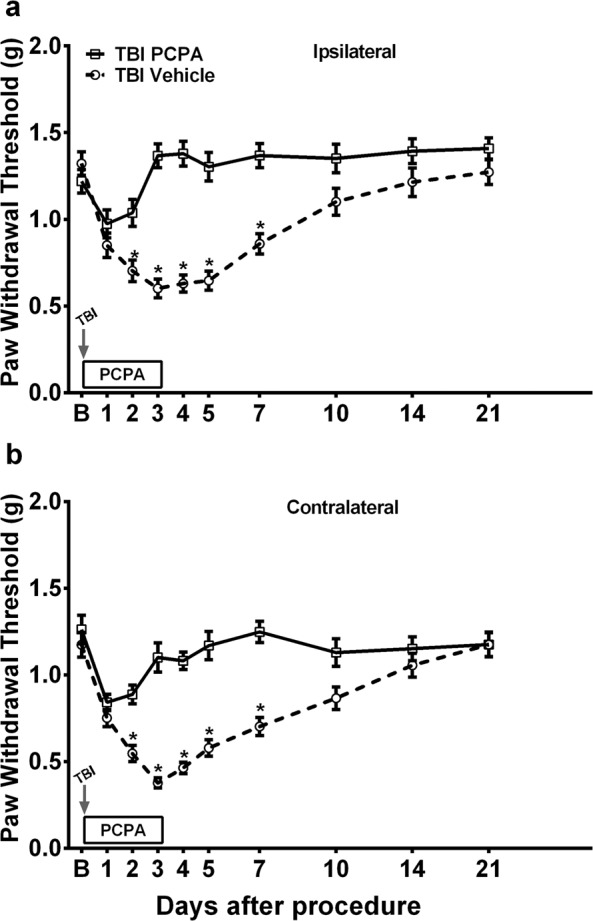
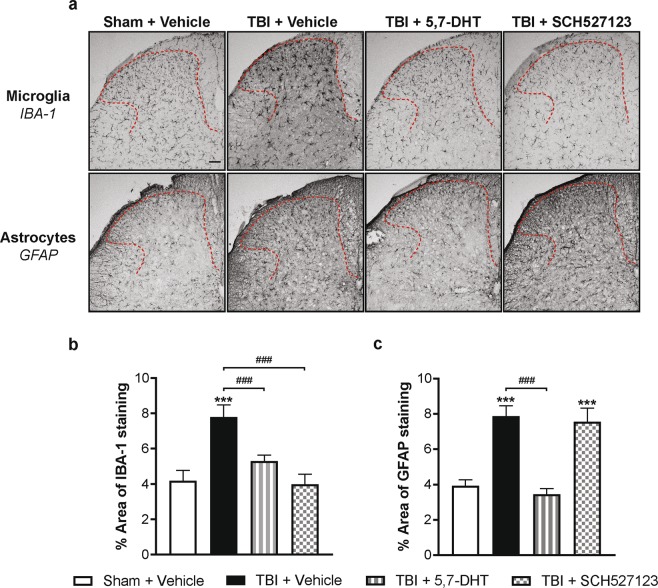
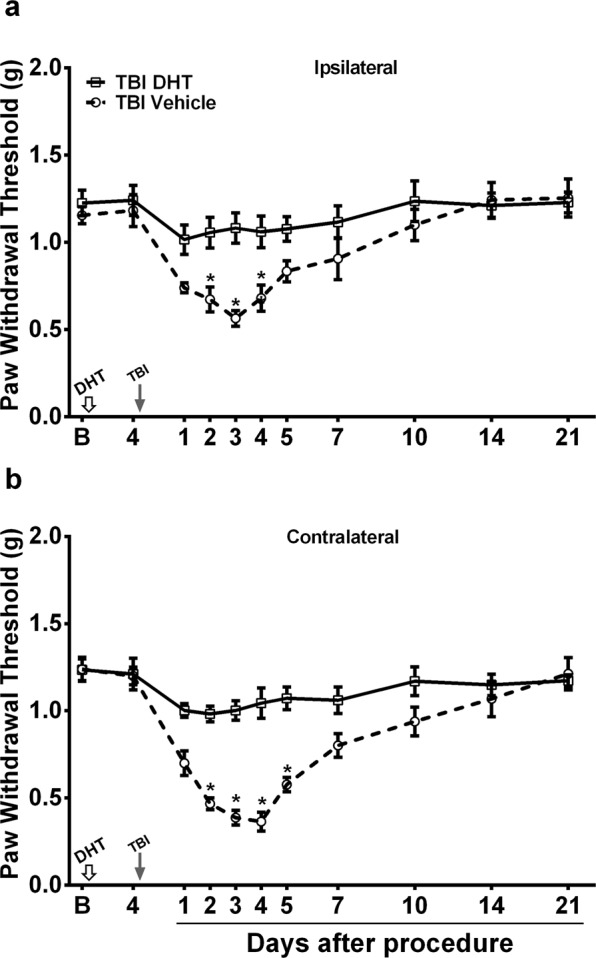
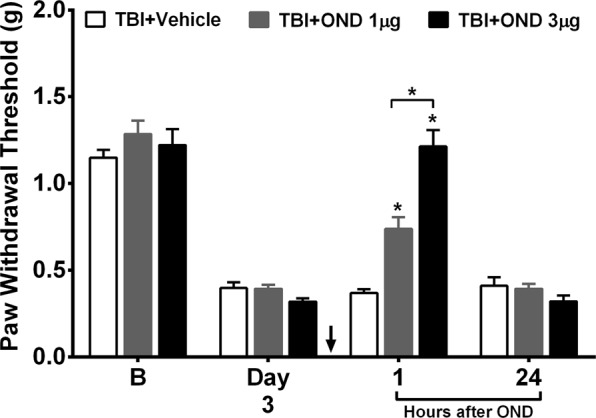
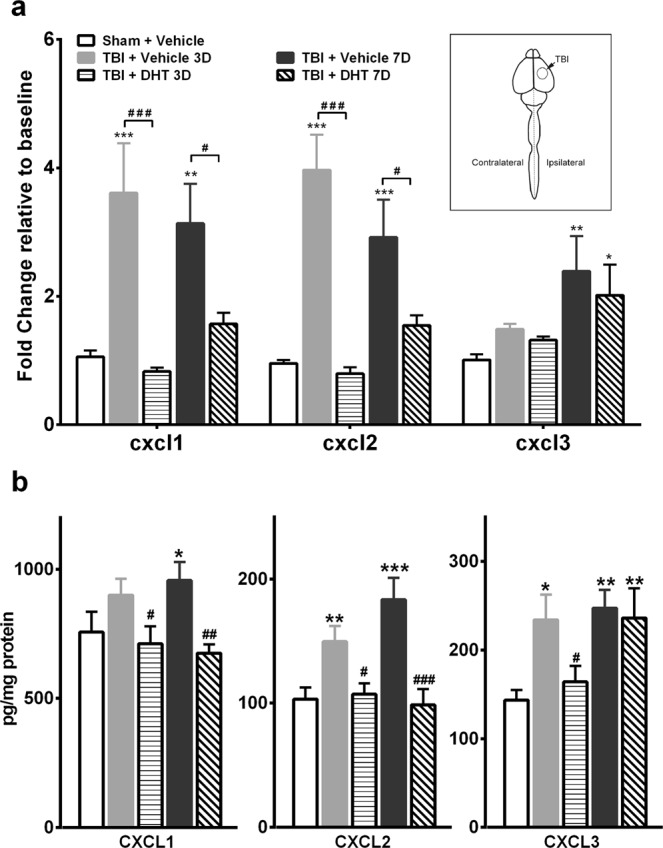
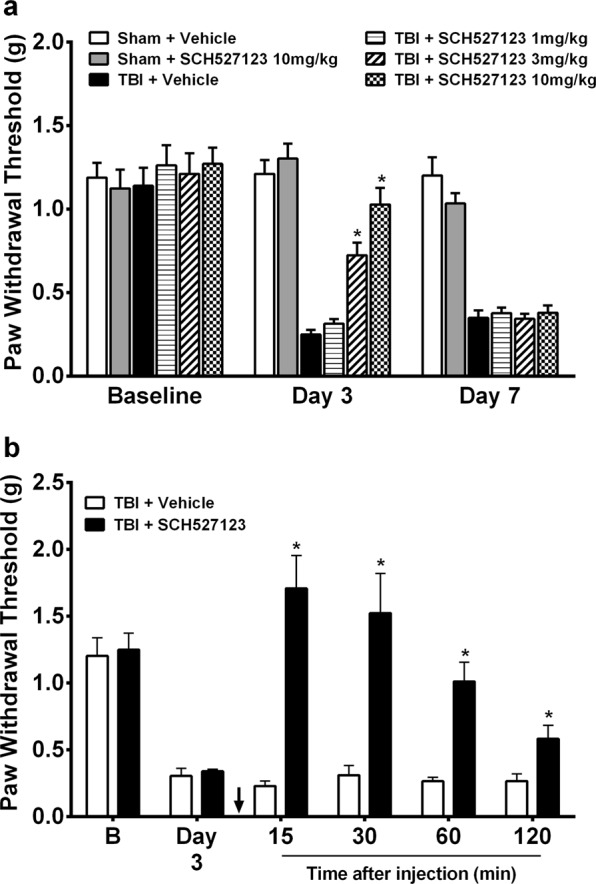
High rates of acute and chronic pain are associated with traumatic brain injury (TBI), but mechanisms responsible for the association remain elusive. Recent data suggest dysregulated descending pain modulation circuitry could be involved. Based on these and other observations, we hypothesized that serotonin (5-HT)-dependent activation of spinal CXC Motif Chemokine Receptor 2 (CXCR2) may support TBI-related nociceptive sensitization in a mouse model of mild TBI (mTBI). We observed that systemic 5-HT depletion with p-chlorophenylalanine attenuated mechanical hypersensitivity seen after mTBI. Likewise, selective spinal 5-HT fiber depletion with 5,7-dihydroxytryptamine (5,7-DHT) reduced hypersensitivity after mTBI. Consistent with a role for spinal 5-HT serotonin receptors, intrathecal ondansetron administration after TBI dose-dependently attenuated nociceptive sensitization. Also, selective CXCR2 antagonist SCH527123 treatment attenuated mechanical hypersensitivity after mTBI. Furthermore, spinal CXCL1 and CXCL2 mRNA and protein levels were increased after mTBI as were GFAP and IBA-1 markers. Spinal 5,7-DHT application reduced both chemokine expression and glial activation. Our results suggest dual pathways for nociceptive sensitization after mTBI, direct 5-HT effect through 5-HT receptors and indirectly through upregulation of chemokine signaling. Designing novel clinical interventions against either the 5-HT mediated component or chemokine pathway may be beneficial in treating pain frequently seen in patients after mTBI.
急性和慢性疼痛的发生率与创伤性脑损伤(TBI)有关,但导致这种关联的机制仍不清楚。最近的数据表明,调节异常的下行疼痛调制回路可能与之相关。基于这些和其他观察结果,我们假设 5-羟色胺(5-HT)依赖性激活脊髓 CXC 基序趋化因子受体 2(CXCR2)可能在轻度 TBI(mTBI)的小鼠模型中支持与 TBI 相关的伤害感受敏化。我们观察到,用对氯苯丙氨酸进行全身 5-HT 耗竭可减轻 mTBI 后出现的机械性超敏反应。同样,用 5,7-二羟基色胺(5,7-DHT)选择性地耗竭脊髓 5-HT 纤维也可减轻 mTBI 后的超敏反应。与脊髓 5-HT 血清素受体的作用一致,TBI 后鞘内给予昂丹司琼可剂量依赖性地减轻伤害感受敏化。此外,选择性 CXCR2 拮抗剂 SCH527123 治疗可减轻 mTBI 后的机械性超敏反应。此外,mTBI 后脊髓 CXCL1 和 CXCL2 的 mRNA 和蛋白水平升高,GFAP 和 IBA-1 标志物也升高。脊髓 5,7-DHT 应用可降低趋化因子表达和神经胶质激活。我们的结果表明,mTBI 后伤害感受敏化存在两种途径,即 5-HT 受体介导的直接 5-HT 作用和通过上调趋化因子信号的间接作用。针对 5-HT 介导的成分或趋化因子途径设计新的临床干预措施可能有益于治疗 mTBI 后经常出现的疼痛。