Omidi Marjan, Khalili Mohammad Ali, Halvaei Iman, Montazeri Fatemeh, Kalantar Seyed Mehdi
Research and Clinical Center for Infertility, Yazd Reproductive Sciences Institute, Shahid Sadoughi University of Medical Sciences, Yazd, Iran.
Research and Clinical Center for Infertility, Yazd Reproductive Sciences Institute, Shahid Sadoughi University of Medical Sciences, Yazd, Iran. Electronic Address:
Cell J. 2020 Oct;22(3):367-374. doi: 10.22074/cellj.2020.6717. Epub 2019 Dec 15.
The aim of this study was to screen the potential of human embryos to develop into expanding blastocysts following embryo splitting and then assess the quality of the generated blastocysts based on chromosomal characteristics and using morphokinetics.
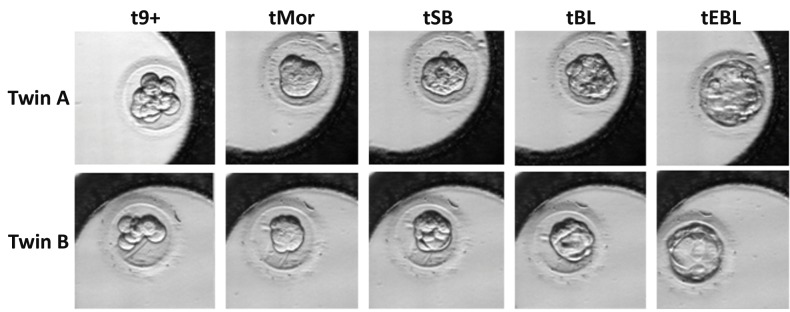
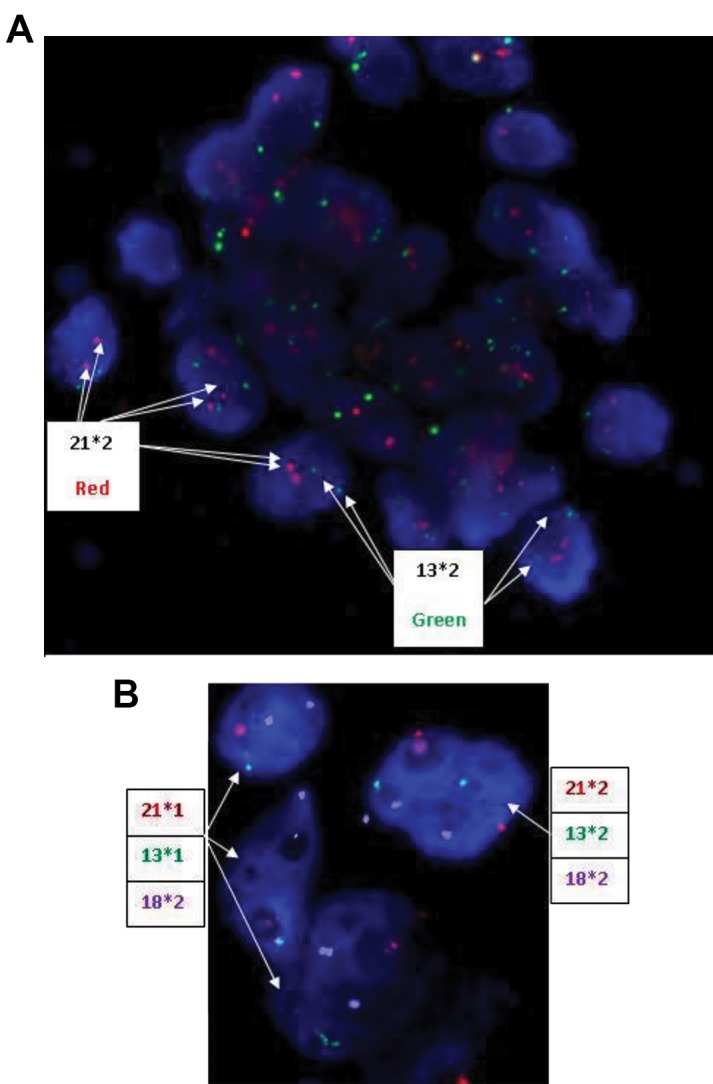
In this experimental study, a total of 82 good quality cleavage-stage donated embryos (8- 14 cells) were used (24 embryos were cultured to the blastocyst stage as controls and 58 embryos underwent splitting). After splitting, the blastomere donor and blastomere recipient embryos were named twin A and twin B, respectively. Morphokinetics and morphological parameters were evaluated using a time-lapse system in the blastocysts developed from twin embryos. Aneuploidy of chromosomes 13, 15, 16, 18, 21, 22, X and Y were analyzed in the twin blastocysts.
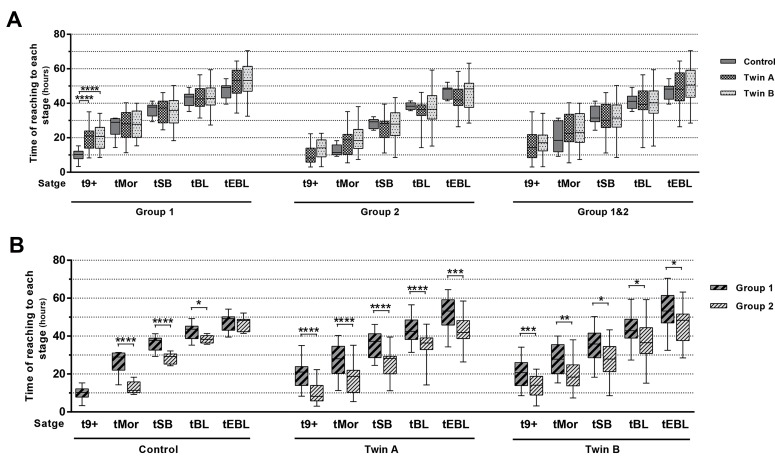
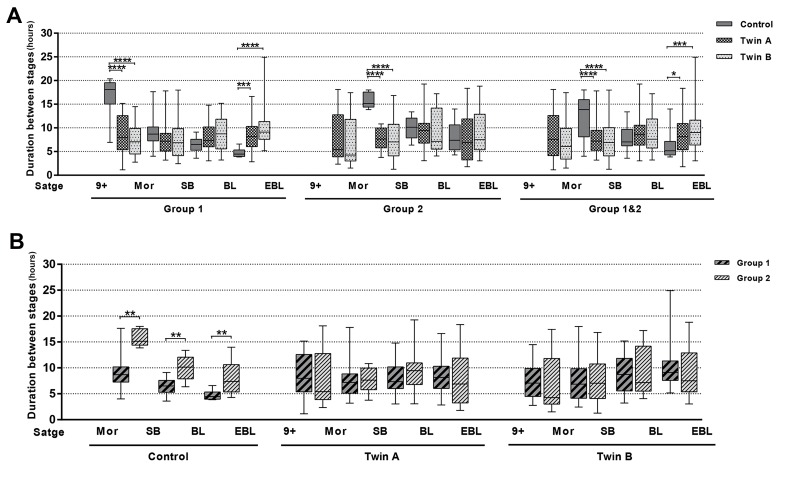
Following splitting, of the 116 resulting twin embryos, 80 (69%) developed to the expanded blastocyst (EBL) stage compared to 21 (87.5%) embryos in the control group (P>0.05). The morphokinetics analysis suggested that the developmental time-points were influenced by the splitting. Moreover, the blastocysts developed from A and B twins had impaired morphology compared to controls. Regarding chromosome abnormalities, there was no significant difference in the rate of aneuploidy or mosaicism between the different groups.
This study showed that while no chromosomal abnormalities were seen, embryo splitting may affect the embryo morphokinetics.
本研究旨在筛选人类胚胎在胚胎分割后发育为扩张囊胚的潜力,然后根据染色体特征并利用胚胎发育时间动态变化评估所产生囊胚的质量。
在本实验研究中,共使用了82个优质卵裂期捐赠胚胎(8 - 14细胞)(24个胚胎培养至囊胚期作为对照,58个胚胎进行分割)。分割后,卵裂球供体胚胎和卵裂球受体胚胎分别命名为双胞胎A和双胞胎B。使用延时系统评估双胞胎胚胎发育成的囊胚的胚胎发育时间动态变化和形态学参数。对双胞胎囊胚的13、15、16、18、21、22、X和Y染色体非整倍体进行分析。
分割后,116个产生的双胞胎胚胎中,80个(69%)发育到扩张囊胚(EBL)阶段,而对照组为21个(87.5%)胚胎(P>0.05)。胚胎发育时间动态变化分析表明,发育时间点受分割影响。此外,与对照组相比,由A和B双胞胎发育而来的囊胚形态受损。关于染色体异常,不同组之间非整倍体或嵌合体发生率无显著差异。
本研究表明,虽然未观察到染色体异常,但胚胎分割可能会影响胚胎发育时间动态变化。