
及时干预:减少马拉维早产的干预措施叙事性综述。
A stitch in time: narrative review of interventions to reduce preterm births in Malawi.
机构信息
UCL Institute for Global Health, 30 Guilford Street, London WC1N 1EH, UK.
出版信息
Int Health. 2020 May 1;12(3):213-221. doi: 10.1093/inthealth/ihz101.
BACKGROUND
The rising rate of preterm births (PTBs) is a global concern, and Malawi has a high rate of PTBs (10.5%). The resulting neonatal and under-5 mortality, morbidity and lifelong disability represent a significant loss of human potential affecting individuals, families and society as a whole. This study aims to review the literature to determine the risk factors for PTB in Malawi and to identify effective interventions to prevent PTBs.
METHODS
A literature search yielded 22 studies that were categorized according to risk factors implicated for PTBs and health interventions to reduce the risks.
RESULTS
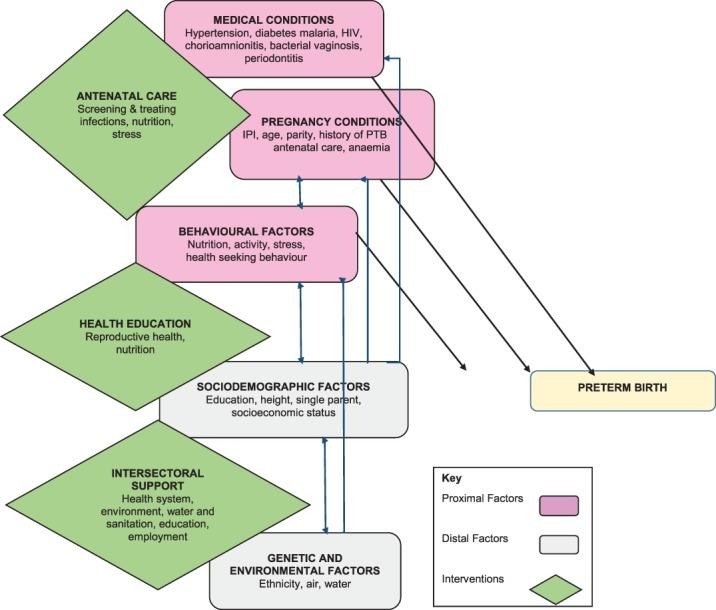
The study has shown that maternal pregnancy factors, infections, nutrition, anaemia and young maternal age are the main causes and risk factors of PTBs in Malawi. The literature revealed no evidence of community-based interventions for reducing the rates of PTBs in Malawi.
CONCLUSIONS
Any successful effort to reduce the rate of PTBs will require a multisector, multilevel strategy targeted at the community, homes and individuals as a package to improve the education, nutrition and reproductive health of girls and women as well as focus on improving the delivery of antenatal services in the community.
背景
早产率(PTBs)的上升是一个全球性问题,马拉维的早产率很高(10.5%)。由此导致的新生儿和 5 岁以下儿童死亡、发病和终身残疾,是对个人、家庭和整个社会的重大人力损失。本研究旨在回顾文献,以确定马拉维早产的风险因素,并确定预防早产的有效干预措施。
方法
文献检索产生了 22 项研究,这些研究根据与早产相关的风险因素和降低风险的健康干预措施进行了分类。
结果
研究表明,母亲的妊娠因素、感染、营养、贫血和母亲年龄较小是马拉维早产的主要原因和风险因素。文献中没有发现针对马拉维降低早产率的基于社区的干预措施的证据。
结论
任何降低早产率的成功努力都需要采取多部门、多层次的策略,针对社区、家庭和个人,作为一个整体来改善女孩和妇女的教育、营养和生殖健康,并注重改善社区的产前服务提供。


 Zotero 插件