
对德国溪流的 13312 个底栖无脊椎动物样本进行分析,结果表明生物丰度数据和生物存在/缺失数据之间的生态状况等级存在较小偏差。
Analysis of 13,312 benthic invertebrate samples from German streams reveals minor deviations in ecological status class between abundance and presence/absence data.
机构信息
University of Duisburg-Essen, Aquatic Ecosystem Research, Essen, Germany.
Centre for Water and Environmental Research (ZWU), Essen, Germany.
出版信息
PLoS One. 2019 Dec 23;14(12):e0226547. doi: 10.1371/journal.pone.0226547. eCollection 2019.
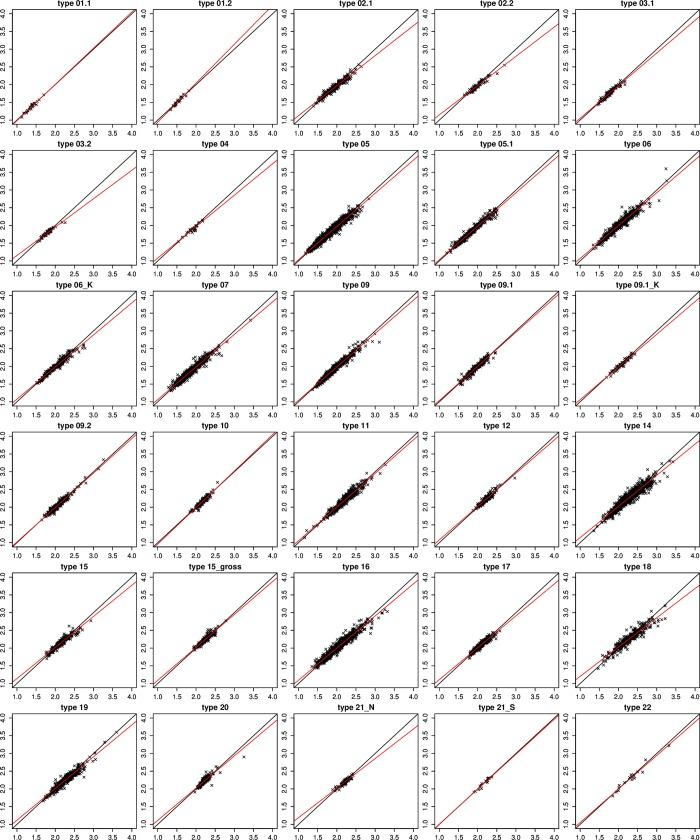
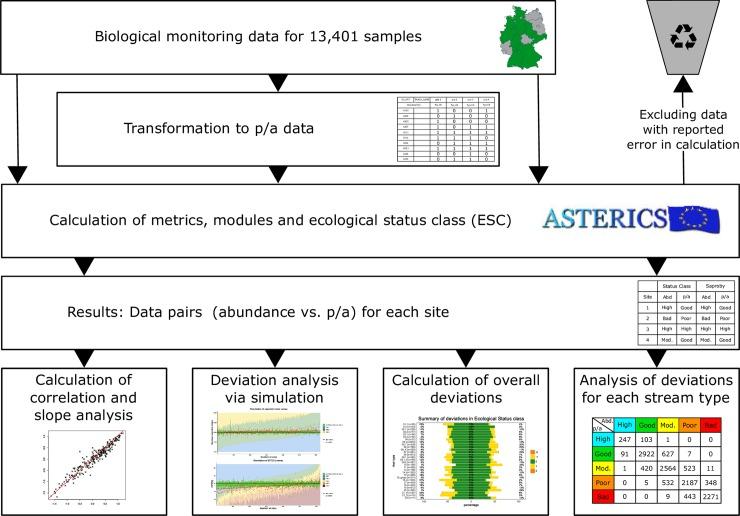
Benthic invertebrates are the most commonly used organisms used to assess ecological status as required by the EU Water Framework Directive (WFD). For WFD-compliant assessments, benthic invertebrate communities are sampled, identified and counted. Taxa × abundance matrices are used to calculate indices and the resulting scores are compared to reference values to determine the ecological status class. DNA-based tools, such as DNA metabarcoding, provide a new and precise method for species identification but cannot deliver robust abundance data. To evaluate the applicability of DNA-based tools to ecological status assessment, we evaluated whether the results derived from presence/absence data are comparable to those derived from abundance data. We analysed benthic invertebrate community data obtained from 13,312 WFD assessments of German streams. Broken down to 30 official stream types, we compared assessment results based on abundance and presence/absence data for the assessment modules "organic pollution" (i.e., the saprobic index) and "general degradation" (a multimetric index) as well as their underlying metrics. In 76.6% of cases, the ecological status class did not change after transforming abundance data to presence/absence data. In 12% of cases, the status class was reduced by one (e.g., from good to moderate), and in 11.2% of cases, the class increased by one. In only 0.2% of cases, the status shifted by two classes. Systematic stream type-specific deviations were found and differences between abundance and presence/absence data were most prominent for stream types where abundance information contributed directly to one or several metrics of the general degradation module. For a single stream type, these deviations led to a systematic shift in status from 'good' to 'moderate' (n = 201; with only n = 3 increasing). The systematic decrease in scores was observed, even when considering simulated confidence intervals for abundance data. Our analysis suggests that presence/absence data can yield similar assessment results to those for abundance-based data, despite type-specific deviations. For most metrics, it should be possible to intercalibrate the two data types without substantial efforts. Thus, benthic invertebrate taxon lists generated by standardised DNA-based methods should be further considered as a complementary approach.
底栖无脊椎动物是评估生态状况最常用的生物,这是欧盟水框架指令(WFD)所要求的。为了进行符合 WFD 要求的评估,需要对底栖无脊椎动物群落进行采样、鉴定和计数。采用分类×丰度矩阵来计算指数,将所得分数与参考值进行比较,以确定生态状况类别。基于 DNA 的工具,如 DNA metabarcoding,为物种鉴定提供了一种新的、精确的方法,但无法提供可靠的丰度数据。为了评估基于 DNA 的工具在生态状况评估中的适用性,我们评估了基于存在/不存在数据的结果是否与基于丰度数据的结果具有可比性。我们分析了来自德国溪流 13312 次 WFD 评估的底栖无脊椎动物群落数据。根据 30 种官方溪流类型进行细分,我们比较了基于丰度和存在/不存在数据的评估结果,这些数据来自于“有机污染”(即需氧指数)和“一般退化”(多指标指数)评估模块以及其基础指标。在 76.6%的情况下,将丰度数据转换为存在/不存在数据后,生态状况类别没有改变。在 12%的情况下,状况类别降低一级(例如,从良好变为中等),在 11.2%的情况下,类别增加一级。只有 0.2%的情况下,状况发生了两级变化。我们发现了系统的溪流类型特定偏差,并且在丰度数据与存在/不存在数据之间存在差异,这种差异在丰度信息直接影响一般退化模块的一个或多个指标的溪流类型中最为明显。对于单一溪流类型,这些偏差导致状况从“良好”到“中等”的系统变化(n = 201;仅 n = 3 增加)。即使考虑了丰度数据的模拟置信区间,也观察到了系统的得分下降。我们的分析表明,尽管存在特定类型的偏差,但存在/不存在数据可以产生与基于丰度数据相似的评估结果。对于大多数指标,无需大量工作就可以对这两种数据类型进行互校准。因此,通过标准化的基于 DNA 的方法生成的底栖无脊椎动物分类群列表应被进一步视为一种补充方法。


 Zotero 插件