Eisa Ahmed, Malenica Katarina, Schwenkert Serena, Bölter Bettina
Department Biologie I, Botanik, Ludwig-Maximilians-Universität, Großhaderner Strasse. 2-4, 82152 Planegg-Martinsried, Germany.
Plants (Basel). 2019 Dec 23;9(1):24. doi: 10.3390/plants9010024.
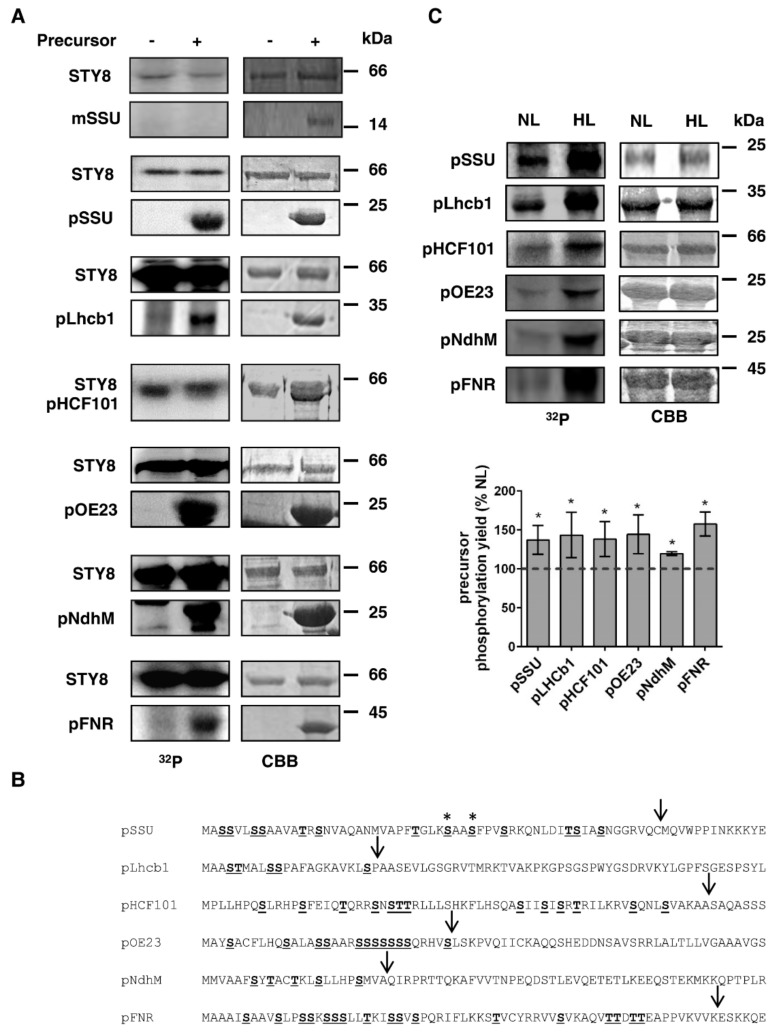
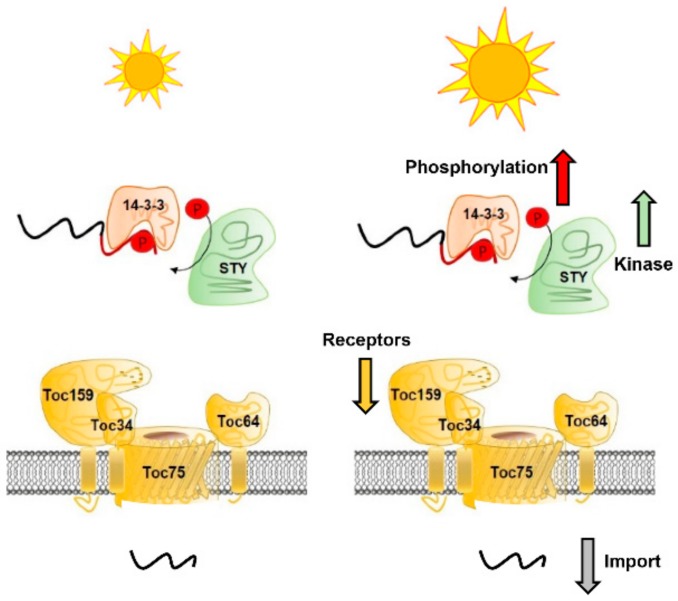
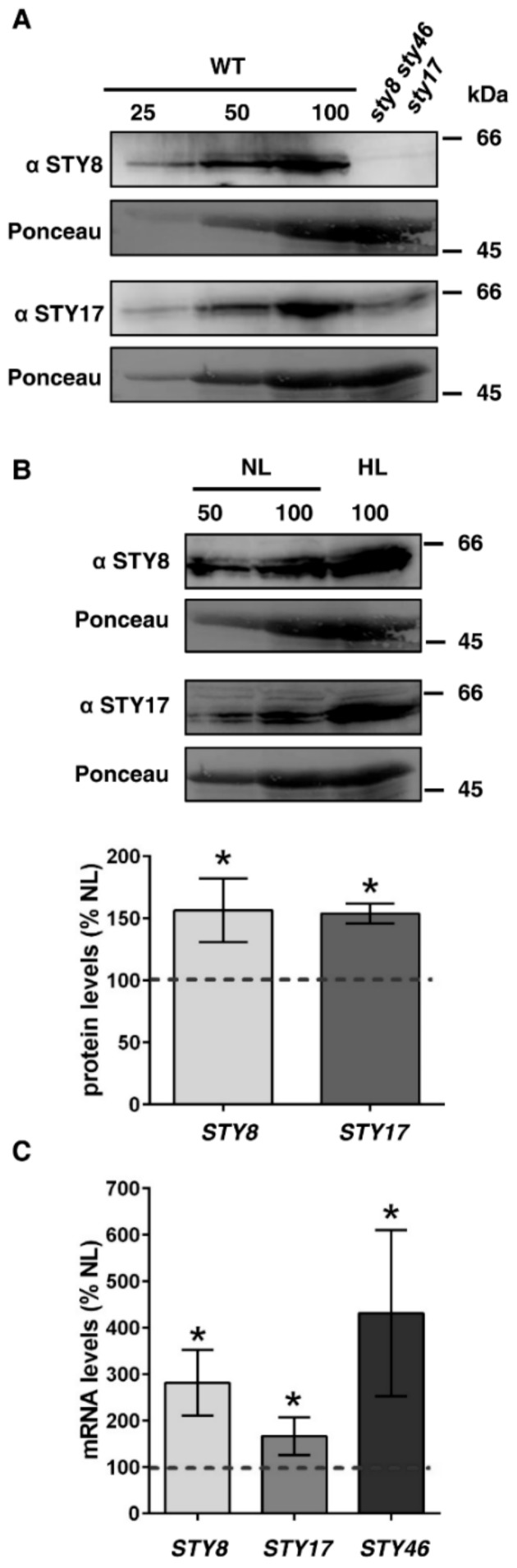
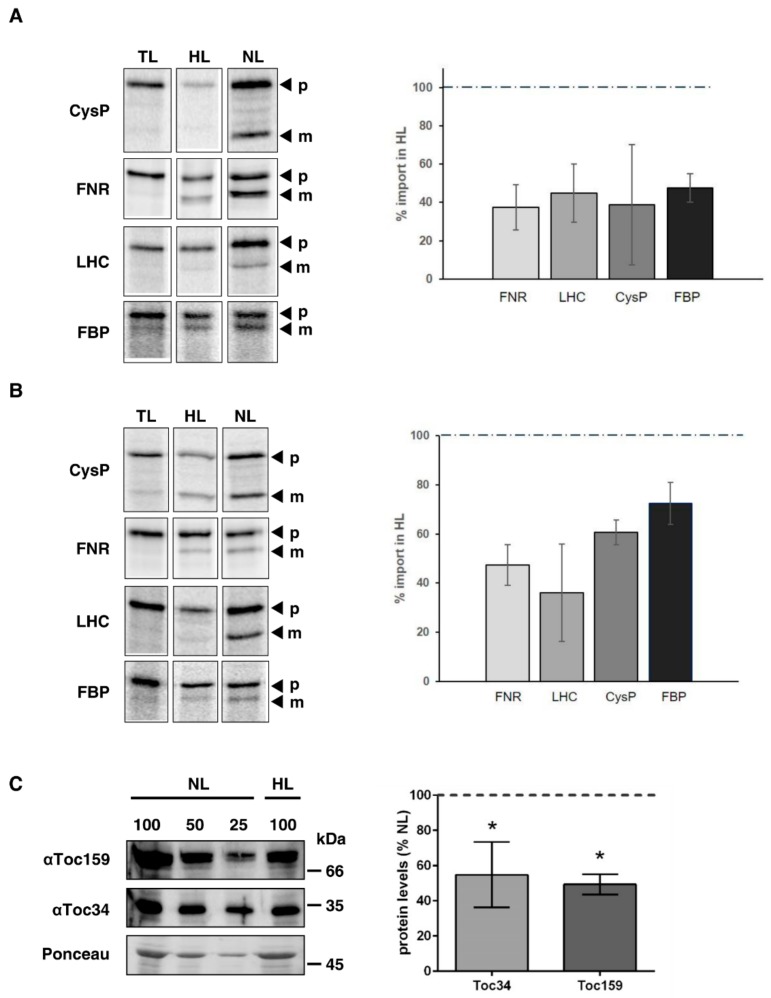
Acclimation is an essential process in plants on many levels, but especially in chloroplasts under changing light conditions. It is partially known how the photosynthetic machinery reacts upon exposure to high light intensities, including rearrangement of numerous protein complexes. Since the majority of proteins residing within chloroplasts needs to be posttranslationally imported into the organelles, we endeavored to study how this important process is regulated upon subjecting plants from pea and to high light. Our results reveal that acclimation takes place on the one hand in the cytosol by differential phosphorylation of preproteins and resulting from the altered expression of the responsible kinases, and on the other hand at the level of the translocation machineries in the outer (TOC) and inner (TIC) envelope membranes. Intriguingly, while phosphorylation is more pronounced under high light, import itself shows a lower efficiency, along with a reduced accumulation of the Toc receptor proteins Toc34 and Toc159.
驯化在许多层面上都是植物的一个重要过程,尤其是在光照条件不断变化时叶绿体中的驯化。光合作用机制在暴露于高光强度下时如何反应,包括众多蛋白质复合物的重排,我们对此有部分了解。由于叶绿体中的大多数蛋白质需要在翻译后导入这些细胞器,我们致力于研究在将豌豆植物置于高光条件下时,这一重要过程是如何被调控的。我们的结果表明,一方面,驯化在细胞质中通过前体蛋白的差异磷酸化以及负责激酶表达的改变而发生;另一方面,驯化发生在外膜(TOC)和内膜(TIC)包膜膜中的转运机制水平上。有趣的是,虽然在高光条件下磷酸化更为明显,但导入本身的效率较低,同时Toc受体蛋白Toc34和Toc159的积累也减少。