School of Biological Sciences, Monash University, Clayton, Victoria 3800, Australia.
Int J Mol Sci. 2019 Dec 26;21(1):188. doi: 10.3390/ijms21010188.
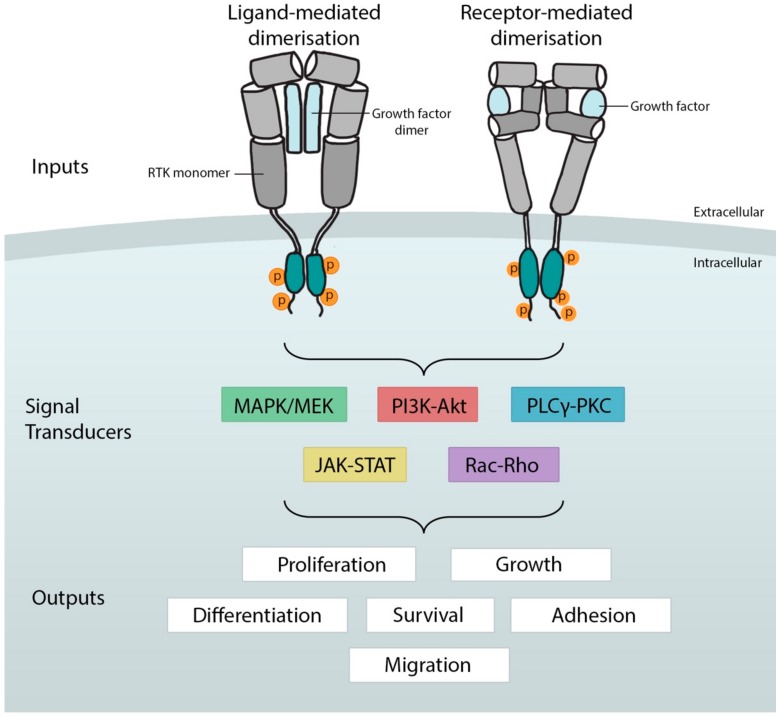
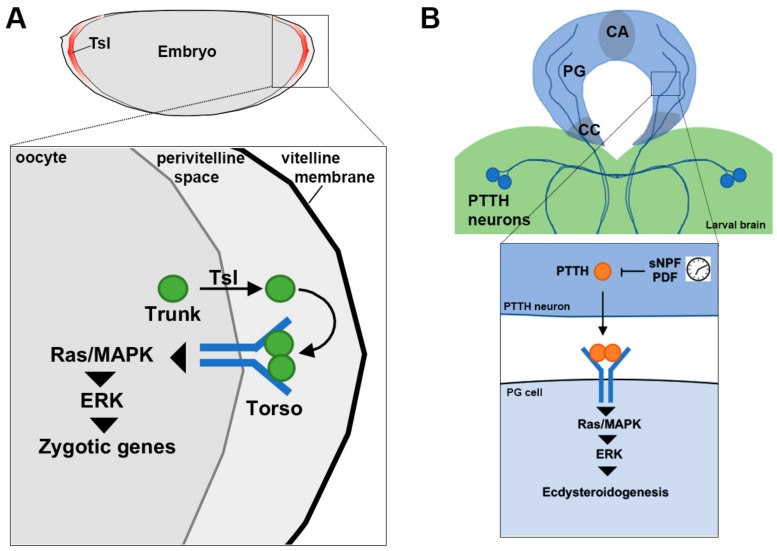
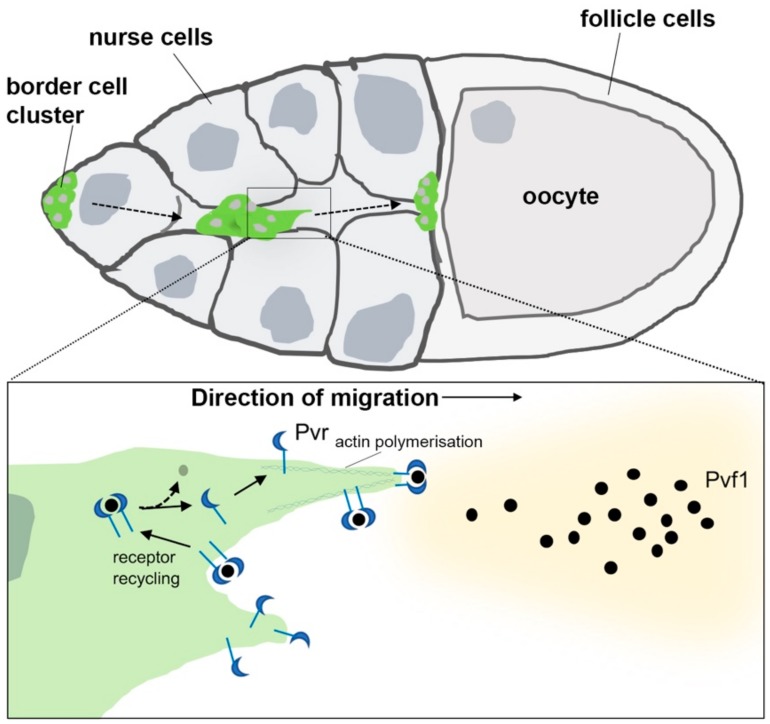
Cell-to-cell communication mediates a plethora of cellular decisions and behaviors that are crucial for the correct and robust development of multicellular organisms. Many of these signals are encoded in secreted hormones or growth factors that bind to and activate cell surface receptors, to transmit the cue intracellularly. One of the major superfamilies of cell surface receptors are the receptor tyrosine kinases (RTKs). For nearly half a century RTKs have been the focus of intensive study due to their ability to alter fundamental aspects of cell biology, such as cell proliferation, growth, and shape, and because of their central importance in diseases such as cancer. Studies in model organisms such a have proved invaluable for identifying new conserved RTK pathway components, delineating their contributions, and for the discovery of conserved mechanisms that control RTK-signaling events. Here we provide a brief overview of the RTK superfamily and the general mechanisms used in their regulation. We further highlight the functions of several RTKs that govern distinct cell-fate decisions in and explore how their activities are developmentally controlled.
细胞间通讯介导了大量细胞决策和行为,这些决策和行为对于多细胞生物的正确和稳健发育至关重要。这些信号中的许多是由分泌的激素或生长因子编码的,它们与细胞表面受体结合并激活这些受体,从而将信号传递到细胞内。细胞表面受体的主要超家族之一是受体酪氨酸激酶 (RTKs)。由于 RTKs 能够改变细胞生物学的基本方面,例如细胞增殖、生长和形状,并且由于它们在癌症等疾病中的核心重要性,近半个世纪以来,RTKs 一直是密集研究的焦点。在模式生物中的研究对于鉴定新的保守 RTK 途径成分、描绘它们的贡献以及发现控制 RTK 信号事件的保守机制非常有价值。在这里,我们简要概述了 RTK 超家族及其调节中使用的一般机制。我们进一步强调了几个 RTKs 的功能,这些 RTKs 控制 中的不同细胞命运决定,并探讨了它们的活性如何受到发育控制。