1Central Unit for Infection Prevention and Control, Universitätsmedizin Greifswald, Walther-Rathenau-Str. 49A, Greifswald, 17475 Germany.
2Institute of Hygiene and Environmental Medicine, Universitätsmedizin Greifswald, Greifswald, Germany.
Antimicrob Resist Infect Control. 2019 Dec 12;8:201. doi: 10.1186/s13756-019-0648-6. eCollection 2019.
The prevention of nosocomial infections requires participation from the patients themselves. In the past, however, patients have been apprehensive to point out hygiene-relevant behaviour to the personnel.In the project AHOI, the possibilities of active patient involvement in infection prevention are identified, tested and realized. The goal is a prevention strategy based upon three dimensions: "adherence", "empowerment" and "acceptance". "AHOI" stands for the "ctivation of patients, persons in need of care and care givers for a ygiene-conscious participatin in nfection control". Results from the AHOI pilot study on the implementation of a multimodal intervention bundle are reported.
In 2017, a two-stage patient survey was conducted on two surgical wards for 14 weeks. In addition to the intervention bundle, acceptance, adherence and empowerment regarding individual hygiene behaviour and perception were evaluated. The bundle included an AHOI-welcome-box with an informational and entertaining brochure and supportive incentives. Furthermore, multiple visual materials like video presentations for patients' bedside TV, posters and visual reminders in the patients' bedrooms and sanitary facilities were installed.
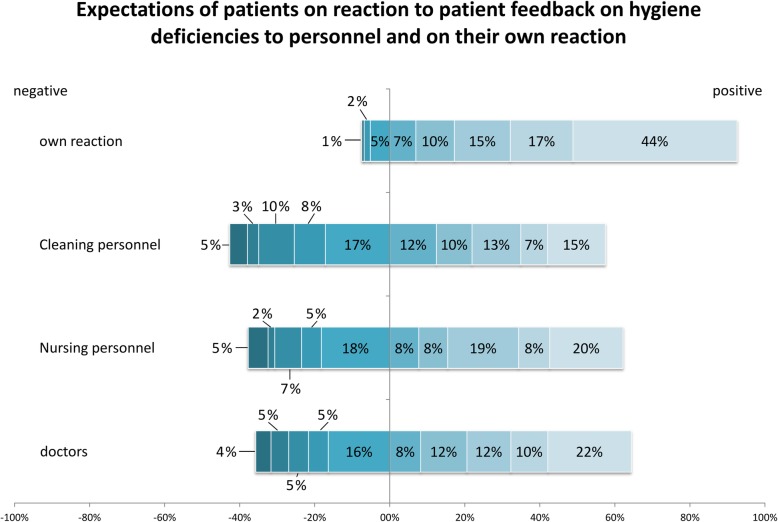
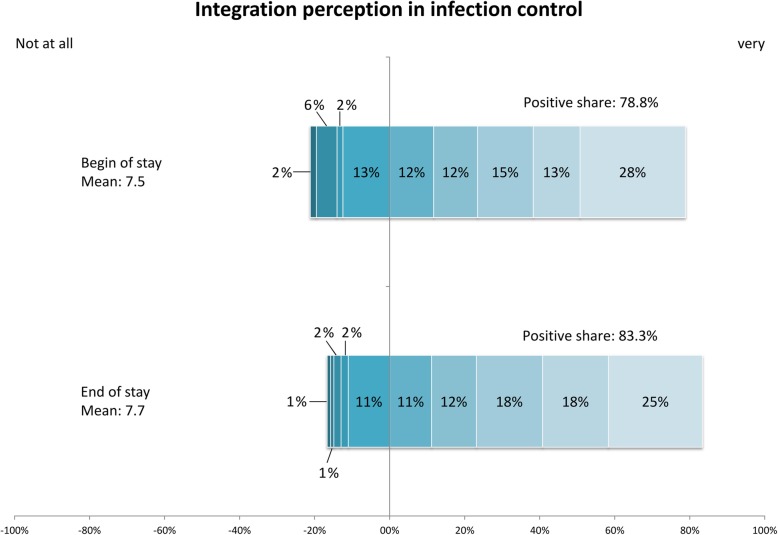
179 respondents were surveyed at admission, 139 at discharge and 133 at both time points. Almost all respondents wanted to contribute to infection control. The AHOI project was well accepted by patients. Two-thirds wanted to be more involved. More than a third expected a negative response from staff after pointing out hygiene deficiencies. Four respondents observed a deficiency in hygiene with healthcare personnel and reported a very positive reaction once this was communicated to the personnel. More than four-fifths of the respondents felt well integrated and adequately informed post intervention. The feeling of active involvement correlated significantly with subjective participation and adherence to hygienic measures, especially self-reported hand disinfection.
The results demonstrated that the required inclusion of patients in infection control is possible with AHOI. Active involvement of patients and relatives is associated with improvements in adherence to infection prevention measures.
预防医院感染需要患者自身的参与。然而,过去患者对向医务人员指出与卫生相关的行为感到担忧。在 AHOI 项目中,确定、测试和实现了患者积极参与感染预防的可能性。目标是基于三个维度的预防策略:“依从性”、“赋权”和“接受”。“AHOI”代表“激活患者、需要护理的人和护理人员,以实现卫生意识的感染控制参与”。报告了关于实施多模式干预包的 AHOI 试点研究的结果。
2017 年,对两个外科病房进行了为期 14 周的两阶段患者调查。除了干预包外,还评估了个人卫生行为和感知的接受度、依从性和赋权。该包包括一个 AHOI 欢迎盒,其中包含信息丰富且有趣的小册子和支持性激励措施。此外,还安装了多个视觉材料,如患者床边电视的视频演示、海报和患者卧室和卫生设施中的视觉提示。
在入院时调查了 179 名受访者,在出院时调查了 139 名受访者,在两个时间点都调查了 133 名受访者。几乎所有受访者都希望为感染控制做出贡献。AHOI 项目得到了患者的认可。三分之二的人希望更多地参与。超过三分之一的人预计在指出卫生缺陷后会得到工作人员的负面回应。有 4 名受访者观察到医护人员在卫生方面存在缺陷,并在向工作人员报告后得到了非常积极的反馈。干预后,超过五分之四的受访者感觉自己融入感强,信息充足。积极参与的感觉与主观参与和遵守卫生措施,尤其是自我报告的手部消毒,显著相关。
结果表明,通过 AHOI 可以实现将患者纳入感染控制的要求。患者和家属的积极参与与感染预防措施的依从性提高有关。