Bauler Matthew, Roberts Jessica K, Wu Chang-Chih, Fan Baochang, Ferrara Francesca, Yip Bon Ham, Diao Shiyong, Kim Young-In, Moore Jennifer, Zhou Sheng, Wielgosz Matthew M, Ryu Byoung, Throm Robert E
Vector Development and Production Laboratory, St. Jude Children's Research Hospital, Memphis, TN 38105, USA.
Therapeutics Production and Quality, St. Jude Children's Research Hospital, Memphis, TN 38105, USA.
Mol Ther Methods Clin Dev. 2019 Nov 26;17:58-68. doi: 10.1016/j.omtm.2019.11.011. eCollection 2020 Jun 12.
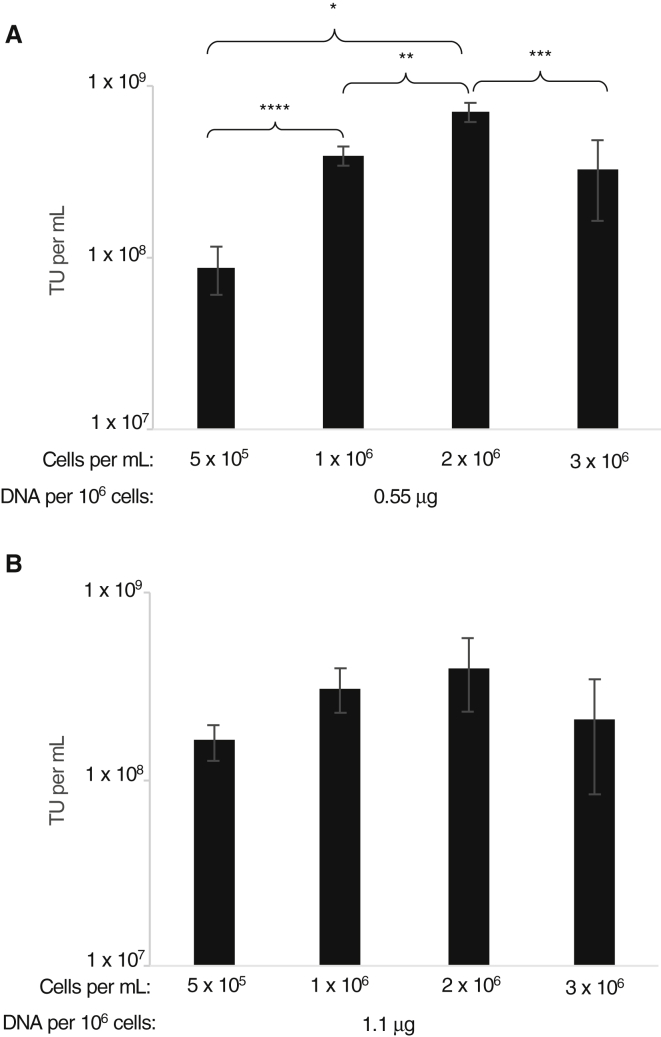
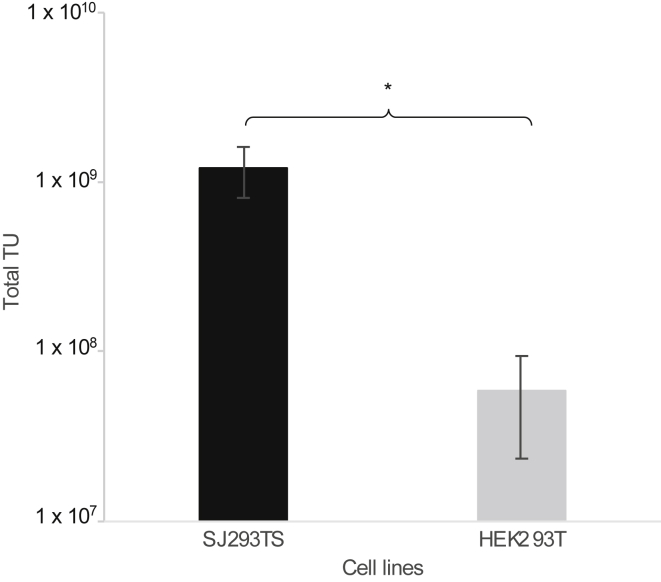
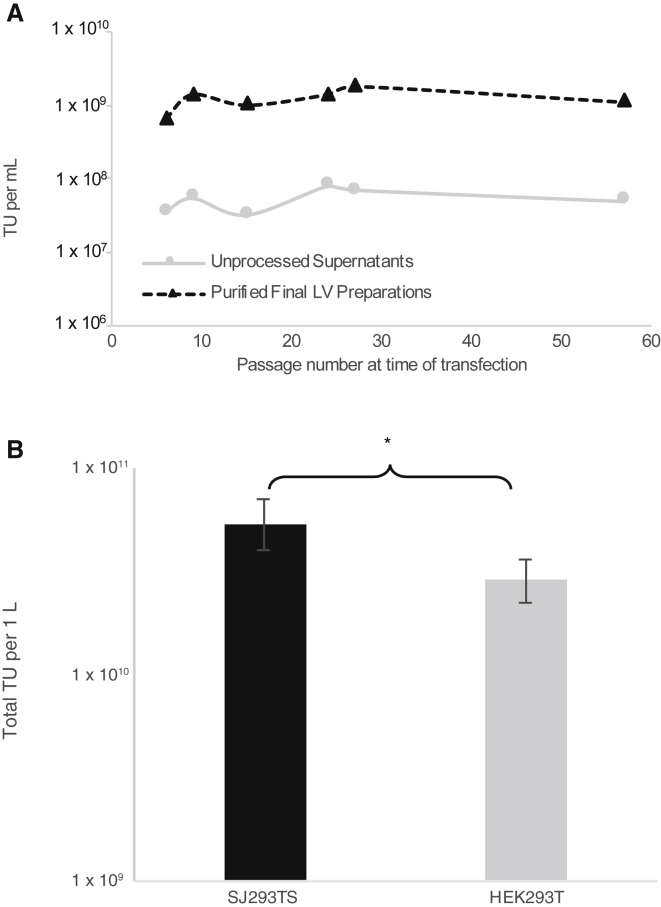
Lentiviral vectors are increasingly utilized in cell and gene therapy applications because they efficiently transduce target cells such as hematopoietic stem cells and T cells. Large-scale production of current Good Manufacturing Practices-grade lentiviral vectors is limited because of the adherent, serum-dependent nature of HEK293T cells used in the manufacturing process. To optimize large-scale clinical-grade lentiviral vector production, we developed an improved production scheme by adapting HEK293T cells to grow in suspension using commercially available and chemically defined serum-free media. Lentiviral vectors with titers equivalent to those of HEK293T cells were produced from SJ293TS cells using optimized transfection conditions that reduced the required amount of plasmid DNA by 50%. Furthermore, purification of SJ293TS-derived lentiviral vectors at 1 L yielded a recovery of 55% ± 14% (n = 138) of transducing units in the starting material, more than a 2-fold increase over historical yields from adherent HEK293T serum-dependent lentiviral vector preparations. SJ293TS cells were stable to produce lentiviral vectors over 4 months of continuous culture. SJ293TS-derived lentiviral vectors efficiently transduced primary hematopoietic stem cells and T cells from healthy donors. Overall, our SJ293TS cell line enables high-titer vector production in serum-free conditions while reducing the amount of input DNA required, resulting in a highly efficient manufacturing option.
慢病毒载体在细胞和基因治疗应用中越来越多地被使用,因为它们能有效地转导造血干细胞和T细胞等靶细胞。由于生产过程中使用的HEK293T细胞具有贴壁、血清依赖的特性,目前符合药品生产质量管理规范(GMP)级别的慢病毒载体的大规模生产受到限制。为了优化大规模临床级慢病毒载体的生产,我们通过使HEK293T细胞适应在市售的化学成分明确的无血清培养基中悬浮生长,开发了一种改进的生产方案。使用优化的转染条件,从SJ293TS细胞中生产出滴度与HEK293T细胞相当的慢病毒载体,该条件将所需质粒DNA的量减少了50%。此外,在1升规模下对SJ293TS衍生的慢病毒载体进行纯化,起始材料中转导单位的回收率为55%±14%(n = 138),比贴壁的HEK293T血清依赖型慢病毒载体制备的历史产量增加了2倍多。SJ293TS细胞在连续培养4个月以上时能稳定产生慢病毒载体。SJ293TS衍生的慢病毒载体能有效地转导健康供体的原代造血干细胞和T细胞。总体而言,我们的SJ293TS细胞系能够在无血清条件下进行高滴度载体生产,同时减少所需的输入DNA量,从而提供了一种高效的生产选择。