Ndé H Soh, Tamfuh P Azinwi, Clet G, Vieillard J, Mbognou M Tsaffo, Woumfo E Djoufac
Department of Inorganic Chemistry, Faculty of Science, University of Yaoundé I, P.O. Box 812, Yaoundé, Cameroon.
Department of Soil Science, Faculty of Agronomy and Agricultural Sciences, University of Dschang, BP 222, Dschang, Cameroon.
Heliyon. 2019 Dec 9;5(12):e02926. doi: 10.1016/j.heliyon.2019.e02926. eCollection 2019 Dec.
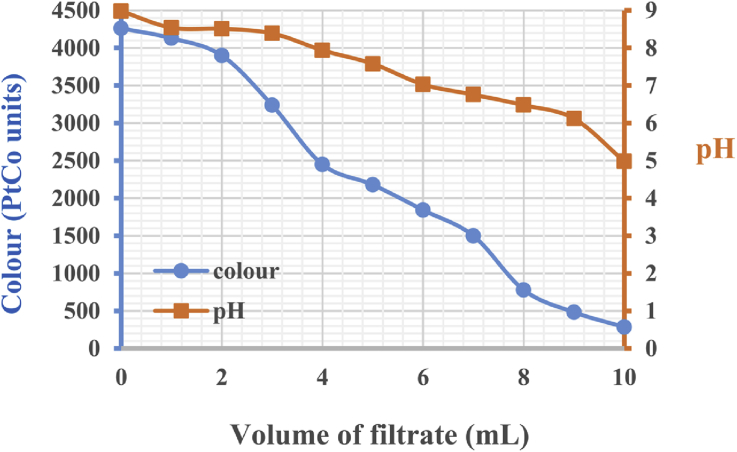
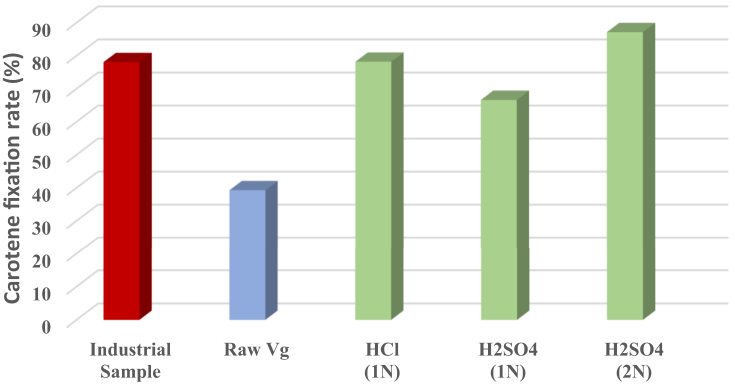
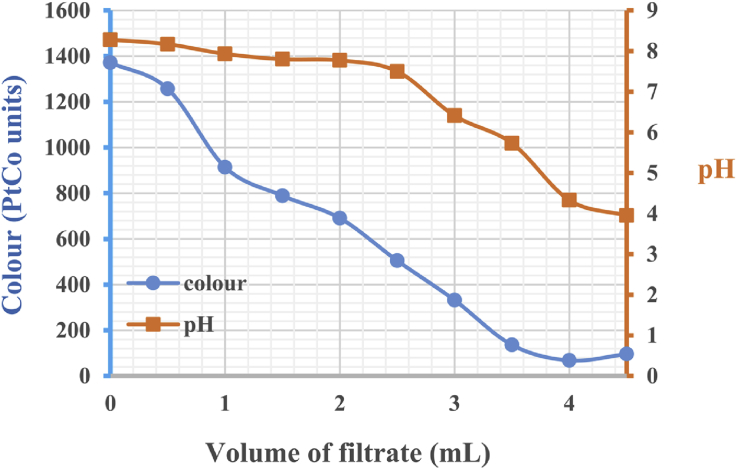
Vertisols occupy approximately 1,200,000 ha in Northern Cameroon. Their richness in smectites allows for the production of "bleaching earths" necessary for refining palm oil, and their effluent is used for leachate treatment. In the present work, two mineral acids (HCl and HSO) were compared, and the most efficient acid with the lowest cost was determined for use in industrial applications. Under similar experimental conditions (ratio of acid solution/clay mass = 5/1, temperature = 97 °C, stirring time = 4 h), the quantity of cations (Fe, Fe, Al) solubilised during acid activation, palm oil discolouration rate by each activated sample and the financial cost of 5 L of acid solution that is required for the acid activation of one kilogram of smectite clay were compared. It was found that 2N HSO was more efficient than 1N HCl and 1N HSO considering palm oil bleaching efficiency and cost. The filtrate collected after the acid activation of vertisols was rich in H (2.04.10M), Fe (2.8.10M), Fe (4.2.10M) and Al (9.2.10M) ions. One gram of smectite clay material produced 9 mL of this filtrate that was used for the treatment of leachate from a controlled landfill. The leachate colour decreased from 4262 to 285 PtCo units, while the corresponding chemical oxygen demand (COD) decreased from 802 to 128 mg/L. Thus, the most effective acid for industrial bleaching earth production from vertisol is 2N HSO acid.
变性土在喀麦隆北部占地约120万公顷。其富含蒙脱石,可用于生产精炼棕榈油所需的“漂白土”,其废水可用于渗滤液处理。在本研究中,比较了两种无机酸(盐酸和硫酸),确定了效率最高且成本最低的酸用于工业应用。在相似的实验条件下(酸溶液/粘土质量比 = 5/1,温度 = 97°C,搅拌时间 = 4小时),比较了酸活化过程中溶解的阳离子(铁、亚铁、铝)的量、每个活化样品对棕榈油的脱色率以及一千克蒙脱石粘土酸活化所需5升酸溶液的财务成本。结果发现,考虑到棕榈油漂白效率和成本,2N硫酸比1N盐酸和1N硫酸更有效。变性土酸活化后收集的滤液富含氢离子(2.04×10⁻³M)、亚铁离子(2.8×10⁻³M)、铁离子(4.2×10⁻³M)和铝离子(9.2×10⁻³M)。一克蒙脱石粘土材料产生9毫升这种滤液,用于处理来自受控垃圾填埋场的渗滤液。渗滤液颜色从4262铂钴单位降至285铂钴单位,而相应的化学需氧量(COD)从802毫克/升降至128毫克/升。因此,用于从变性土生产工业漂白土的最有效酸是2N硫酸。