Department of Neurosurgery, No. 901 Hospital of the Chinese People's Liberation Army Logistic Support Force, Hefei, Anhui, China.
Neurosurg Rev. 2021 Feb;44(1):411-422. doi: 10.1007/s10143-019-01228-8. Epub 2020 Jan 2.
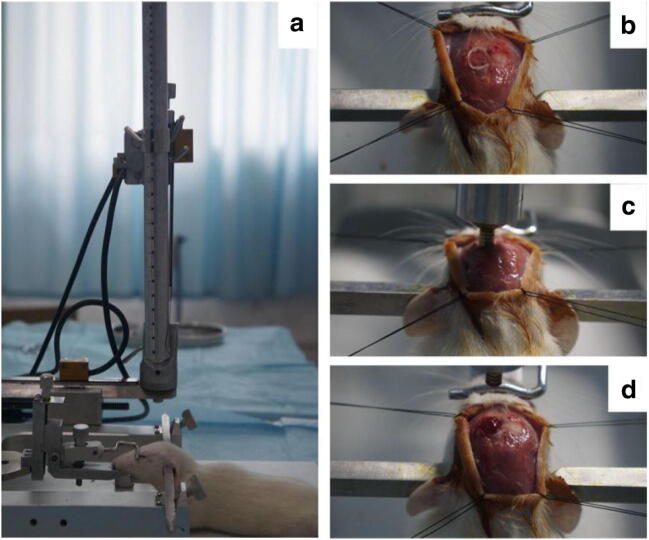
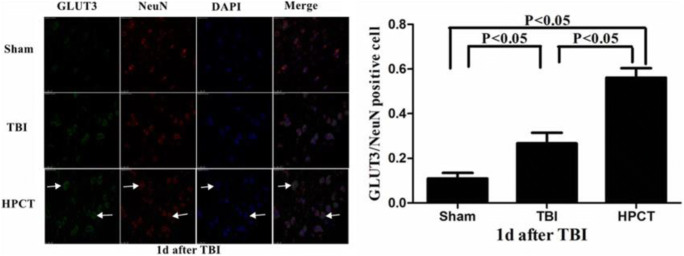
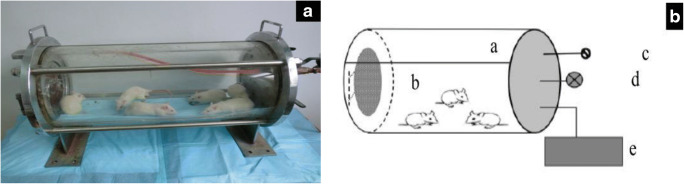
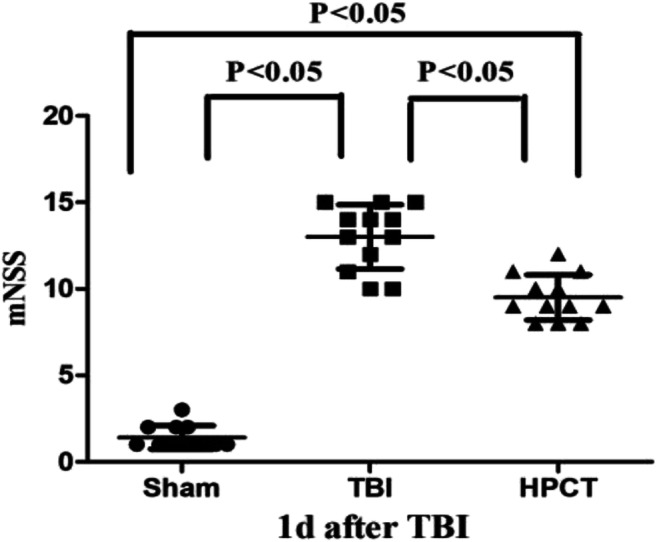
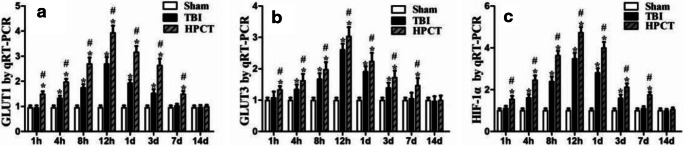
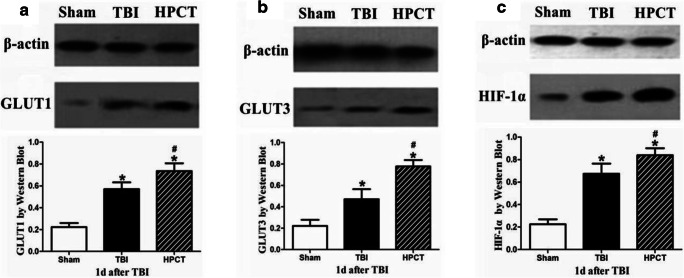
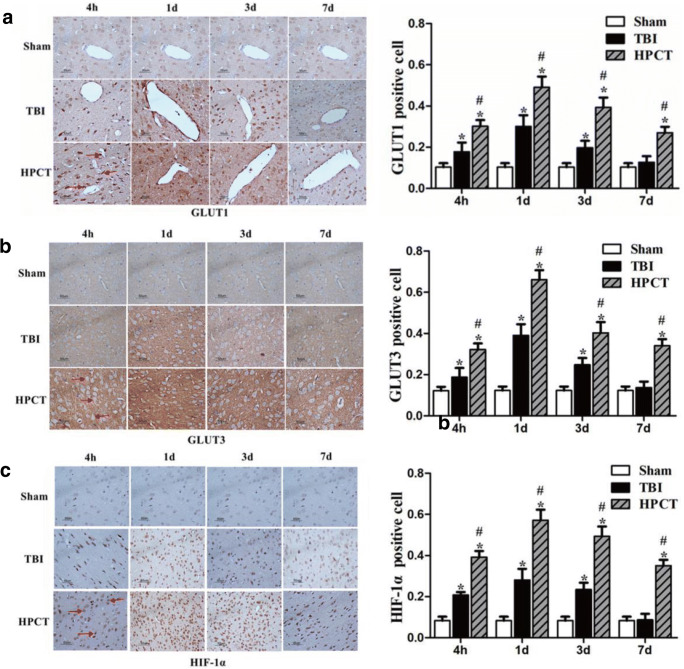
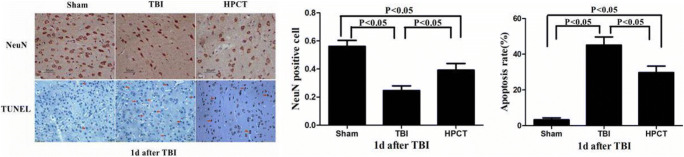
Hypoxia preconditioning (HPC), a well-established preconditioning model, has been shown to protect the brain against severe hypoxia or ischemia caused by traumatic brain injury (TBI), but the mechanism has not been well elucidated. Anaerobic glycolysis is the major way for neurons to produce energy under cerebral ischemia and hypoxia after TBI, and it requires large amounts of glucose. We hypothesized that glucose transport, as a rate-limiting step of glucose metabolism, may play key roles in the neuroprotective effects of HPC on cerebral cortex tissue against TBI. The aim of this study was to investigate the effect of HPC on glucose transport activity of rat cerebral cortex tissue after TBI through examining the gene expression of two major glucose transporters (GLUT1 and GLUT3) and their upstream target gene hypoxia-inducible factor-1α (HIF-1α). Sprague-Dawley rats were treated with HPC (50.47 kPa, 3 h/d, 3d). Twenty-four hours after the last treatment, the rats were injured using the Feeney free falling model. Cortex tissues of injured rats were removed at 1 h, 4 h, 8 h, 12 h, 1 day, 3 days, 7 d, and 14 days post-injury for histological analysis. Compared with TBI alone, HPC before TBI resulted in the expression of HIF-1α, GLUT1, and GLUT3 to increase at 1 h; they were markedly increased at 4 h, 8 h, 12 h, 1 day, and 3 days and decreased thereafter (p < 0.05). HPC before TBI could improve neuronal survival in rats by examining NeuN staining and observing reduced apoptosis by examining TUNEL staining. The result showed that HPC before TBI could increase the expression of GLUT1 and GLUT3. And through double immunofluorescence staining for GLUT3 and NeuN, the results strongly suggest that HPC improved glucose transport activity of neurons in rats with TBI. In summary, our results further support that HPC can improve hypoxia tolerance and attenuate neuronal loss of cerebral cortex in rats after TBI. The mechanism is mainly related to the increase of glucose transport activity through inducing GLUT1 and GLUT3 expression through upregulating HIF-1α expression.
缺氧预处理(HPC)是一种成熟的预处理模型,已被证明可保护大脑免受创伤性脑损伤(TBI)引起的严重缺氧或缺血,但机制尚未得到很好的阐明。在 TBI 后,无氧糖酵解是神经元在脑缺血和缺氧下产生能量的主要方式,它需要大量的葡萄糖。我们假设,作为葡萄糖代谢的限速步骤,葡萄糖转运可能在 HPC 对 TBI 后大脑皮层组织的神经保护作用中发挥关键作用。本研究旨在通过检测两种主要葡萄糖转运体(GLUT1 和 GLUT3)及其上游靶基因缺氧诱导因子-1α(HIF-1α)的基因表达,研究 HPC 对 TBI 后大鼠大脑皮层组织葡萄糖转运活性的影响。Sprague-Dawley 大鼠接受 HPC(50.47 kPa,3 h/d,3 d)处理。最后一次治疗后 24 小时,大鼠使用 Feeney 自由落体模型受伤。伤后 1、4、8、12、1、3、7 和 14 小时取出受伤大鼠的皮质组织进行组织学分析。与单纯 TBI 相比,TBI 前的 HPC 导致 HIF-1α、GLUT1 和 GLUT3 的表达在 1 小时增加;在 4、8、12、1 和 3 小时明显增加,此后减少(p<0.05)。通过 NeuN 染色检查神经元存活情况,通过 TUNEL 染色观察凋亡减少,发现 TBI 前的 HPC 可改善大鼠神经元的存活。结果表明,TBI 前的 HPC 可增加 GLUT1 和 GLUT3 的表达。通过 GLUT3 和 NeuN 的双重免疫荧光染色,结果强烈提示 HPC 改善了 TBI 大鼠神经元的葡萄糖转运活性。总之,我们的结果进一步支持 HPC 可以提高 TBI 后大鼠的缺氧耐受能力并减轻大脑皮层神经元的丢失。其机制主要与通过上调 HIF-1α 表达诱导 GLUT1 和 GLUT3 表达来增加葡萄糖转运活性有关。