School of Earth and Environmental Sciences, The University of Manchester, Oxford Road, Manchester, M13 9PL, UK.
Environ Monit Assess. 2020 Jan 3;192(2):84. doi: 10.1007/s10661-019-8019-6.
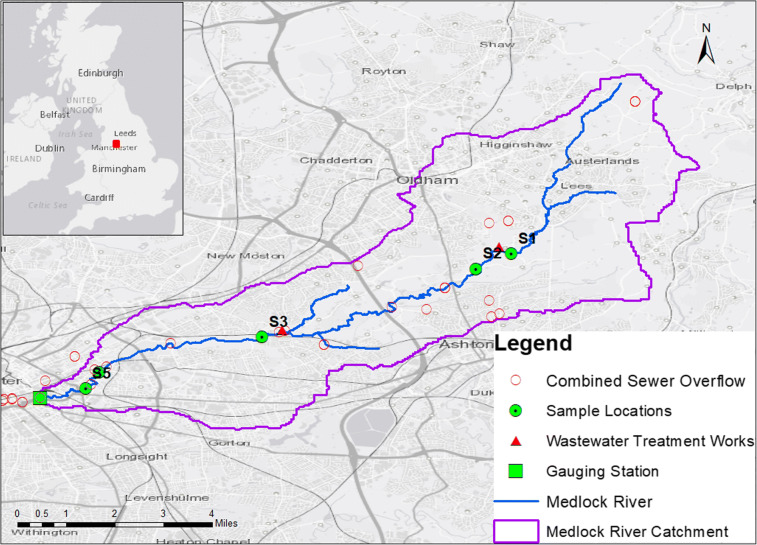
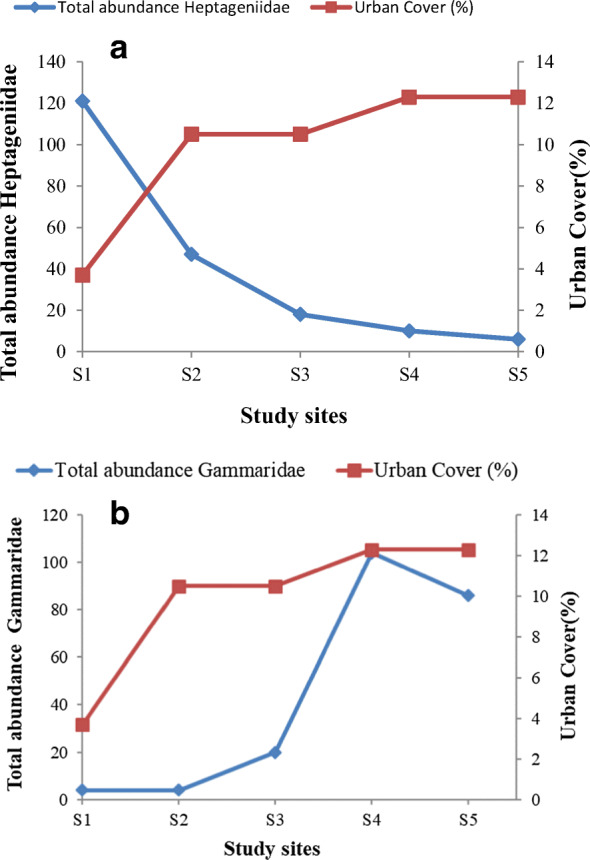
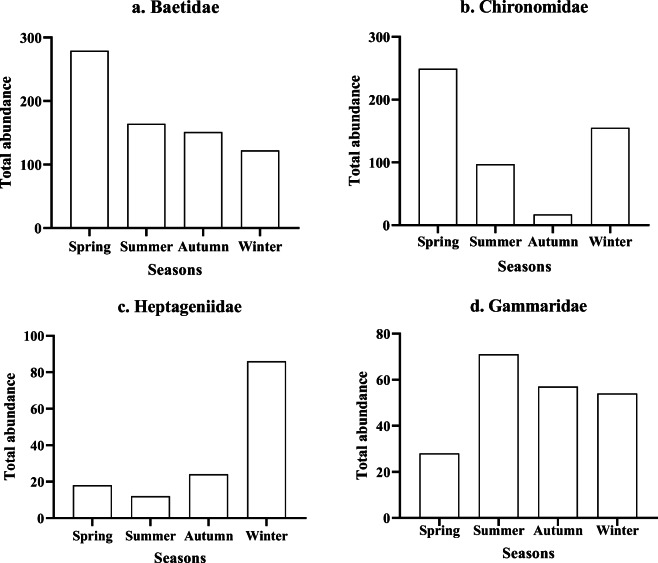
Urban rivers face challenges of increased human activities which also affect river organisms. In order to enhance freshwater biodiversity in urban rivers, it is important to determine how the benthic macroinvertebrate communities are influenced by key abiotic factors. This was investigated in this paper through the study of the spatial and temporal variations of benthic macroinvertebrates and water quality variables at the urban River Medlock in Greater Manchester, UK. Samples were obtained from five sections of the catchment (S1 to S5) over a period of 14 months and the results were compared with the standard requirement of the European Union's Water Framework Directives. Multivariate tests including SIMPER (similarity percentages), PCA (principal component analysis) and BIOENV (biological and environmental) were carried out on the data in order to determine the environmental variables which most influenced the benthic macroinvertebrates. PCA of environmental variables indicated that 34% of the overall variance was heavily weighted on nutrients and catchment area (negatively on altitude and slope), 17% represented river substrate and the 12% represented discharge. The BIOENV analysis also indicated altitude, slope, catchment area, discharge and conductivity as the variables which influenced the biological communities. SIMPER analysis showed a difference between the upper and lower sections of the river with some sensitive taxa at the upper sites and showed that more organisms are present during spring. Apart from the lowest section of the river, the EU Water Framework Directive classification showed that other sites achieved the 'good ecological status'. While 32 taxa groups were identified, abundant Baetidae, Chironomidae and Oligochaeta were recorded at all sites and seasons. The scores for biotic indices Whalley Hawkes Paisley and Trigg (WHPT) and Biological Monitoring Working Party (BMWP) were found to be similar. By the application of surrogate variables such as percentage urban cover, catchment area and total number of organism, the influence of urbanisation could be seen in the abundance of organisms over time and space.
城市河流面临着人类活动增加的挑战,这些活动也会影响到河流生物。为了提高城市河流的淡水生物多样性,重要的是要确定底栖大型无脊椎动物群落是如何受到关键非生物因素的影响。本文通过研究英国大曼彻斯特市梅德洛克河(River Medlock)流域的底栖大型无脊椎动物和水质变量的时空变化,探讨了这一问题。在 14 个月的时间里,从流域的五个部分(S1 到 S5)采集了样本,并将结果与欧盟水框架指令的标准要求进行了比较。为了确定对底栖大型无脊椎动物影响最大的环境变量,对数据进行了包括 SIMPER(相似百分比)、PCA(主成分分析)和 BIOENV(生物和环境)在内的多元测试。环境变量的 PCA 分析表明,总方差的 34%主要受营养物质和流域面积的影响(与海拔和坡度呈负相关),17%代表河流基质,12%代表流量。BIOENV 分析还表明,海拔、坡度、流域面积、流量和电导率是影响生物群落的变量。SIMPER 分析显示,河流上下游之间存在差异,上游一些敏感类群的存在表明,春季有更多的生物存在。除了河流最下游的部分,其他地点的欧盟水框架指令分类都显示出了“良好的生态状况”。尽管识别出了 32 个类群,但在所有地点和季节都记录到了丰富的蜉蝣科、摇蚊科和寡毛纲。Whalley Hawkes Paisley 和 Trigg(WHPT)生物指数和生物监测工作组(BMWP)的得分被发现相似。通过应用城市化的替代变量,如城市覆盖百分比、流域面积和生物总数,可以看出随着时间和空间的推移,城市化对生物数量的影响。