
全基因组多态性与慢性术后疼痛的相关性:一项前瞻性观察研究。
The association between genome-wide polymorphisms and chronic postoperative pain: a prospective observational study.
机构信息
Department of Anaesthesiology and Pain Management, Maastricht University Medical Center, Maastricht, the Netherlands.
School for Mental Health and Neuroscience, Faculty of Health, Medicine and Life Sciences, University of Maastricht, the Netherlands.
出版信息
Anaesthesia. 2020 Jan;75 Suppl 1(Suppl 1):e111-e120. doi: 10.1111/anae.14832.
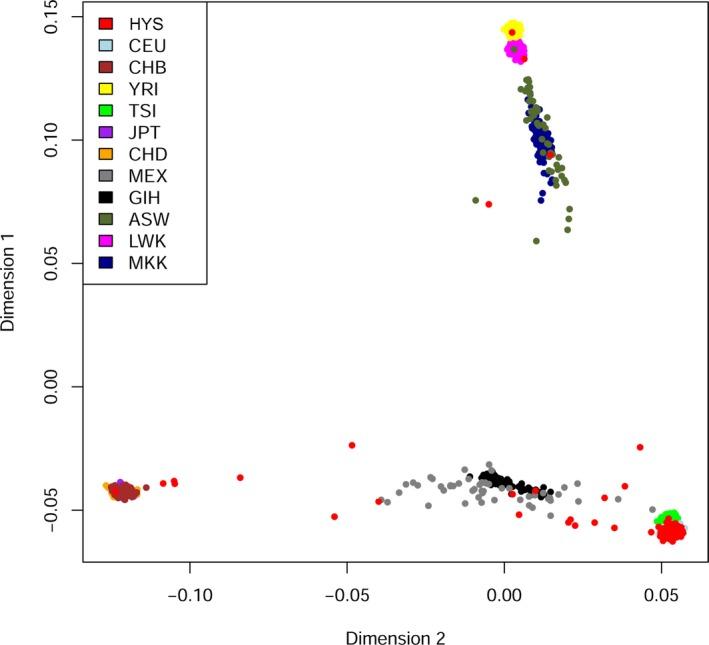
Chronic postoperative pain is common and can have a negative impact on quality of life. Recent studies show that genetic risk factors are likely to play a role, although only gene-targeted analysis has been used to date. This is the first genome-wide association study to identify single-nucleotide polymorphisms associated with the development of chronic postoperative pain based on two independent cohorts. In a discovery cohort, 330 women scheduled for hysterectomy were genotyped. A case-control association analysis compared patients without chronic postoperative pain and the 34 who had severe chronic postoperative pain 3 months after surgery. No single-nucleotide polymorphisms reached genome-wide significance, but several showed suggestive associations with chronic postoperative pain (p < 1 × 10 ). Single-nucleotide polymorphisms with significance p < 1 × 10 were followed up in a replication cohort consisting of 203 men and women scheduled for orthopaedic or abdominal surgery. Ten of these patients developed severe chronic postoperative pain. A single-nucleotide polymorphism in NAV3 was significantly replicated with chronic postoperative pain in the replication cohort (p = 0.009). Meta-analysis revealed that two loci (IQGAP1 and CRTC3) were significantly associated with chronic postoperative pain at 3 months (IQGAP1 p = 3.93 × 10 β = 2.3863, CRTC3 p = 2.26 × 10 , β = 2.4209). The present genome-wide association study provides initial evidence for genetic risk factors of chronic postoperative pain and supports follow-up studies.
慢性术后疼痛很常见,会对生活质量产生负面影响。最近的研究表明,遗传风险因素可能起作用,尽管迄今为止仅使用了基因靶向分析。这是第一项基于两个独立队列,鉴定与慢性术后疼痛发展相关的单核苷酸多态性的全基因组关联研究。在一个发现队列中,对 330 名计划接受子宫切除术的女性进行了基因分型。病例对照关联分析比较了无慢性术后疼痛的患者和 34 名术后 3 个月出现严重慢性术后疼痛的患者。没有单核苷酸多态性达到全基因组显著水平,但有几个单核苷酸多态性与慢性术后疼痛具有提示性关联(p<1×10-)。在由 203 名计划接受骨科或腹部手术的男性和女性组成的复制队列中,对具有统计学意义 p<1×10-的单核苷酸多态性进行了随访。这些患者中有 10 人出现严重慢性术后疼痛。NAV3 中的单核苷酸多态性在复制队列中与慢性术后疼痛显著复制(p=0.009)。荟萃分析显示,两个基因座(IQGAP1 和 CRTC3)与 3 个月时的慢性术后疼痛显著相关(IQGAP1 p=3.93×10β=2.3863,CRTC3 p=2.26×10β=2.4209)。这项全基因组关联研究为慢性术后疼痛的遗传风险因素提供了初步证据,并支持进一步的研究。



 Zotero 插件