Center Endocrinology Reproductive Medicine (CERM), Viae Liegi 28, 00198 Rome, Italy.
Histology and Embryology Section, Department of Biomedicine and Prevention, University of Rome, 00133 Rome, Italy.
Int J Mol Sci. 2019 Dec 31;21(1):285. doi: 10.3390/ijms21010285.
Recurrent Pregnancy Loss (RPL) is a syndrome recognizing several causes, and in some cases the treatment with Granulocyte Colony Stimulating Factor (G-CSF) may be successful, especially when karyotype of the previous miscarriage showed no embryo chromosomal abnormalities. In order to evaluate the effects of G-CSF treatment on the decidual and trophoblast expression of G-CSF and its receptor, VEGF and its receptor and Foxp3, specific marker of putative Tregs we conducted an immunohistochemical study.
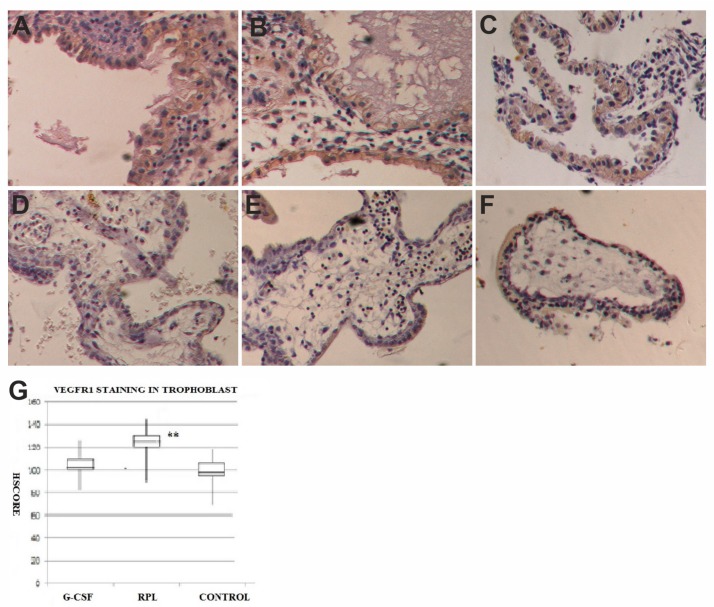
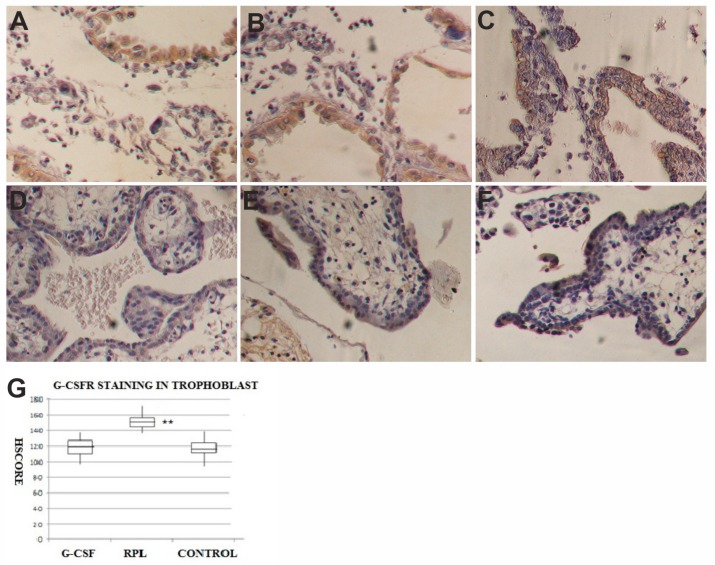
This study was conducted on three groups of patients for a total of 38 women: in 8 cases decidual and trophoblast tissue were obtained from 8 women with unexplained RPL treated with G-CSF that miscarried despite treatment; in 15 cases the tissue were obtained from 15 women with unexplained RPL no treated; 15 cases of women who underwent voluntary pregnancy termination were used as controls. Tissue collected from these patients were used for immunohistochemistry studies testing the expression of G-CSF, G-CSFR, VEGF, VEGFR-1 and Foxp3.
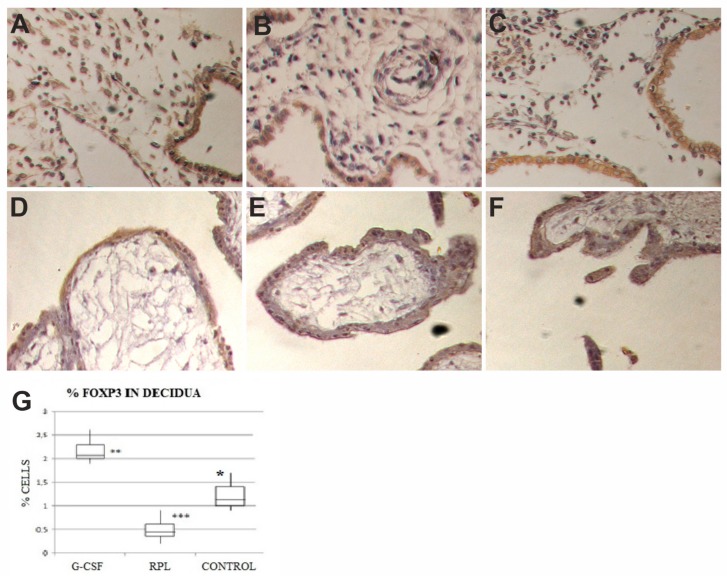
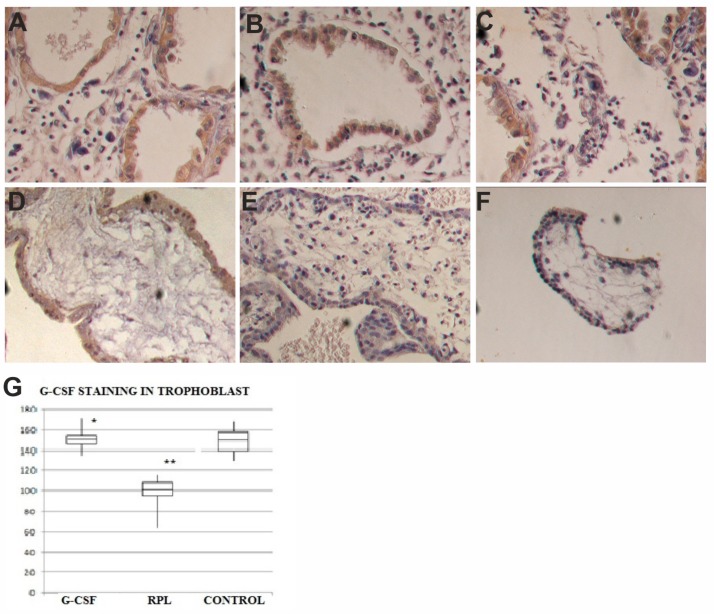
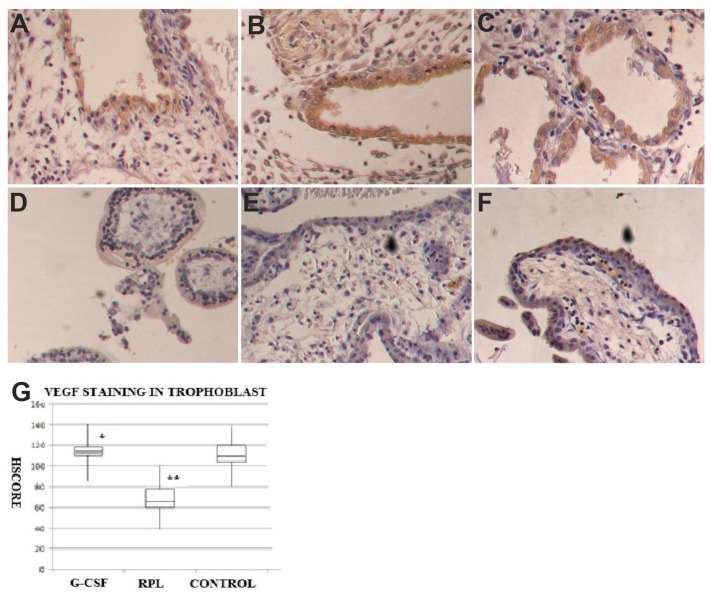
G-CSF treatment increased the concentration of cells expressing Foxp3, specific marker for Tregs, in the decidua, whereas in no treated RPL a reduction of these cells was found when compared to controls. Furthermore, G-CSF treatment increased the expression of G-CSF and VEGF in the trophoblast.
Our study showed that G-CSF treatment increased the number of decidual Treg cells in RPL patients as well as the expression of G-CSF and VEGF in villus trophoblast. These finding may explain the effectiveness of this treatment in RPL, probably regulating the maternal immune response through Tregs recruitment in the decidua, as well as stimulating trophoblast growth.
复发性流产(RPL)是一种综合征,有多种原因,在某些情况下,使用粒细胞集落刺激因子(G-CSF)治疗可能会成功,尤其是在前次流产的核型显示胚胎染色体无异常的情况下。为了评估 G-CSF 治疗对蜕膜和滋养层中 G-CSF 及其受体、VEGF 及其受体和 Foxp3(假定 Tregs 的特定标志物)表达的影响,我们进行了一项免疫组织化学研究。
这项研究共纳入三组患者,总计 38 名女性:8 例为接受 G-CSF 治疗的不明原因 RPL 患者,尽管治疗但仍流产,我们从这些患者中获得蜕膜和滋养层组织;15 例为未接受治疗的不明原因 RPL 患者,我们从这些患者中获得蜕膜和滋养层组织;15 例为自愿终止妊娠的女性作为对照组。收集这些患者的组织用于免疫组织化学研究,检测 G-CSF、G-CSFR、VEGF、VEGFR-1 和 Foxp3 的表达。
G-CSF 治疗增加了蜕膜中表达 Foxp3(Tregs 的特定标志物)的细胞浓度,而在未治疗的 RPL 中,与对照组相比,这些细胞减少。此外,G-CSF 治疗增加了绒毛滋养层中 G-CSF 和 VEGF 的表达。
我们的研究表明,G-CSF 治疗增加了 RPL 患者蜕膜中 Treg 细胞的数量,以及绒毛滋养层中 G-CSF 和 VEGF 的表达。这些发现可能解释了这种治疗在 RPL 中的有效性,可能通过招募 Tregs 到蜕膜中调节母体免疫反应,以及刺激滋养层生长。