Courlet Perrine, Livio Françoise, Guidi Monia, Cavassini Matthias, Battegay Manuel, Stoeckle Marcel, Buclin Thierry, Alves Saldanha Susana, Csajka Chantal, Marzolini Catia, Decosterd Laurent
Service of Clinical Pharmacology, Lausanne University Hospital and University of Lausanne, Lausanne, Switzerland.
Institute of Pharmaceutical Sciences of Western Switzerland, Geneva, Switzerland.
Open Forum Infect Dis. 2019 Dec 21;6(12):ofz531. doi: 10.1093/ofid/ofz531. eCollection 2019 Dec.
Antiretroviral therapy has transformed HIV infection from a deadly into a chronic condition. Aging people with HIV (PWH) are at higher risk of polypharmacy, potential drug-drug interactions (DDIs), and potentially inappropriate medications (PIMs). This study aims to compare prescribed drugs, polypharmacy, and potential DDIs between young (<65 years old) and elderly (≥65 years old) PWH. The prevalence of PIMs was assessed in elderly.
PWH from 2 centers within the Swiss HIV Cohort Study were asked to fill in a form with all their current medications. Polypharmacy was defined as being on ≥5 non-HIV drugs. PIMs were evaluated using Beers criteria. Potential DDIs for the most prescribed therapeutic classes were screened with the Liverpool interaction database.
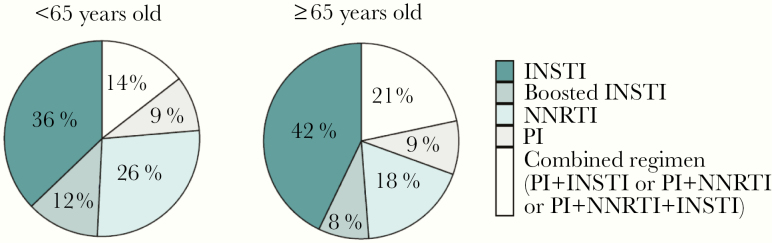
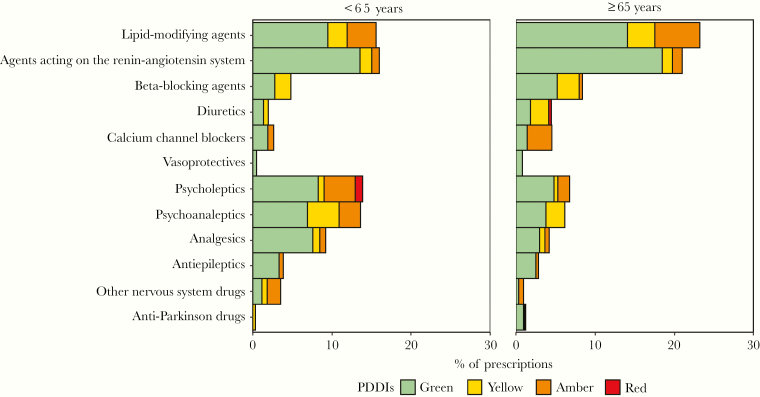
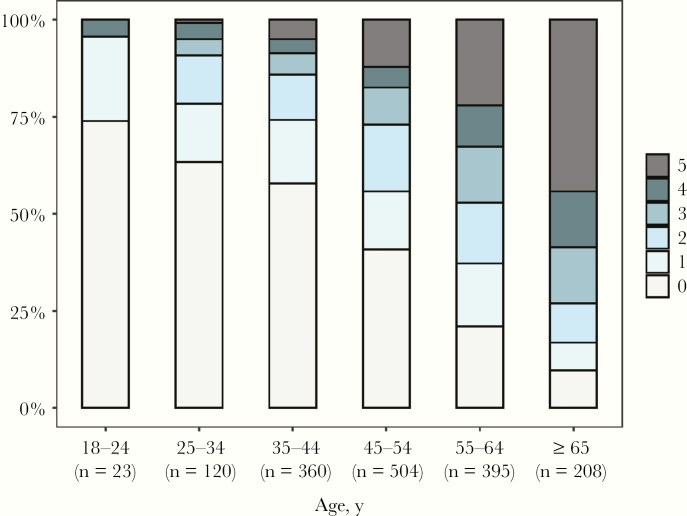
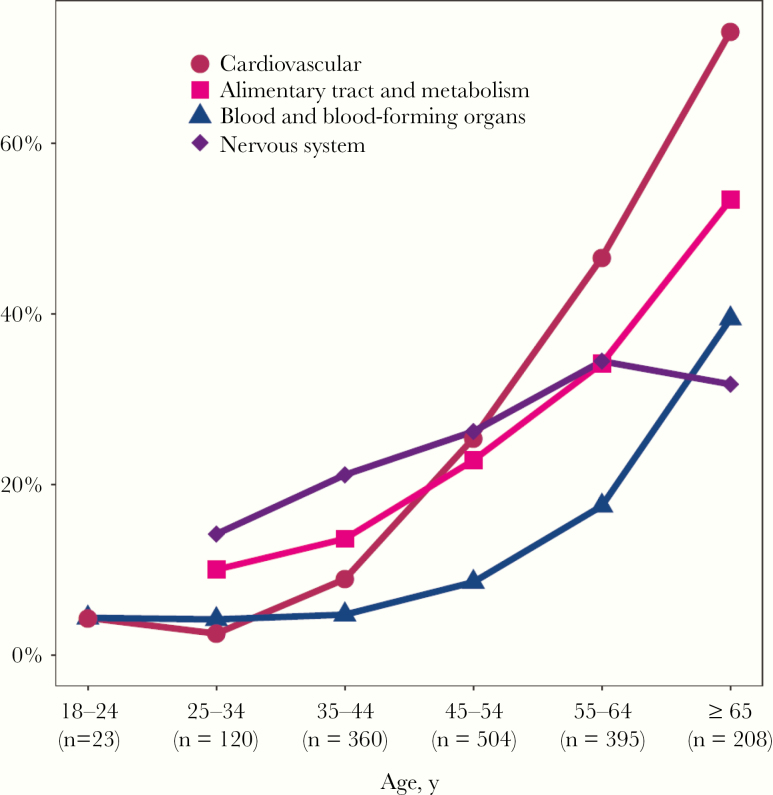
Among the 996 PWH included, 122 were ≥65 years old. Polypharmacy was more frequent in the elderly group (44% vs 12%). Medications and potential DDIs differed according to the age group: cardiovascular drugs and related potential DDIs were more common in the elderly group (73% of forms included ≥1 cardiovascular drug; 11% of cardiovascular drugs involved potential DDIs), whereas central nervous system drugs were more prescribed and involved in potential DDIs in younger PWH (26%, 11%). Potential DDIs were mostly managed through dosage adjustments. PIMs were found in 31% of the elderly group.
Potential DDIs remain common, and PIMs constitute an additional burden for the elderly. It is important that prescribers develop and maintain a proactive approach for the recognition and management of DDIs and other prescribing issues frequently encountered in geriatric medicine.
抗逆转录病毒疗法已将艾滋病毒感染从一种致命疾病转变为一种慢性病。老年艾滋病毒感染者(PWH)面临更高的多重用药风险、潜在药物相互作用(DDIs)和潜在不适当用药(PIMs)风险。本研究旨在比较年轻(<65岁)和老年(≥65岁)PWH之间的处方药、多重用药情况和潜在DDIs。评估了老年患者中PIMs的患病率。
来自瑞士艾滋病毒队列研究中2个中心的PWH被要求填写一份包含其所有当前用药情况的表格。多重用药被定义为服用≥5种非艾滋病毒药物。使用Beers标准评估PIMs。使用利物浦相互作用数据库筛查最常开具的治疗类别中的潜在DDIs。
在纳入的996名PWH中,122名年龄≥65岁。多重用药在老年组中更为常见(44%对12%)。药物和潜在DDIs因年龄组而异:心血管药物及相关潜在DDIs在老年组中更为常见(73%的表格包含≥1种心血管药物;11%的心血管药物涉及潜在DDIs),而中枢神经系统药物在年轻PWH中开具得更多且涉及潜在DDIs(26%,11%)。潜在DDIs大多通过调整剂量来处理。在31%的老年组中发现了PIMs。
潜在DDIs仍然很常见,PIMs给老年人带来了额外负担。开具处方者积极主动地识别和管理DDIs以及老年医学中经常遇到的其他处方问题非常重要。