Howard Hughes Medical Institute, Department of Biochemistry and Biophysics, University of Pennsylvania School of Medicine, Philadelphia, PA, 19104-6148, USA.
Nat Commun. 2020 Jan 7;11(1):1. doi: 10.1038/s41467-019-13993-7.
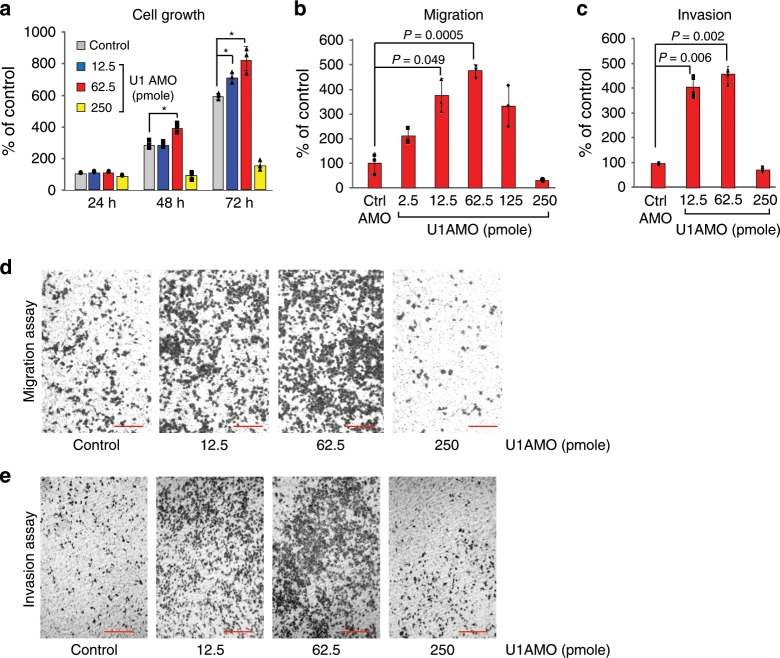
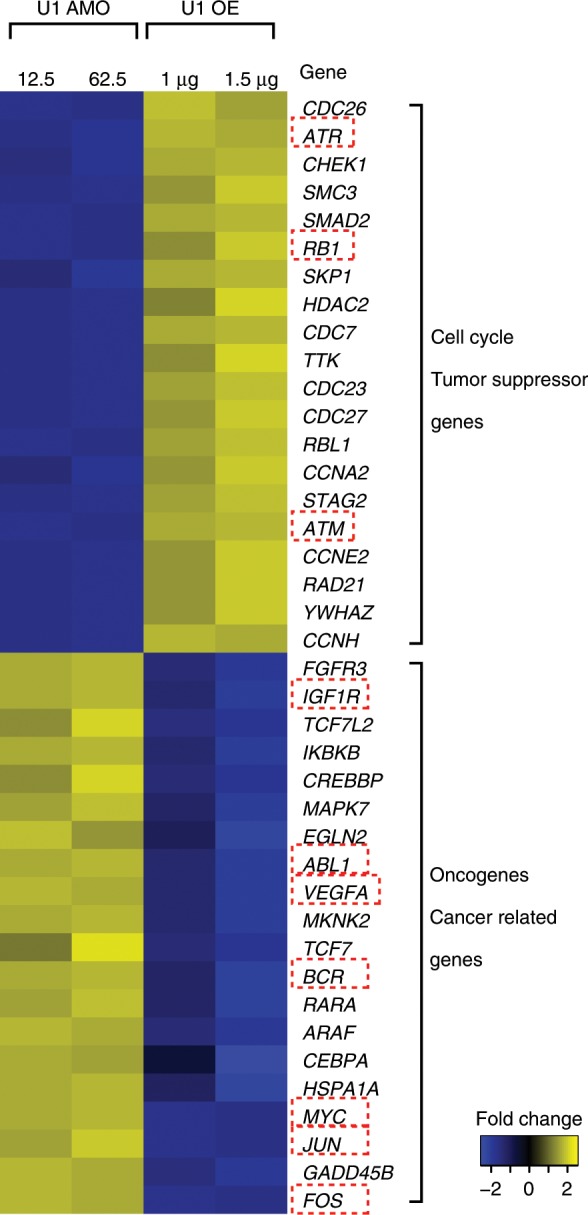
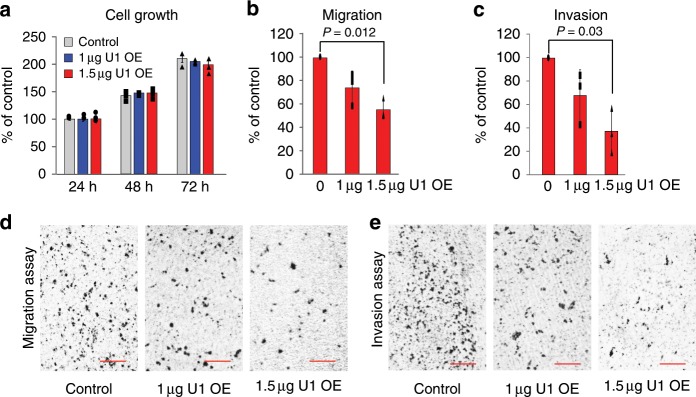
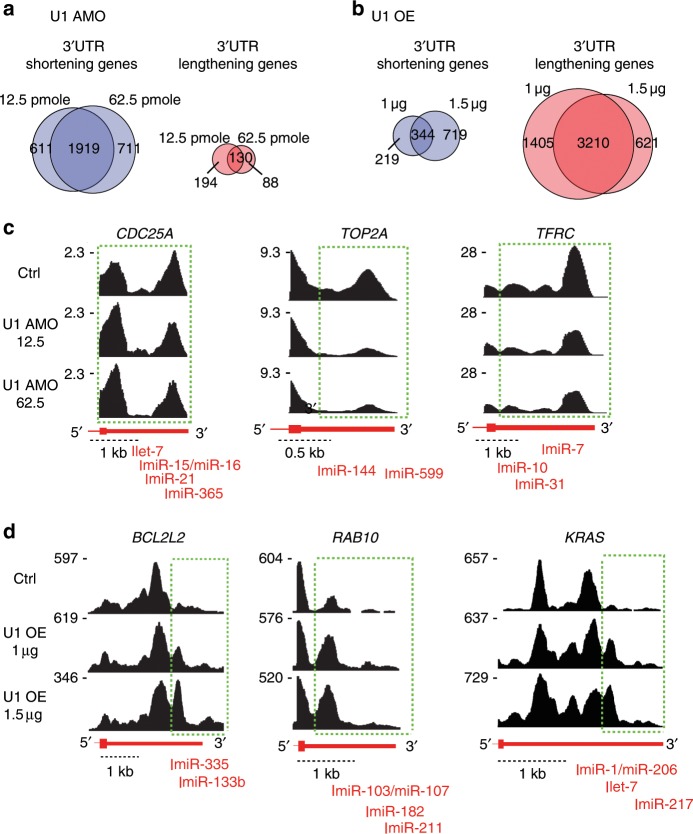
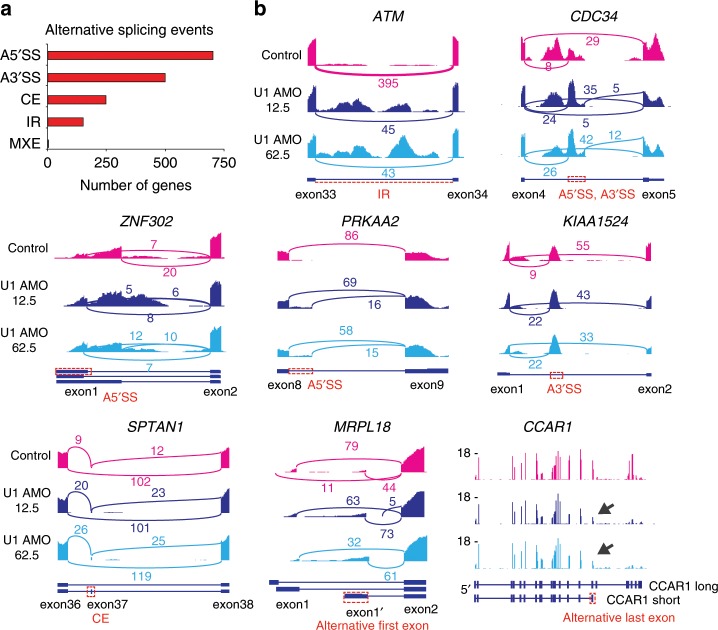
Stimulated cells and cancer cells have widespread shortening of mRNA 3'-untranslated regions (3'UTRs) and switches to shorter mRNA isoforms due to usage of more proximal polyadenylation signals (PASs) in introns and last exons. U1 snRNP (U1), vertebrates' most abundant non-coding (spliceosomal) small nuclear RNA, silences proximal PASs and its inhibition with antisense morpholino oligonucleotides (U1 AMO) triggers widespread premature transcription termination and mRNA shortening. Here we show that low U1 AMO doses increase cancer cells' migration and invasion in vitro by up to 500%, whereas U1 over-expression has the opposite effect. In addition to 3'UTR length, numerous transcriptome changes that could contribute to this phenotype are observed, including alternative splicing, and mRNA expression levels of proto-oncogenes and tumor suppressors. These findings reveal an unexpected role for U1 homeostasis (available U1 relative to transcription) in oncogenic and activated cell states, and suggest U1 as a potential target for their modulation.
刺激细胞和癌细胞由于在内含子和最后外显子中使用更多近端多聚腺苷酸化信号(PAS),导致 mRNA 3'-非翻译区域(3'UTR)广泛缩短,并转换为较短的 mRNA 亚型。U1 snRNP(U1)是脊椎动物最丰富的非编码(剪接体)小核 RNA,可沉默近端 PAS,其反义吗啉代寡核苷酸(U1 AMO)的抑制作用会引发广泛的过早转录终止和 mRNA 缩短。在这里,我们发现低剂量的 U1 AMO 可使体外癌细胞的迁移和侵袭增加高达 500%,而 U1 过表达则有相反的效果。除了 3'UTR 长度外,还观察到许多可能导致这种表型的转录组变化,包括可变剪接,以及原癌基因和肿瘤抑制基因的 mRNA 表达水平。这些发现揭示了 U1 动态平衡(相对于转录的可用 U1)在致癌和激活细胞状态中的意外作用,并表明 U1 可能是其调节的潜在靶标。