Laboratory of Virology and Infectious Disease, The Rockefeller University, New York, NY 10065.
Laboratory of Liver Infectious Diseases, Ghent University, 9000 Ghent, Belgium.
Proc Natl Acad Sci U S A. 2020 Jan 21;117(3):1678-1688. doi: 10.1073/pnas.1919035117. Epub 2020 Jan 8.
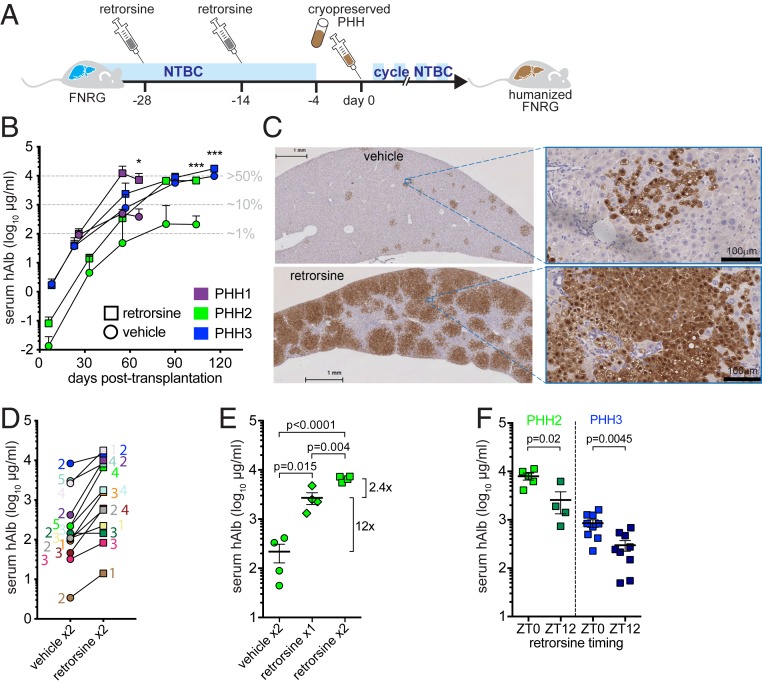
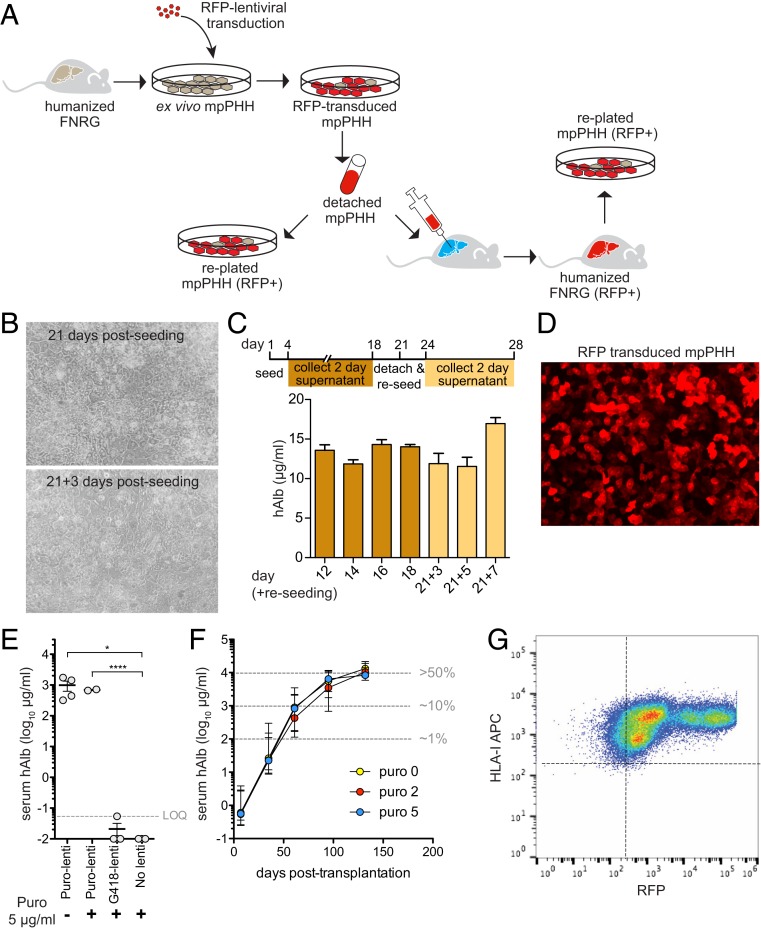
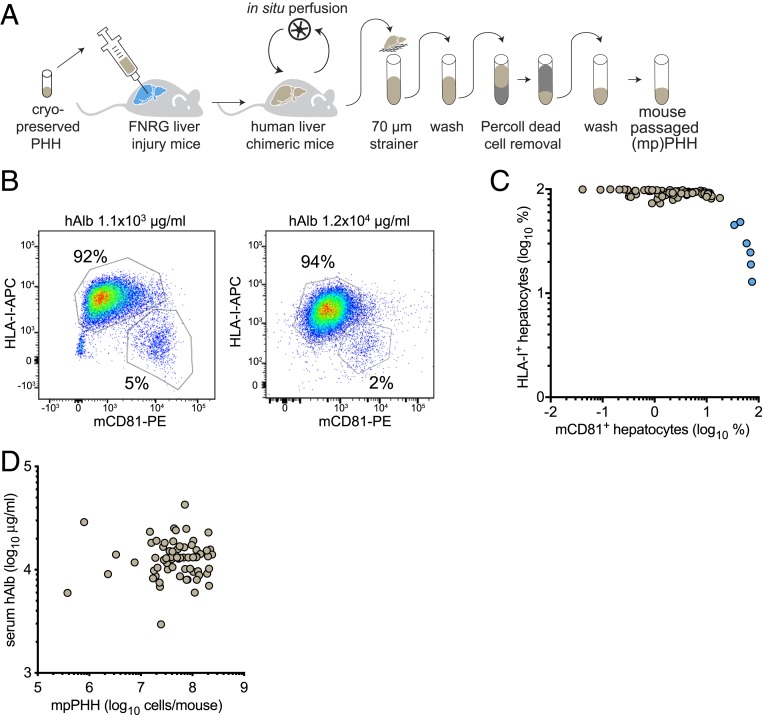
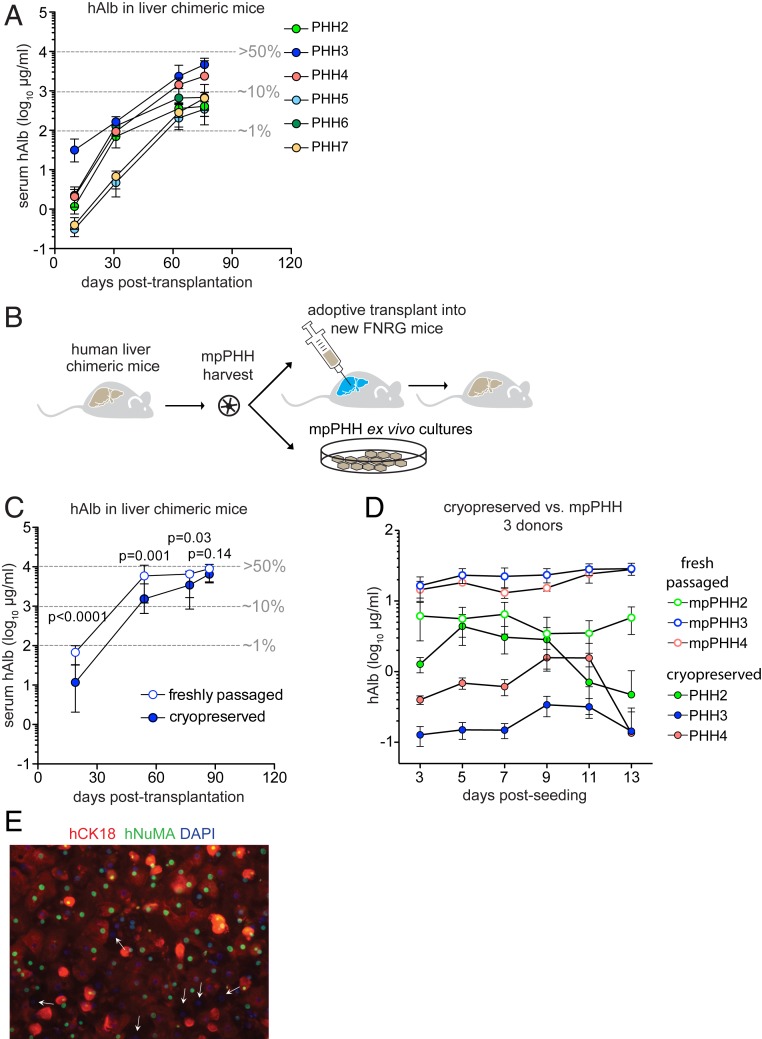
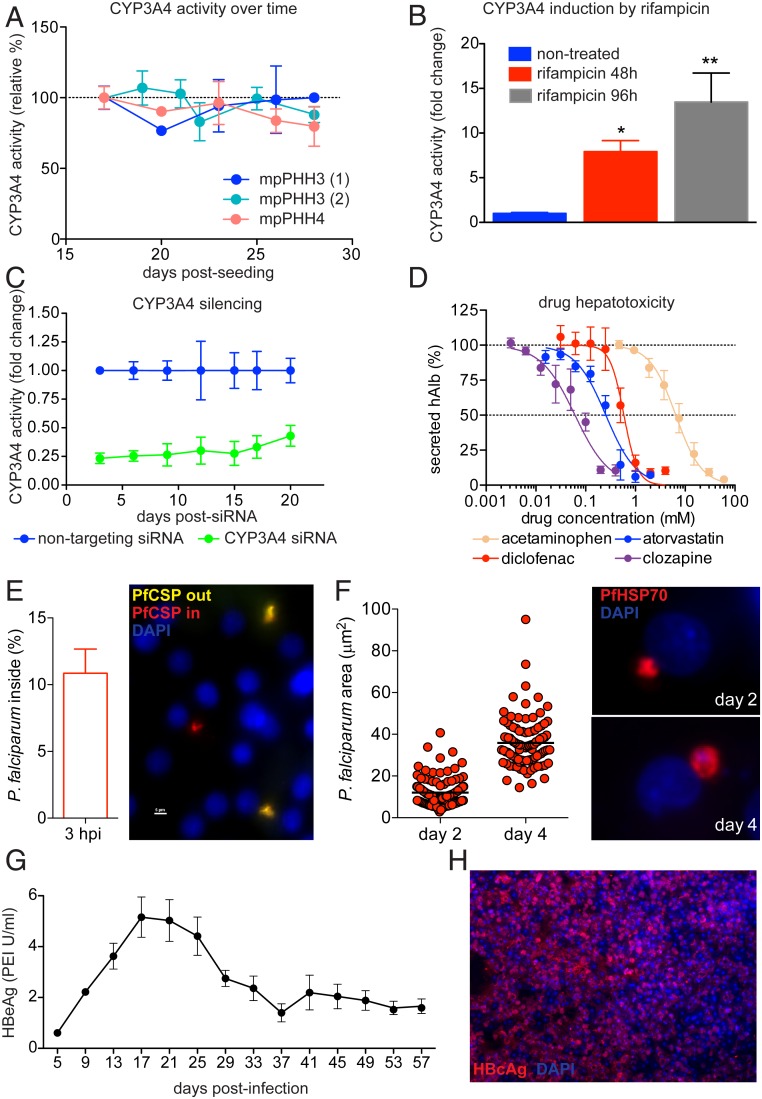
Primary human hepatocytes (PHHs) are an essential tool for modeling drug metabolism and liver disease. However, variable plating efficiencies, short lifespan in culture, and resistance to genetic manipulation have limited their use. Here, we show that the pyrrolizidine alkaloid retrorsine improves PHH repopulation of chimeric mice on average 10-fold and rescues the ability of even poorly plateable donor hepatocytes to provide cells for subsequent ex vivo cultures. These mouse-passaged (mp) PHH cultures overcome the marked donor-to-donor variability of cryopreserved PHH and remain functional for months as demonstrated by metabolic assays and infection with hepatitis B virus and mpPHH can be efficiently genetically modified in culture, mobilized, and then recultured as spheroids or retransplanted to create highly humanized mice that carry a genetically altered hepatocyte graft. Together, these advances provide flexible tools for the study of human liver disease and evaluation of hepatocyte-targeted gene therapy approaches.
原代人肝细胞(PHHs)是模拟药物代谢和肝病的重要工具。然而,可变的接种效率、培养过程中的短寿命以及对遗传操作的抗性限制了它们的使用。在这里,我们表明吡咯里西啶生物碱 retrorsine 平均将 PHH 对嵌合小鼠的再定植提高了 10 倍,并挽救了即使是极难接种的供体肝细胞提供细胞进行后续离体培养的能力。这些经过小鼠传代(mp)的 PHH 培养物克服了冷冻 PHH 明显的供体间变异性,并且在数月的代谢测定和乙型肝炎病毒感染中保持功能,并且可以在培养中高效地进行遗传修饰、动员,然后作为球体重新培养或重新移植,以创建携带遗传改变的肝细胞移植物的高度人源化小鼠。总之,这些进展为研究人类肝病和评估针对肝细胞的基因治疗方法提供了灵活的工具。