Department of Diagnostic Sciences, Ghent University, Ghent.
Department of Diagnostic Sciences, Ghent University, Ghent, Belgium.
Haematologica. 2021 Jan 1;106(1):130-141. doi: 10.3324/haematol.2019.226126.
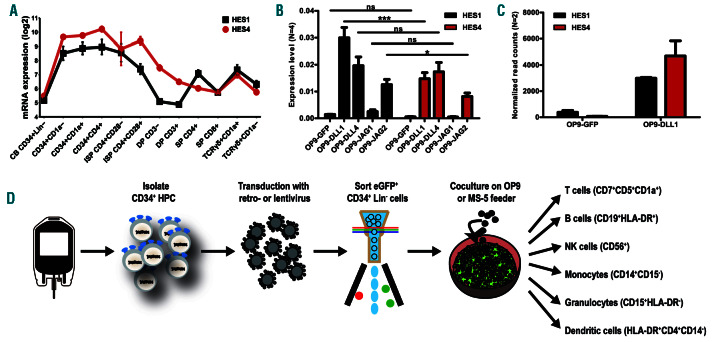
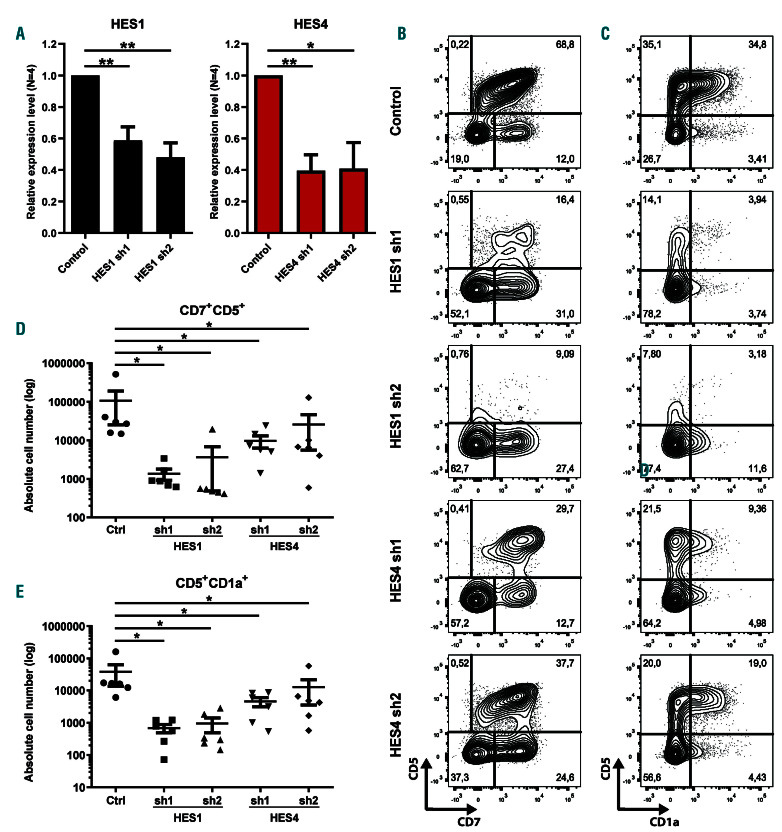
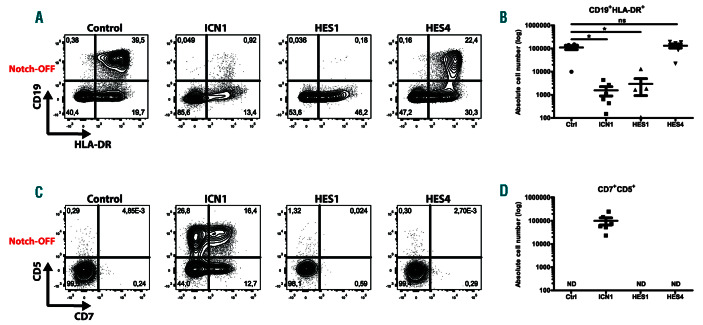
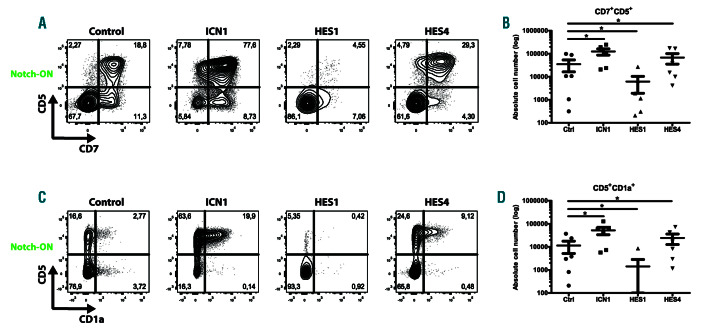
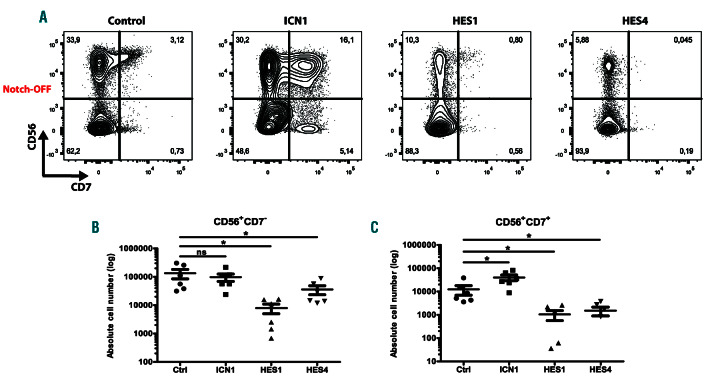
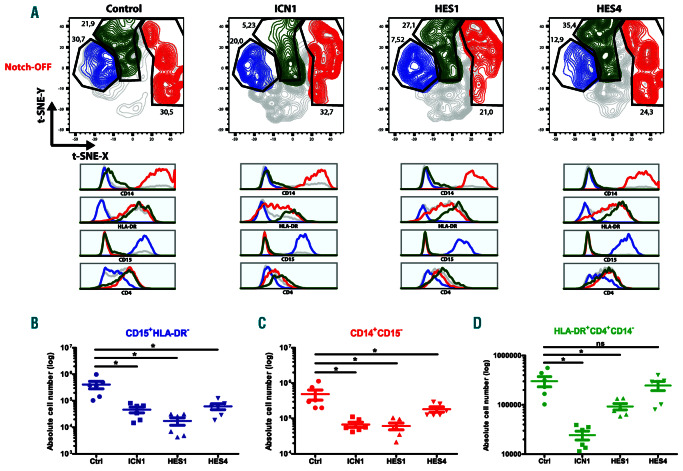
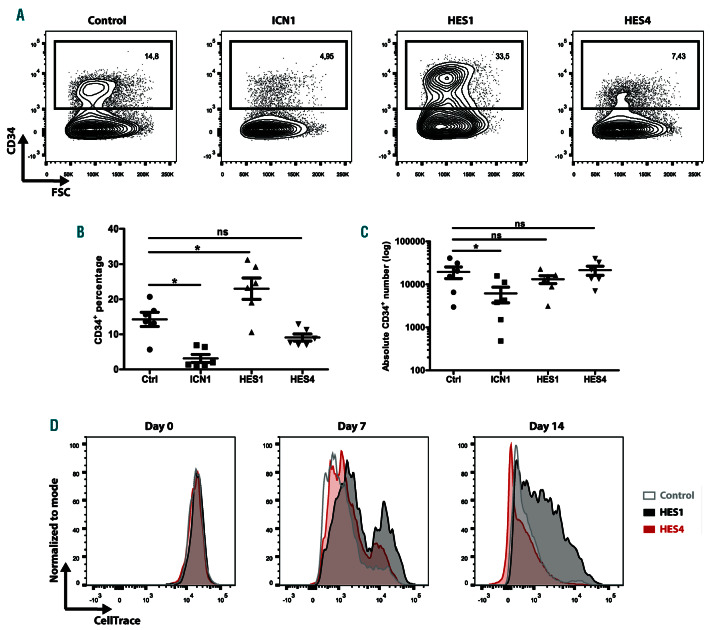
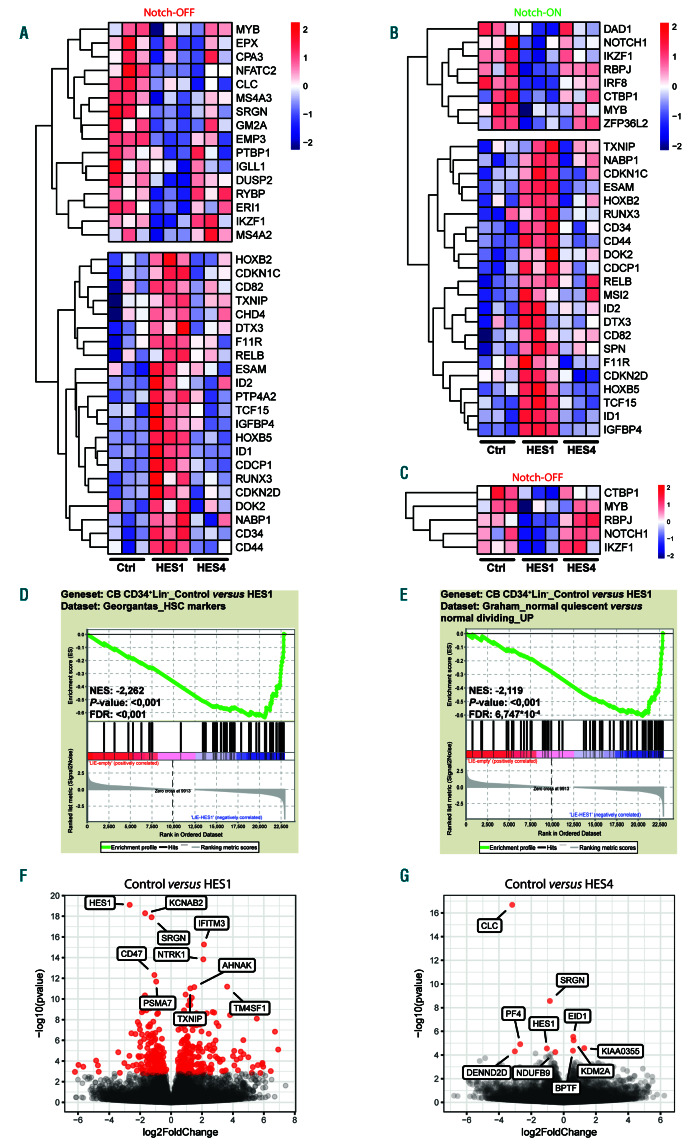
In both mouse and human, Notch1 activation is the main initial driver to induce T-cell development in hematopoietic progenitor cells. The initiation of this developmental process coincides with Notch1-dependent repression of differentiation towards other hematopoietic lineages. Although well described in mice, the role of the individual Notch1 target genes during these hematopoietic developmental choices is still unclear in human, particularly for HES4 since no orthologous gene is present in the mouse. Here, we investigated the functional capacity of the Notch1 target genes HES1 and HES4 to modulate human Notch1-dependent hematopoietic lineage decisions and their requirement during early T-cell development. We show that both genes are upregulated in a Notch-dependent manner during early T-cell development and that HES1 acts as a repressor of differentiation by maintaining a quiescent stem cell signature in CD34+ hematopoietic progenitor cells. While HES4 can also inhibit natural killer and myeloid cell development like HES1, it acts differently on the T- versus B-cell lineage choice. Surprisingly, HES4 is not capable of repressing B-cell development, the most sensitive hematopoietic lineage with respect to Notch-mediated repression. In contrast to HES1, HES4 promotes initiation of early T-cell development, but ectopic expression of HES4, or HES1 and HES4 combined, is not sufficient to induce T-lineage differentiation. Importantly, knockdown of HES1 or HES4 significantly reduces human T-cell development. Overall, we show that the Notch1 target genes HES1 and HES4 have non-redundant roles during early human T-cell development which may relate to differences in mediating Notch-dependent human hematopoietic lineage decisions.
在小鼠和人类中,Notch1 的激活是诱导造血祖细胞中 T 细胞发育的主要初始驱动因素。这一发育过程的启动与 Notch1 依赖性抑制向其他造血谱系分化同时发生。尽管在小鼠中得到了很好的描述,但在人类中,个别 Notch1 靶基因在这些造血发育选择中的作用仍然不清楚,特别是对于 HES4,因为在小鼠中没有同源基因。在这里,我们研究了 Notch1 靶基因 HES1 和 HES4 在调节人类 Notch1 依赖性造血谱系决定中的功能能力,以及它们在早期 T 细胞发育中的需求。我们表明,在早期 T 细胞发育过程中,这两个基因都以 Notch 依赖性方式上调,并且 HES1 通过在 CD34+造血祖细胞中维持静止的干细胞特征来作为分化的抑制剂。虽然 HES4 也可以像 HES1 一样抑制自然杀伤细胞和髓样细胞的发育,但它在 T 细胞与 B 细胞谱系选择上的作用不同。令人惊讶的是,HES4 不能抑制 B 细胞发育,B 细胞是对 Notch 介导的抑制最敏感的造血谱系。与 HES1 相反,HES4 促进早期 T 细胞发育的启动,但 HES4 的异位表达,或 HES1 和 HES4 的联合表达,不足以诱导 T 细胞谱系分化。重要的是,HES1 或 HES4 的敲低显著降低了人类 T 细胞的发育。总的来说,我们表明,Notch1 靶基因 HES1 和 HES4 在人类早期 T 细胞发育中具有非冗余的作用,这可能与调节 Notch 依赖性人类造血谱系决定的差异有关。