Shamloo Bahar, Kumar Nandita, Owen Randall H, Reemmer Jesica, Ost John, Perkins R Serene, Shen Hai-Ying
Department of Translational Neuroscience, Legacy Research Institute, Legacy Health, Portland, OR 97232, USA.
Legacy Tumor Bank, Legacy Research Institute, Legacy Health, Portland, OR 97232, USA.
Oncotarget. 2019 Dec 31;10(68):7238-7250. doi: 10.18632/oncotarget.27364.
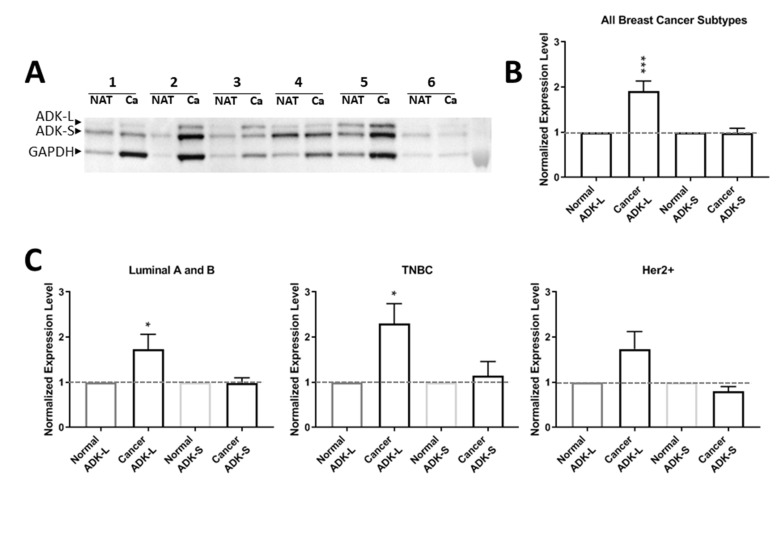
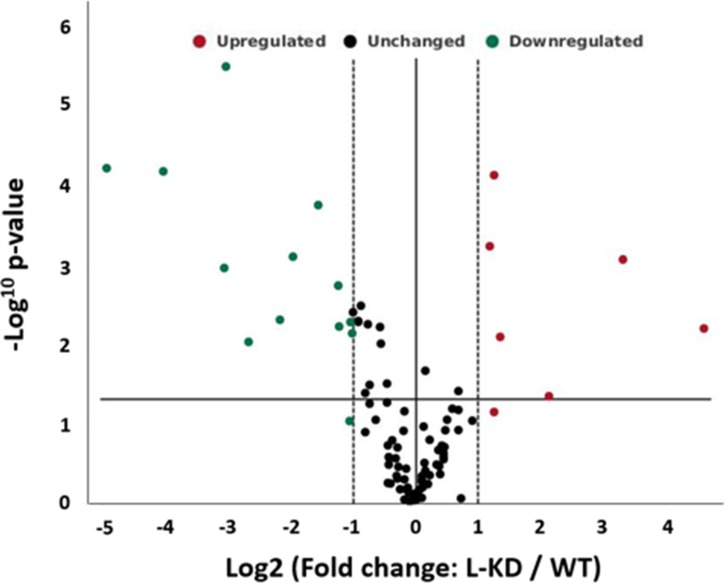
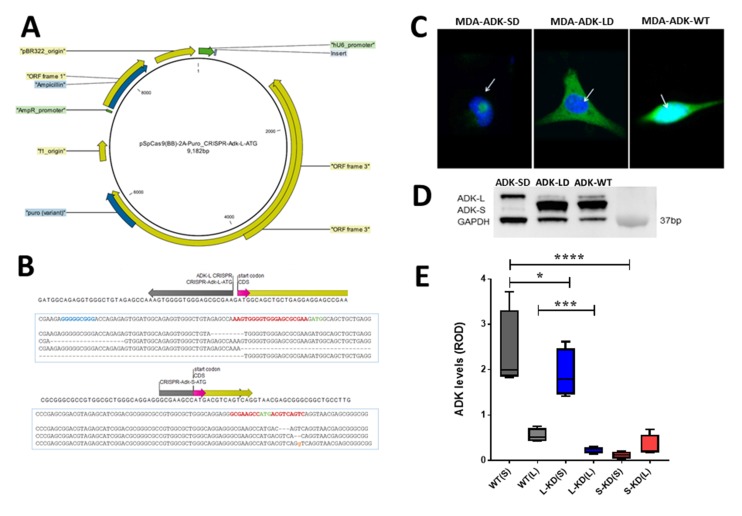
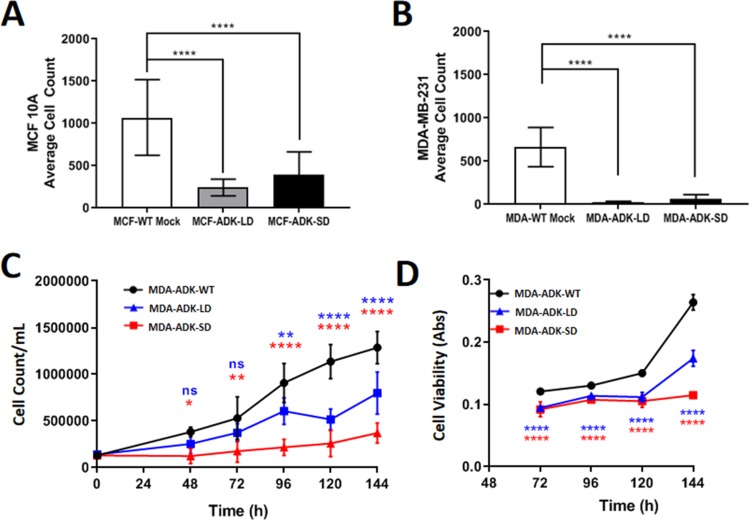
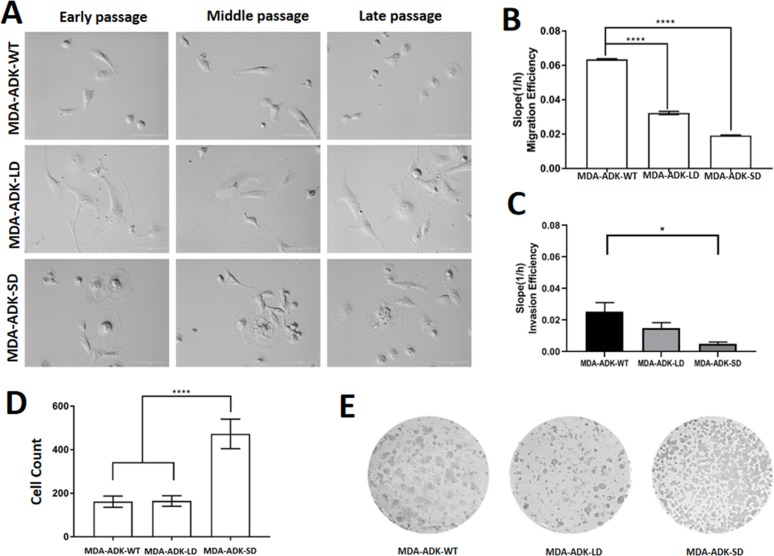
Dysregulated adenosine signaling pathway has been evidenced in the pathogenesis of breast cancer. However, the role of adenosine kinase (ADK) in tumorigenesis remains unclear while it crucially regulates the removal and availability of adenosine. ADK has two isoforms that localize to discrete subcellular spaces: i.e., nuclear, long-isoform (ADK-L) and cytosolic, short-isoform (ADK-S). We hypothesized that these two ADK isoforms would be differentially expressed in breast cancer and may contribute to divergent cellular actions in cancer. In this study, we examined the expression profiles of ADK isoforms in breast cancer tissues from 46 patient and followed up with an investigation by knocking down the expression of ADK-L or ADK-S using CRISPR gene editing to evaluate the role of ADK isoform in cancer progression and metastasis of cultured triple-negative breast cancer cell line MDA-MB-231. We demonstrated that ADK-L expression level was significantly increased in breast cancer tissues versus paired normal tissues adjacent to tumor, whereas the ADK-S expression levels were not significantly different between cancerous and normal tissues; CRISPR/Cas9-mediated downregulation of ADK isoforms, led to suppressed cellular proliferation, division, and migration of cultured breast cancer cells; ADK-L knockdown significantly upregulated gene expression of matrix metalloproteinase (ADAM23, 9.93-fold; MMP9, 24.58-fold) and downregulated expression of cyclin D2 (CCND2, -30.76-fold), adhesive glycoprotein THBS1 (-8.28-fold), and cystatin E/M (CST6, -16.32-fold). Our findings suggest a potential role of ADK-L in mitogenesis, tumorigenesis, and tumor-associated tissue remodeling and invasion; and the manipulation of ADK-L holds promise as a therapeutic strategy for aggressive breast cancer.
腺苷信号通路失调在乳腺癌发病机制中已有证据。然而,腺苷激酶(ADK)在肿瘤发生中的作用仍不清楚,尽管它对腺苷的清除和可用性起着关键调节作用。ADK有两种亚型,定位于不同的亚细胞空间:即核内的长亚型(ADK-L)和胞质内的短亚型(ADK-S)。我们推测这两种ADK亚型在乳腺癌中会有差异表达,并可能导致癌症中不同的细胞行为。在本研究中,我们检测了46例患者乳腺癌组织中ADK亚型的表达谱,并通过使用CRISPR基因编辑敲低ADK-L或ADK-S的表达进行后续研究,以评估ADK亚型在培养的三阴性乳腺癌细胞系MDA-MB-231的癌症进展和转移中的作用。我们证明,与肿瘤旁配对的正常组织相比,乳腺癌组织中ADK-L的表达水平显著升高,而癌组织和正常组织中ADK-S的表达水平无显著差异;CRISPR/Cas9介导的ADK亚型下调导致培养的乳腺癌细胞的细胞增殖、分裂和迁移受到抑制;敲低ADK-L显著上调基质金属蛋白酶的基因表达(ADAM23,9.93倍;MMP9,24.58倍),并下调细胞周期蛋白D2(CCND2,-30.76倍)、黏附糖蛋白THBS1(-8.28倍)和胱抑素E/M(CST6,-16.32倍)的表达。我们的研究结果表明ADK-L在有丝分裂、肿瘤发生以及肿瘤相关组织重塑和侵袭中具有潜在作用;对ADK-L的调控有望成为侵袭性乳腺癌的一种治疗策略。