Bajracharya Rajiv, Song Jae Geun, Back Seung Yun, Han Hyo-Kyung
College of Pharmacy, Dongguk University-Seoul, Dongguk-ro 32, Ilsan-Donggu, Goyang, Republic of Korea.
Comput Struct Biotechnol J. 2019 Sep 11;17:1290-1308. doi: 10.1016/j.csbj.2019.09.004. eCollection 2019.
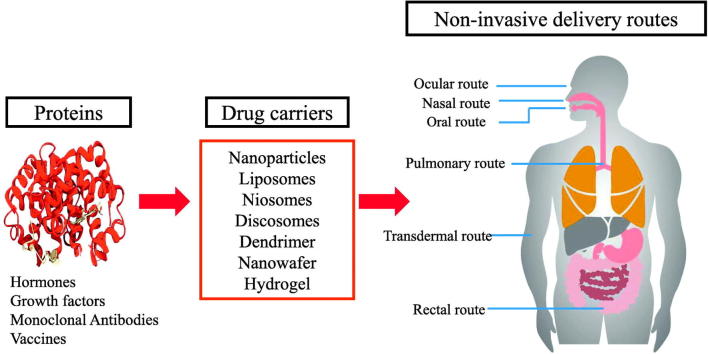
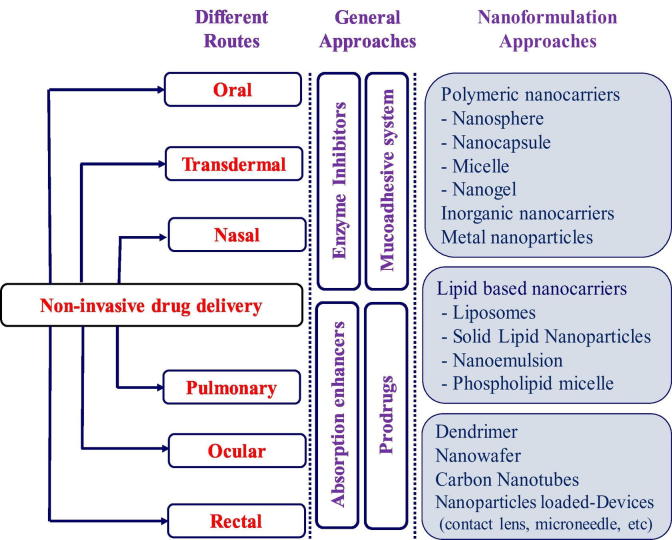
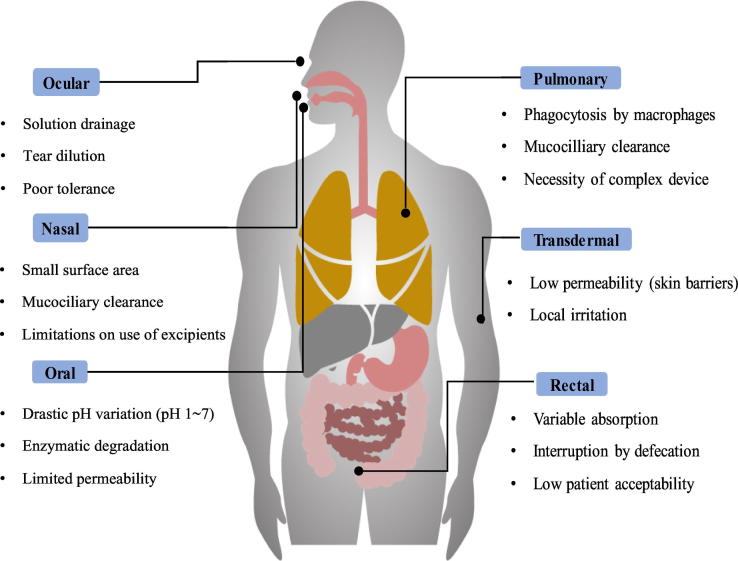
Advancements in biotechnology and protein engineering expand the availability of various therapeutic proteins including vaccines, antibodies, hormones, and growth factors. In addition, protein drugs hold many therapeutic advantages over small synthetic drugs in terms of high specificity and activity. This has led to further R&D investment in protein-based drug products and an increased number of drug approvals for therapeutic proteins. However, there are many biological and biopharmaceutical obstacles inherent to protein drugs including physicochemical and enzymatic destabilization, which limit their development and clinical application. Therefore, effective formulations of therapeutic proteins are needed to overcome the various physicochemical and biological barriers. In current medical practice, protein drugs are predominantly available in injectable formulations, which have disadvantages including pain, the possibility of infection, high cost, and low patient compliance. Consequently, non-invasive drug delivery systems for therapeutic proteins have gained great attention in the research and development of biomedicines. Therefore, this review covers the various formulation approaches to optimizing the delivery properties of protein drugs with an emphasis on improving bioavailability and patient compliance. It provides a comprehensive update on recent advancements in nanotechnologies with regard to non-invasive protein drug delivery systems, which is also categorized by the route of administrations including oral, nasal, transdermal, pulmonary, ocular, and rectal delivery systems.
生物技术和蛋白质工程的进步扩大了包括疫苗、抗体、激素和生长因子在内的各种治疗性蛋白质的可及性。此外,蛋白质药物在高特异性和活性方面比小分子合成药物具有许多治疗优势。这导致了对基于蛋白质的药物产品的进一步研发投资以及治疗性蛋白质药物获批数量的增加。然而,蛋白质药物存在许多固有的生物学和生物制药障碍,包括物理化学和酶促失稳,这限制了它们的开发和临床应用。因此,需要有效的治疗性蛋白质制剂来克服各种物理化学和生物学障碍。在当前的医学实践中,蛋白质药物主要以注射剂形式提供,其缺点包括疼痛、感染可能性、高成本和低患者依从性。因此,治疗性蛋白质的非侵入性给药系统在生物医学研发中受到了极大关注。因此,本综述涵盖了优化蛋白质药物递送特性的各种制剂方法,重点是提高生物利用度和患者依从性。它全面更新了关于非侵入性蛋白质药物递送系统的纳米技术的最新进展,这些进展也按给药途径分类,包括口服、鼻腔、透皮、肺部、眼部和直肠递送系统。