Zhang Xiao, Zhang Chunhui, Lin Qixuan, Cheng Banggui, Liu Xinxin, Peng Feng, Ren Junli
State Key Laboratory of Pulp and Paper Engineering, South China University of Technology, Guangzhou, China.
School of Light Industry and Engineering, South China University of Technology, Guangzhou, China.
Front Chem. 2019 Dec 9;7:808. doi: 10.3389/fchem.2019.00808. eCollection 2019.
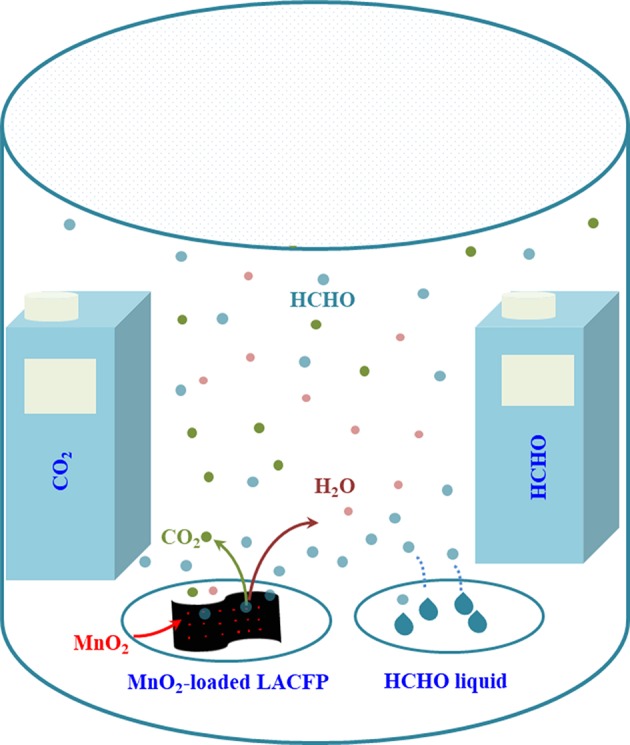
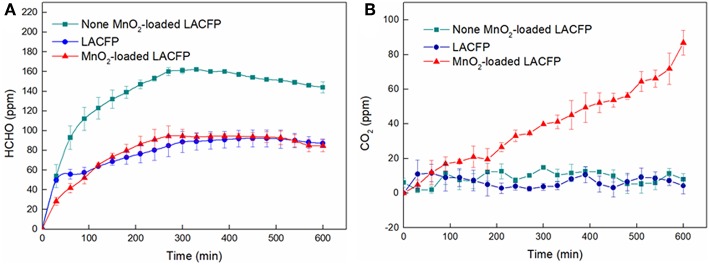
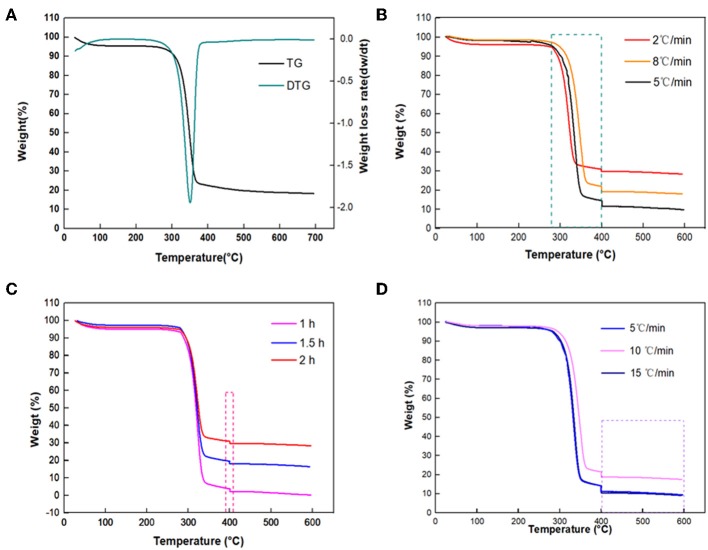
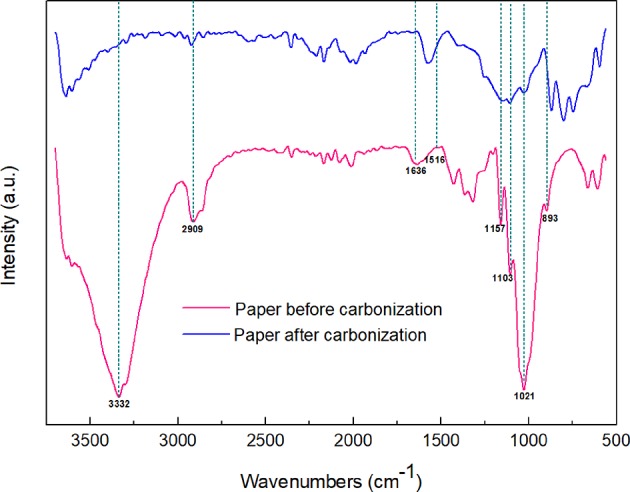
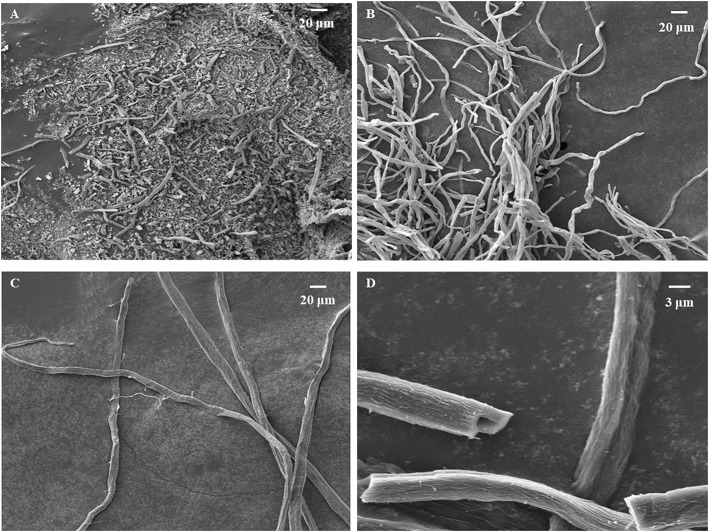
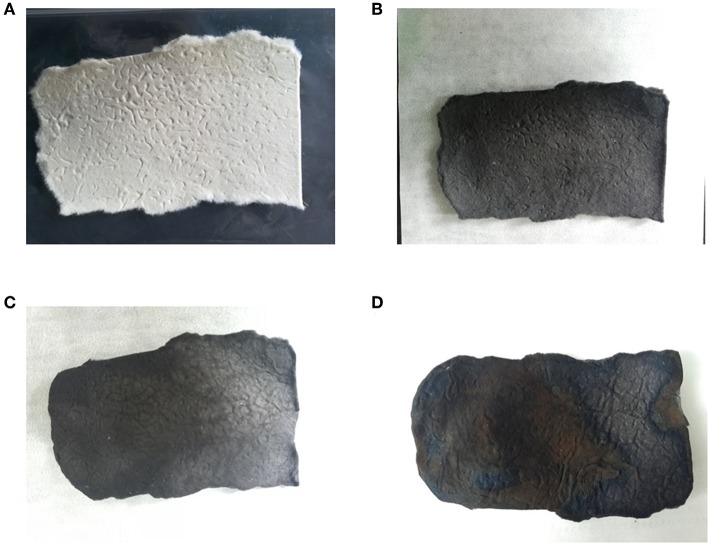
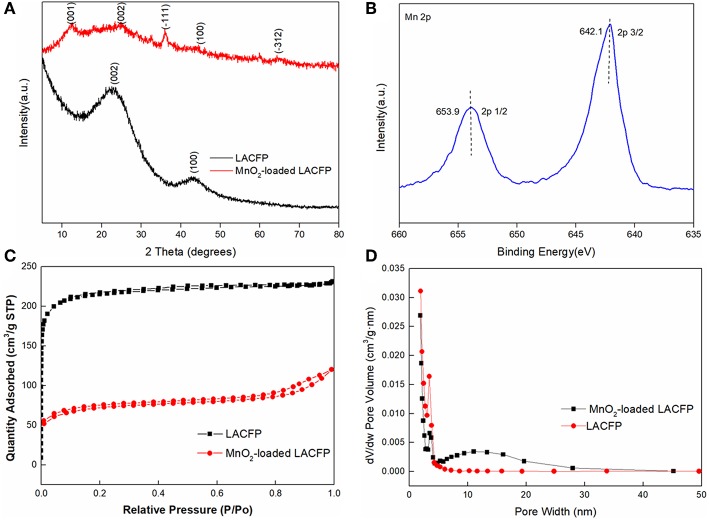
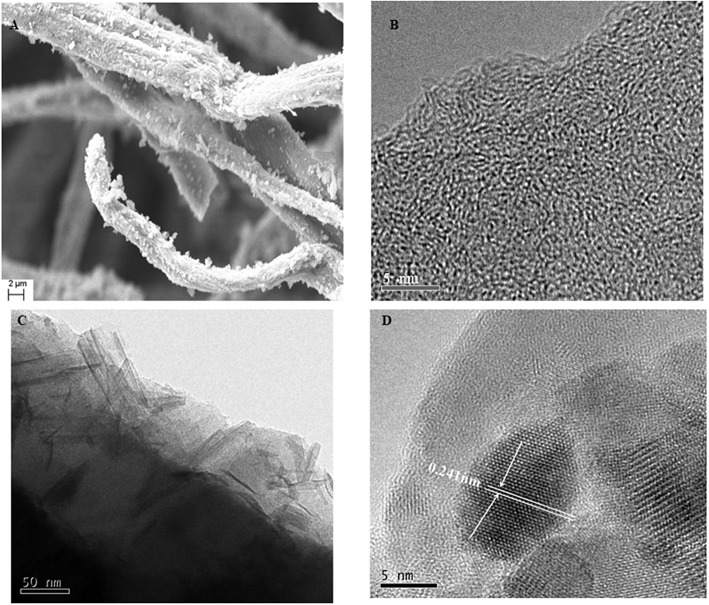
Formaldehyde is a colorless, highly toxic, and flammable gas that is harmful to human health. Recently, many efforts have been devoted to the application of activated carbon to absorb formaldehyde. In this work, lignocellulose-based activated carbon fiber paper (LACFP) loaded with manganese dioxide (MnO) was fabricated for the adsorption and catalytic degradation of formaldehyde. LACFP was prepared by two-stage carbonization and activation of sisal hemp pulp-formed paper and was then impregnated with manganese sulfate (MnSO) and potassium permanganate (KMnO) solutions; MnO then formed by growth on the LACFP base by calcination. The catalytic performance of MnO-loaded LACFP for formaldehyde was then investigated. It was found that the suitable carbonization conditions were elevating the temperature first by raising it at 10°C/min from room temperature to 280°C, then at 2°C/min from 280 to 400°C, maintaining the temperature at 400°C for 1 h, and then increasing it quickly from 400 to 700°C at 15°C/min. The conditions used for activation were similar to those for carbonization, with the temperature additionally being held at 700°C for 2 h. The conditions mentioned above were optimized to maintain the fiber structure and shape integrity of the paper, being conducive to loading with catalytically active substances. Regarding the catalytic activity of MnO-loaded LACFP, the concentration of formaldehyde decreased by 59 ± 6 ppm and the concentration of ΔCO increased by 75 ± 3 ppm when the reaction proceeded at room temperature for 10 h. The results indicated that MnO-loaded LACFP could catalyze formaldehyde into non-toxic substances.
甲醛是一种无色、剧毒且易燃的气体,对人体健康有害。最近,人们致力于将活性炭应用于吸附甲醛。在这项工作中,制备了负载二氧化锰(MnO)的木质纤维素基活性炭纤维纸(LACFP)用于吸附和催化降解甲醛。LACFP通过对剑麻浆成型纸进行两阶段碳化和活化制备,然后用硫酸锰(MnSO)和高锰酸钾(KMnO)溶液浸渍;MnO随后通过煅烧在LACFP基体上生长形成。然后研究了负载MnO的LACFP对甲醛的催化性能。发现合适的碳化条件是先以10℃/min的速率从室温升温至280℃,然后以2℃/min的速率从280℃升温至400℃,在400℃保持温度1 h,然后以15℃/min的速率从400℃快速升温至700℃。活化条件与碳化条件相似,温度额外保持在700℃2 h。上述条件经过优化以保持纸张的纤维结构和形状完整性,有利于负载催化活性物质。关于负载MnO 的LACFP的催化活性,当反应在室温下进行10 h时,甲醛浓度降低了59±6 ppm,ΔCO浓度增加了75±3 ppm。结果表明,负载MnO的LACFP可以将甲醛催化转化为无毒物质。