Marinaro Federica, Gómez-Serrano María, Jorge Inmaculada, Silla-Castro Juan Carlos, Vázquez Jesús, Sánchez-Margallo Francisco Miguel, Blázquez Rebeca, López Esther, Álvarez Verónica, Casado Javier G
Stem Cell Therapy Unit, Jesús Usón Minimally Invasive Surgery Centre, Cáceres, Spain.
CIBER de Enfermedades Cardiovasculares, Madrid, Spain.
Front Bioeng Biotechnol. 2019 Dec 20;7:431. doi: 10.3389/fbioe.2019.00431. eCollection 2019.
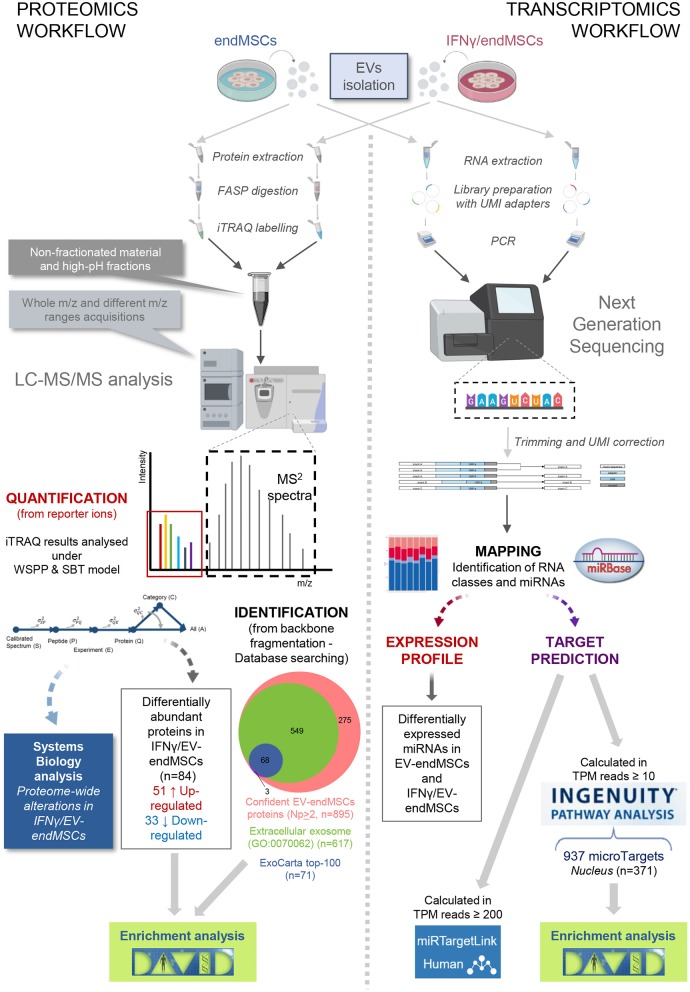
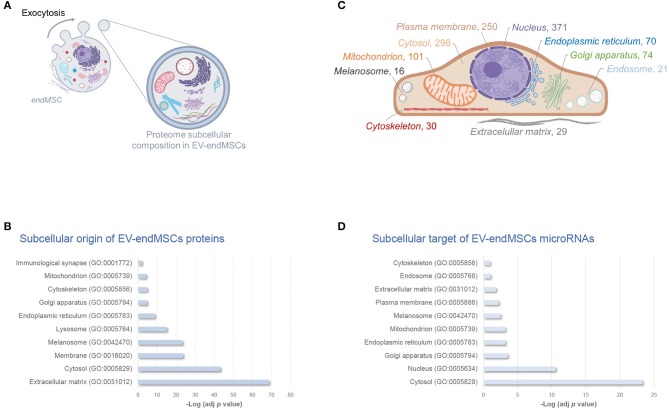
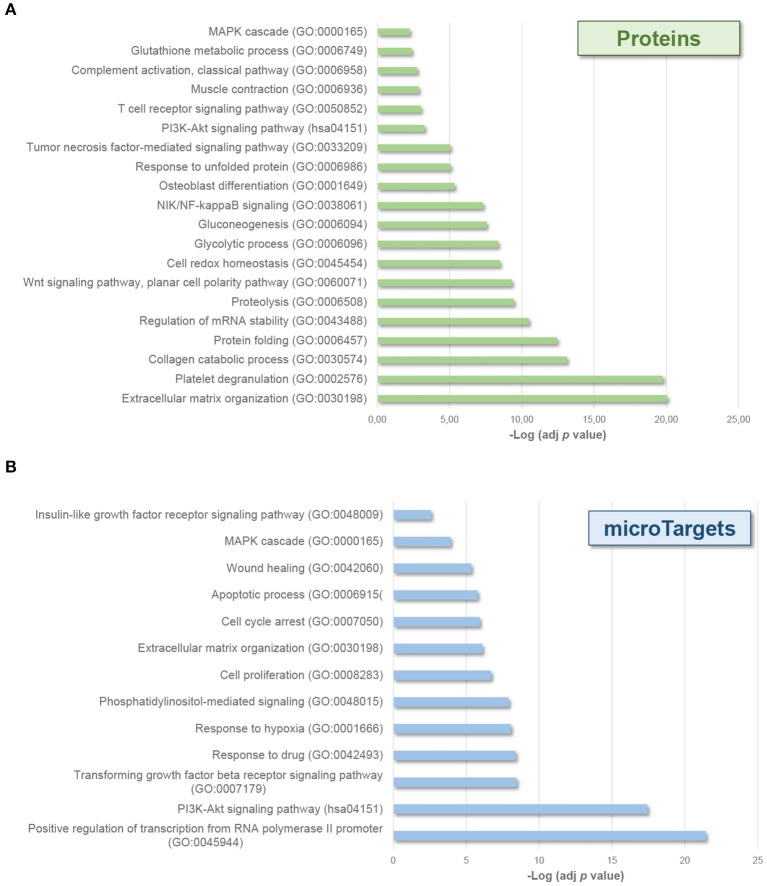
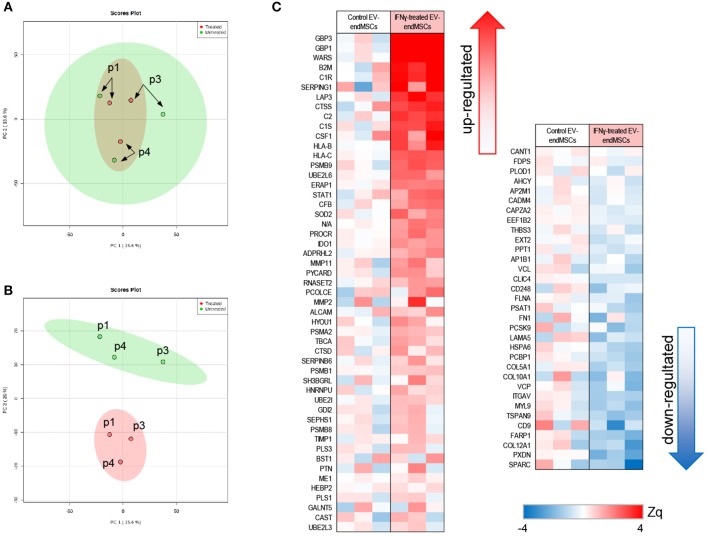
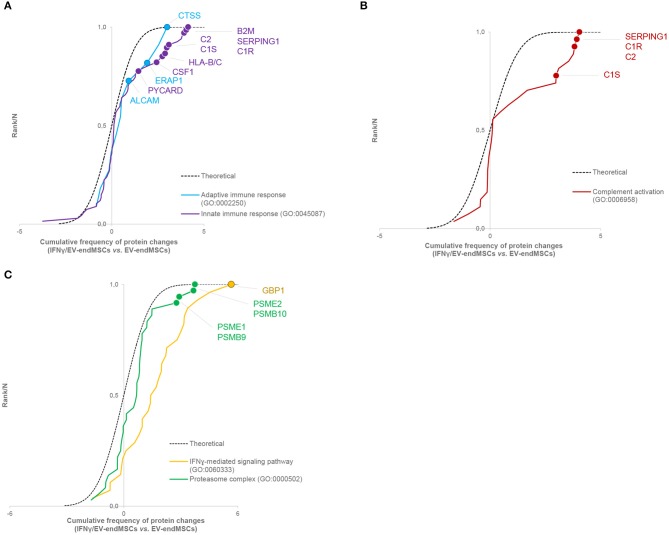
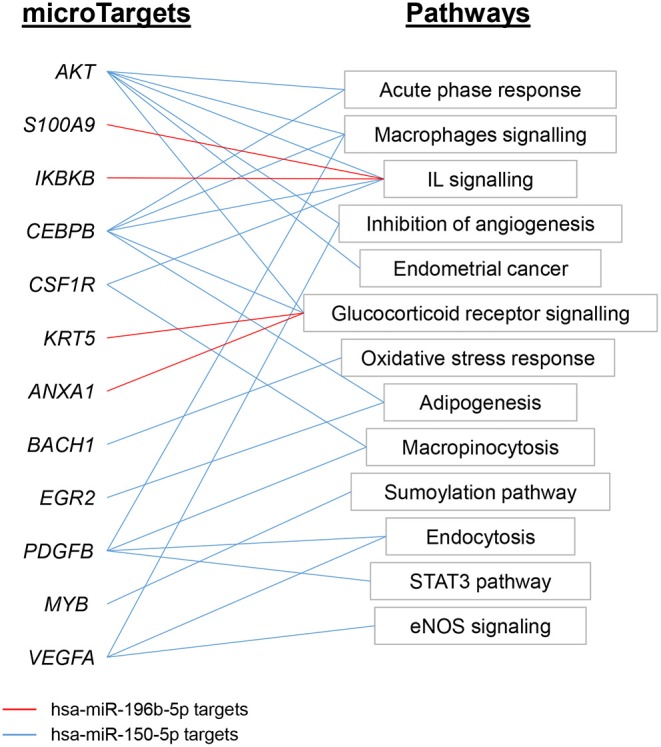
Endometrial-derived Mesenchymal Stem Cells (endMSCs) are involved in the regeneration and remodeling of human endometrium, being considered one of the most promising candidates for stem cell-based therapies. Their therapeutic effects have been found to be mediated by extracellular vesicles (EV-endMSCs) with pro-angiogenic, anti-apoptotic, and immunomodulatory effects. Based on that, the main goal of this study was to characterize the proteome and microRNAome of these EV-endMSCs by proteomics and transcriptomics approaches. Additionally, we hypothesized that inflammatory priming of endMSCs may contribute to modify the therapeutic potential of these vesicles. High-throughput proteomics revealed that 617 proteins were functionally annotated as (GO:0070062), corresponding to the 70% of the EV-endMSC proteome. Bioinformatics analyses allowed us to identify that these proteins were involved in adaptive/innate immune response, complement activation, antigen processing/presentation, negative regulation of apoptosis, and different signaling pathways, among others. Of note, multiplexed quantitative proteomics and Systems Biology analyses showed that IFNγ priming significantly modulated the protein profile of these vesicles. As expected, proteins involved in antigen processing and presentation were significantly increased. Interestingly, immunomodulatory proteins, such as CSF1, ERAP1, or PYCARD were modified. Regarding miRNAs expression profile in EV-endMSCs, Next-Generation Sequencing (NGS) showed that the preferred site of microRNAome targeting was the nucleus ( = 371 microTargets), significantly affecting (GO:0007165), (GO:0008283), and (GO:0006915), among others. Interestingly, NGS analyses highlighted that several miRNAs, such as hsa-miR-150-5p or hsa-miR-196b-5p, were differentially expressed in IFNγ-primed EV-endMSCs. These miRNAs have a functional involvement in glucocorticoid receptor signaling, IL-6/8/12 signaling, and in the role of macrophages. In summary, these results allowed us to understand the complexity of the molecular networks in EV-endMSCs and their potential effects on target cells. To our knowledge, this is the first comprehensive study based on proteomic and genomic approaches to unravel the therapeutic potential of these extracellular vesicles, that may be used as immunomodulatory effectors in the treatment of inflammatory conditions.
子宫内膜来源的间充质干细胞(endMSCs)参与人类子宫内膜的再生和重塑,被认为是基于干细胞治疗最有前景的候选者之一。已发现它们的治疗作用由具有促血管生成、抗凋亡和免疫调节作用的细胞外囊泡(EV-endMSCs)介导。基于此,本研究的主要目标是通过蛋白质组学和转录组学方法对这些EV-endMSCs的蛋白质组和微小RNA组进行表征。此外,我们假设endMSCs的炎症预处理可能有助于改变这些囊泡的治疗潜力。高通量蛋白质组学显示,617种蛋白质在功能上被注释为(GO:0070062),占EV-endMSC蛋白质组的70%。生物信息学分析使我们能够确定这些蛋白质参与了适应性/先天性免疫反应、补体激活、抗原加工/呈递、细胞凋亡的负调控以及不同的信号通路等。值得注意的是,多重定量蛋白质组学和系统生物学分析表明,IFNγ预处理显著调节了这些囊泡的蛋白质谱。正如预期的那样,参与抗原加工和呈递的蛋白质显著增加。有趣的是,免疫调节蛋白,如CSF1、ERAP1或PYCARD发生了改变。关于EV-endMSCs中的微小RNA表达谱,下一代测序(NGS)显示微小RNA组的首选靶向位点是细胞核(=371个微小靶点),显著影响(GO:0007165)、(GO:0008283)和(GO:0006915)等。有趣的是,NGS分析突出显示,几种微小RNA,如hsa-miR-150-5p或hsa-miR-196b-5p,在IFNγ预处理的EV-endMSCs中差异表达。这些微小RNA在糖皮质激素受体信号传导、IL-6/8/12信号传导以及巨噬细胞的作用中具有功能参与。总之,这些结果使我们能够了解EV-endMSCs中分子网络的复杂性及其对靶细胞的潜在影响。据我们所知,这是第一项基于蛋白质组学和基因组学方法来揭示这些细胞外囊泡治疗潜力的综合研究,这些囊泡可作为免疫调节效应物用于治疗炎症性疾病。