Laboratory of Clinical Chemistry and Haematology, UMC Utrecht, Utrecht, The Netherlands.
Department of Physiology, Anatomy and Genetics, University of Oxford, Oxford, UK.
Exp Mol Med. 2019 Mar 15;51(3):1-12. doi: 10.1038/s12276-019-0223-5.
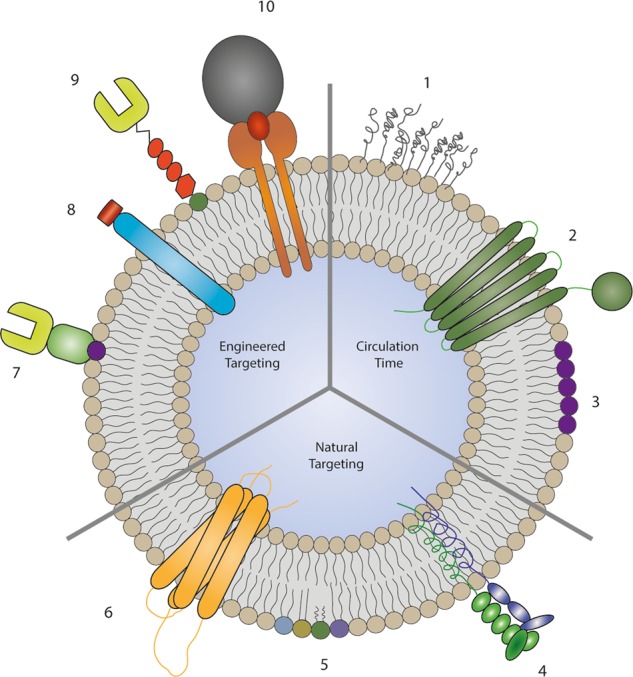
Extracellular vesicles (EVs) are increasingly being recognized as mediators of intercellular signaling via the delivery of effector molecules. Interestingly, certain types of EVs are also capable of inducing therapeutic responses. For these reasons, the therapeutic potential of EVs is a topic of intense research, both in the context of drug delivery and regenerative medicine. However, to fully utilize EVs for therapeutic purposes, an improved understanding of the mechanisms by which they function would be highly advantageous. Here, the current state of knowledge regarding the cellular uptake and trafficking of EVs is reviewed, along with a consideration of how these pathways potentially influence the functions of therapeutic EVs. Furthermore, the natural cell-targeting abilities, biodistribution profiles, and pharmacokinetics of exogenously administered EVs, along with the components responsible for these features are discussed. An overview of the potential clinical applications and preclinical examples of their successful use is also provided. Finally, examples of EV modifications that have successfully been employed to improve their therapeutic characteristics receive a particular focus. We suggest that, in addition to investigation of EV cell targeting and routes of uptake, future research into the routes of intracellular trafficking in recipient cells is required to optimally utilize EVs for therapeutic purposes.
细胞外囊泡(EVs)越来越被认为是通过传递效应分子来介导细胞间信号传递的介质。有趣的是,某些类型的 EVs 也能够诱导治疗反应。出于这些原因,EVs 的治疗潜力是一个研究热点,无论是在药物输送还是再生医学的背景下。然而,为了充分利用 EVs 进行治疗,深入了解它们发挥作用的机制将非常有利。在这里,我们回顾了关于 EVs 细胞摄取和运输的现有知识状态,并考虑了这些途径如何潜在地影响治疗性 EVs 的功能。此外,还讨论了外源性给予的 EVs 的天然细胞靶向能力、生物分布谱和药代动力学,以及负责这些特征的成分。还概述了它们成功应用的潜在临床应用和临床前实例。最后,特别关注了那些经过成功修饰以改善其治疗特性的 EV。我们认为,除了研究 EV 细胞靶向和摄取途径外,还需要研究受体细胞内的细胞内运输途径,以优化 EVs 用于治疗目的。