Makowiecka Aleksandra, Malek Natalia, Mazurkiewicz Ewa, Mrówczyńska Ewa, Nowak Dorota, Mazur Antonina Joanna
Department of Cell Pathology, Faculty of Biotechnology, University of Wrocław, Wrocław, Poland.
Front Cell Dev Biol. 2019 Dec 23;7:304. doi: 10.3389/fcell.2019.00304. eCollection 2019.
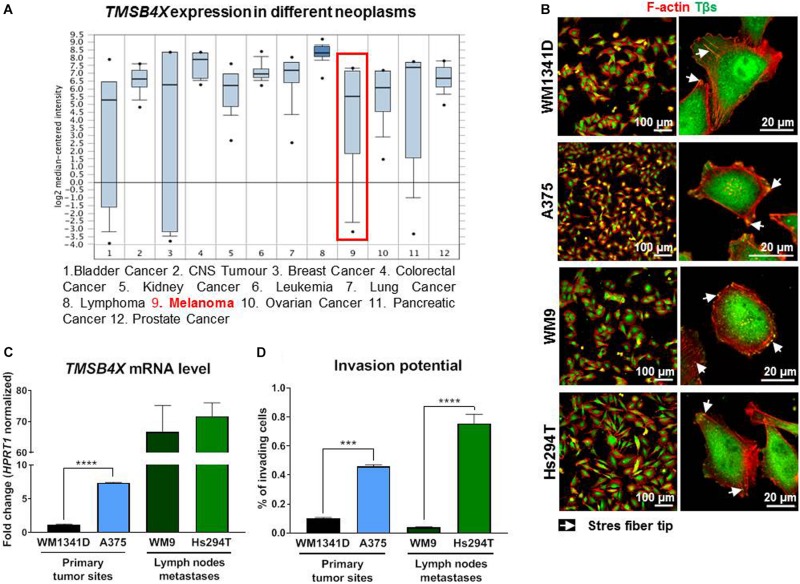
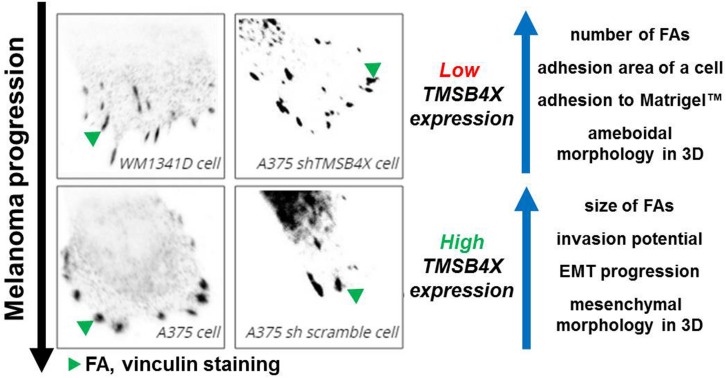
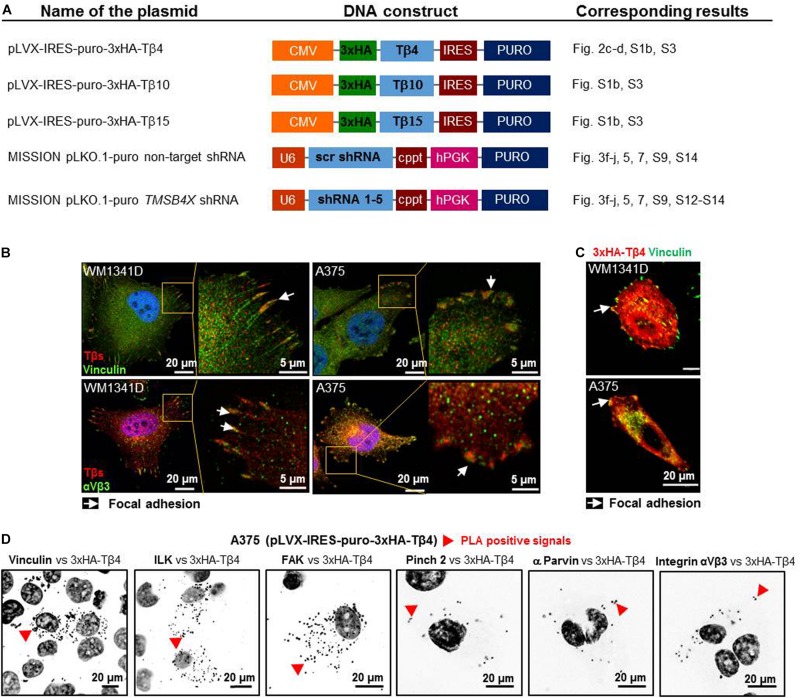
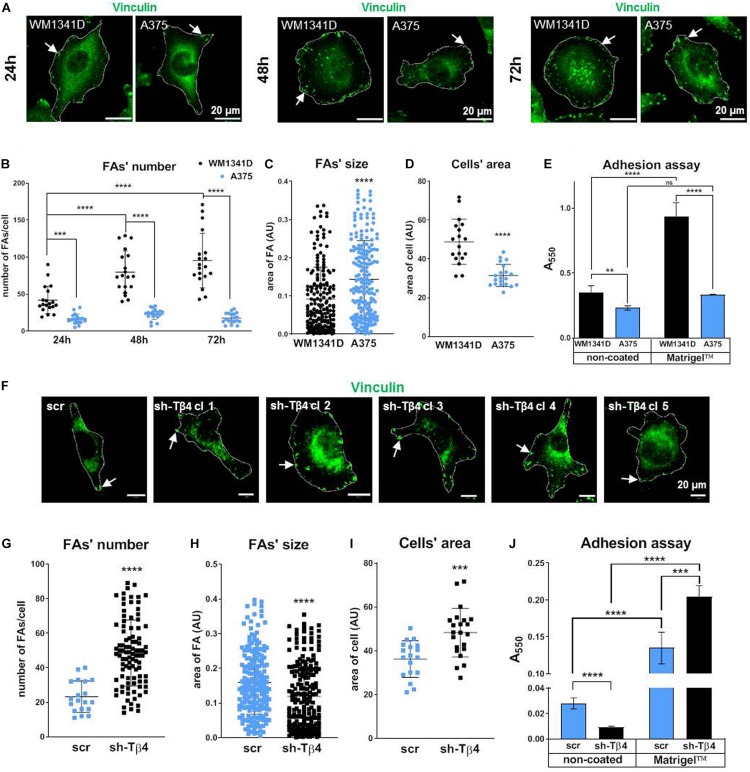
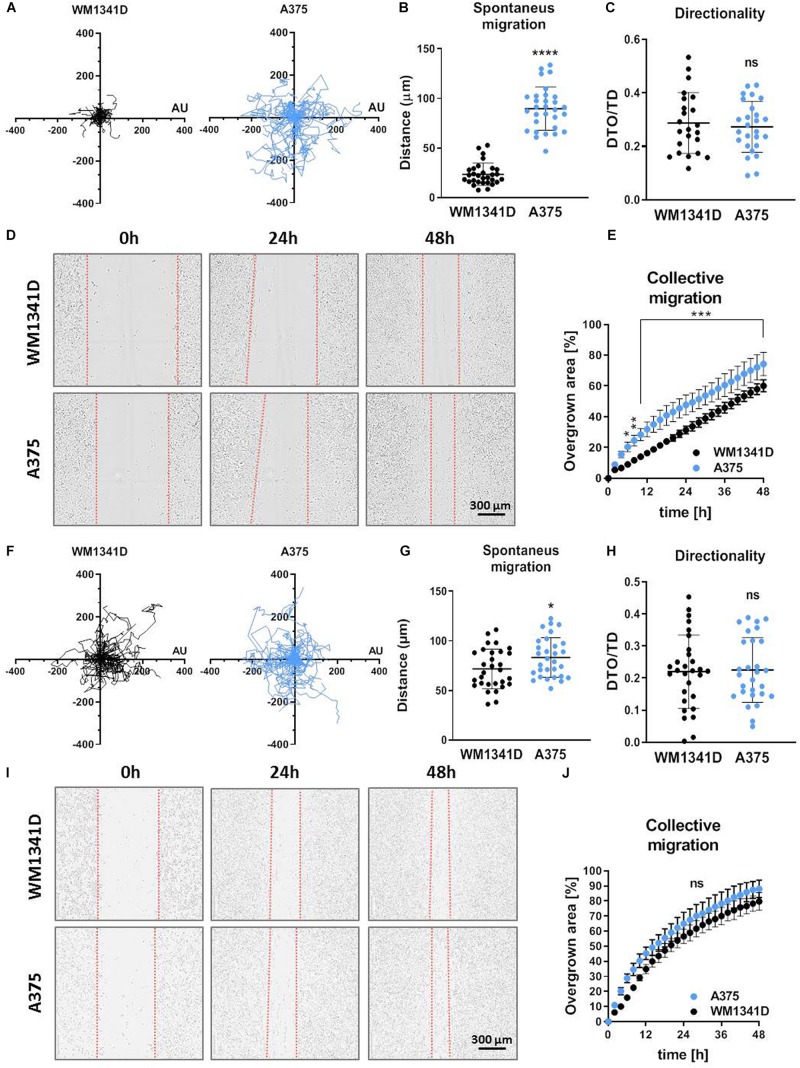
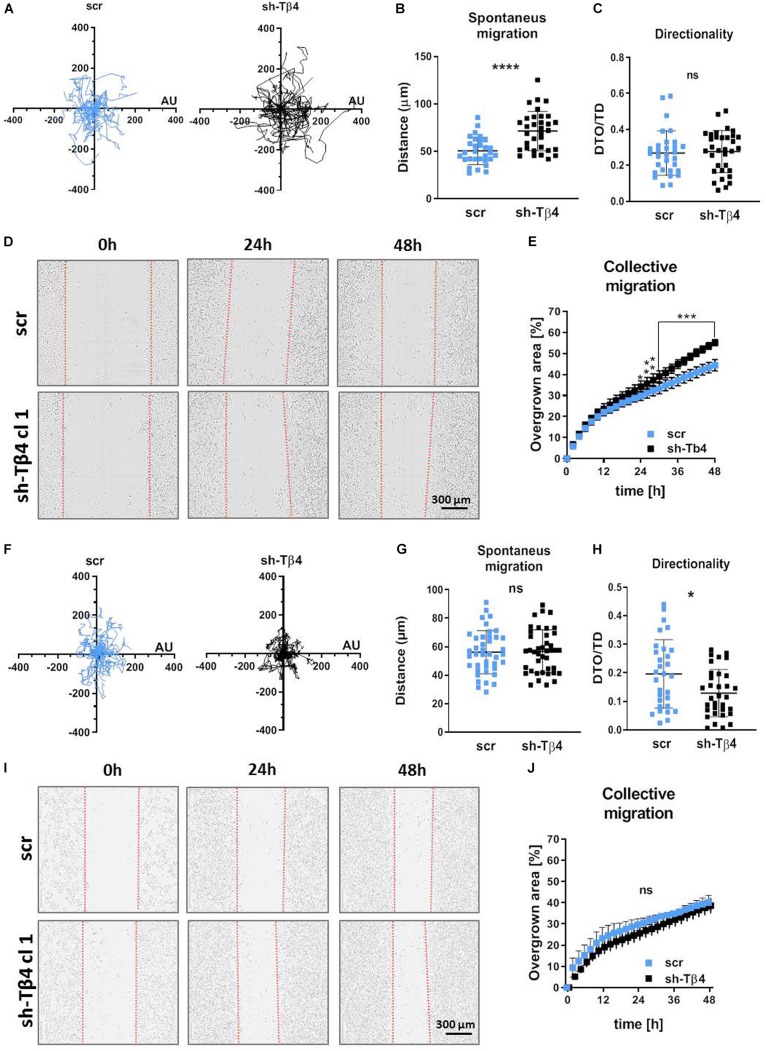
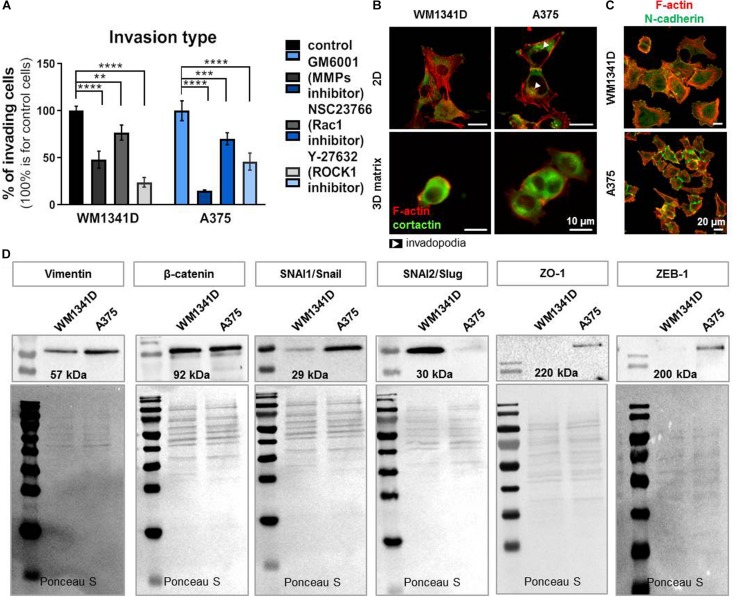
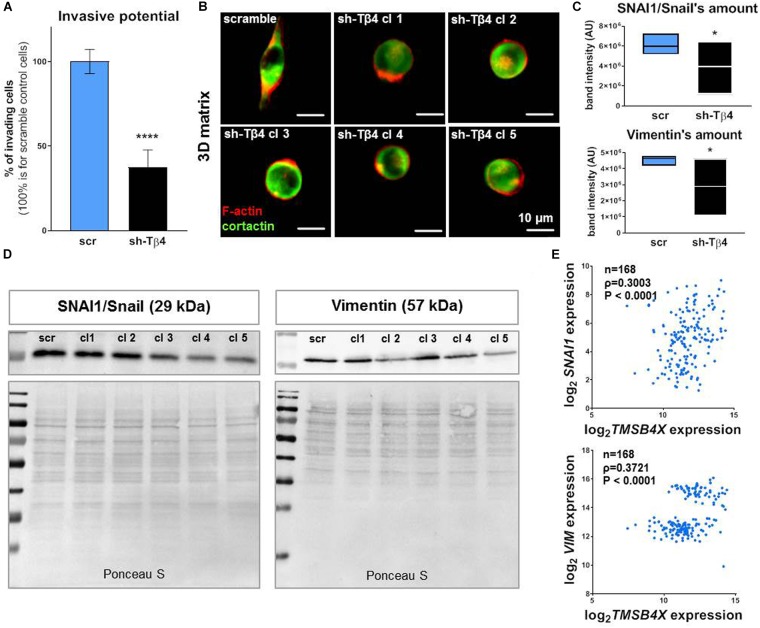
Thymosin β4 (Tβ4), a multifunctional 44-amino acid polypeptide and a member of actin-binding proteins (ABPs), plays an important role in developmental processes and wound healing. In recent years an increasing number of data has been published suggesting Tβ4's involvement in tumorigenesis. However, Tβ4's role in melanoma tumor development still remains to be elucidated. In our study we demonstrate that Tβ4 is crucial for melanoma adhesion and invasion. For the purpose of our research we tested melanoma cell lines differing in invasive potential. Moreover, we applied shRNAs to silence (gene encoding Tβ4) expression in a cell line with high expression. We found out that Tβ4 is not only a component of focal adhesions (FAs) and interacts with several FAs components but also regulates FAs formation. We demonstrate that Tβ4 level has an impact on FAs' number and morphology. Moreover, manipulation with expression resulted in changes in cells' motility on non-coated and Matrigel (resembling basement membrane composition)-coated surfaces and drastically decreased invasion abilities of the cells. Additionally, a correlation between Tβ4 expression level and exhibition of mesenchymal-like [epithelial-mesenchymal transition (EMT)] features was discovered. Cells with lowered expression were less EMT-progressed than control cells. Summarizing, obtained results show that Tβ4 by regulating melanoma cells' adhesion has an impact on motility features and EMT. Our study not only contributes to a better understanding of the processes underlying melanoma cells' capacity to create metastases but also highlights Tβ4 as a potential target for melanoma management therapy.
胸腺素β4(Tβ4)是一种由44个氨基酸组成的多功能多肽,属于肌动蛋白结合蛋白(ABP)家族成员,在发育过程和伤口愈合中发挥着重要作用。近年来,越来越多的数据表明Tβ4参与肿瘤发生。然而,Tβ4在黑色素瘤肿瘤发展中的作用仍有待阐明。在我们的研究中,我们证明Tβ4对黑色素瘤的黏附和侵袭至关重要。为了我们的研究目的,我们测试了侵袭潜能不同的黑色素瘤细胞系。此外,我们应用短发夹RNA(shRNA)在高表达细胞系中沉默(编码Tβ4的基因)表达。我们发现Tβ4不仅是黏着斑(FA)的组成部分,且与几种FA成分相互作用,还能调节FA的形成。我们证明Tβ4水平对FA的数量和形态有影响。此外,对表达的操作导致细胞在未包被和基质胶(类似于基底膜成分)包被表面的运动性发生变化,并显著降低细胞的侵袭能力。此外,还发现Tβ4表达水平与间充质样[上皮-间质转化(EMT)]特征的表现之间存在相关性。Tβ4表达降低的细胞比对照细胞的EMT进程更慢。总之,获得的结果表明,Tβ4通过调节黑色素瘤细胞的黏附,对运动性特征和EMT产生影响。我们的研究不仅有助于更好地理解黑色素瘤细胞形成转移的潜在机制,还突出了Tβ4作为黑色素瘤治疗潜在靶点的作用。