Yamaya Mutsuo, Kawakami Genichiro, Momma Haruki, Yamada Aya, Itoh Jun, Ichinose Masakazu
Department of Advanced Preventive Medicine for Infectious Disease, Tohoku University Graduate School of Medicine, Japan.
Department of Internal Medicine, National Hospital Organization, Hachinohe National Hospital, Japan.
Intern Med. 2020;59(2):181-192. doi: 10.2169/internalmedicine.2966-19. Epub 2020 Jan 15.
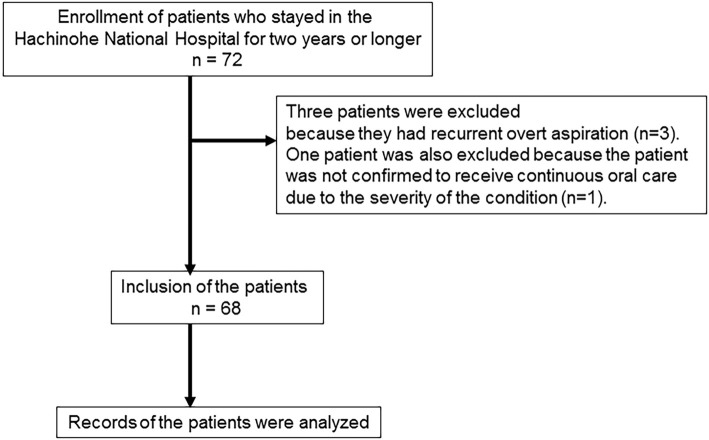
Objective Pneumonia develops in bedridden patients, even in those receiving oral care, and malnutrition is associated with the development of pneumonia. We examined the effects of nutritional treatment on the prevention of pneumonia. Patients and Methods We retrospectively examined the effects of nutritional treatment on the prevention of pneumonia by analyzing the records of bedridden patients (n=68; mean age: 68.0 years) who stayed in a hospital for 2 years or longer. Results Among the analyzed patients, pneumonia developed in 52 (76%) patients, and the mean frequency of pneumonia was 1.6 times per year during the first year of stay. In a multivariate analysis, the serum albumin level at admission in the pneumonia group was lower than that in the non-pneumonia group. The frequency of pneumonia during the second year of stay was lower than that during the first year of stay. Serum levels of albumin and total protein (TP) at one year after admission were higher than those at admission in all analyzed patients, and in all patients (n=52) and elderly (≥65 years) patients (n=31) in the pneumonia group. The proportions of patients with hypoalbuminemia (<3.5 g/dL) and hypoproteinemia (<6.5 g/dL) at one year after admission were lower than those at admission. The increases in the proportions of patients presenting a reduced frequency of pneumonia were correlated with increases in the proportions of patients presenting increased levels of albumin and/or TP. Conclusion Nutritional treatment may reduce the frequency of pneumonia by improving malnutrition in bedridden patients receiving oral care.
即使是接受口腔护理的卧床患者也会发生肺炎,且营养不良与肺炎的发生有关。我们研究了营养治疗对预防肺炎的作用。
通过分析在医院住院2年或更长时间的卧床患者(n = 68;平均年龄:68.0岁)的记录,回顾性研究营养治疗对预防肺炎的作用。
在分析的患者中,52例(76%)发生了肺炎,住院第一年肺炎的平均发病频率为每年1.6次。多因素分析显示,肺炎组入院时的血清白蛋白水平低于非肺炎组。住院第二年的肺炎发病频率低于第一年。所有分析患者、肺炎组所有患者(n = 52)及老年(≥65岁)患者(n = 31)入院一年后的血清白蛋白和总蛋白(TP)水平均高于入院时。入院一年后低白蛋白血症(<3.5 g/dL)和低蛋白血症(<6.5 g/dL)患者的比例低于入院时。肺炎发病频率降低的患者比例增加与白蛋白和/或TP水平升高的患者比例增加相关。
营养治疗可能通过改善接受口腔护理的卧床患者的营养不良状况来降低肺炎的发病频率。