
控制性低血压用于双颌手术时微创心输出量及中心静脉血氧饱和度监测的有效性
Efficacy of minimal invasive cardiac output and ScVO monitoring during controlled hypotension for double-jaw surgery.
作者信息
Kim Seokkon, Song Jaegyok, Ji Sungmi, Kwon Min A, Nam Dajeong
机构信息
Department of Anesthesiology and Pain Medicine, College of Medicine, Dankook University, Cheonan, Korea.
出版信息
J Dent Anesth Pain Med. 2019 Dec;19(6):353-360. doi: 10.17245/jdapm.2019.19.6.353. Epub 2019 Dec 27.
BACKGROUND
Controlled hypotension (CH) provides a better surgical environment and reduces operative time. However, there are some risks related to organ hypoperfusion. The EV1000/FloTrac system can provide continuous cardiac output monitoring without the insertion of pulmonary arterial catheter. The present study investigated the efficacy of this device in double jaw surgery under CH.
METHODS
We retrospectively reviewed the medical records of patients who underwent double jaw surgery between 2010 and 2015. Patients were administered conventional general anesthesia with desflurane; CH was performed with remifentanil infusion and monitored with an invasive radial arterial pressure monitor or the EV1000/FloTrac system. We allocated the patients into two groups, namely an A-line group and an EV1000 group, according to the monitoring methods used, and the study variables were compared.
RESULTS
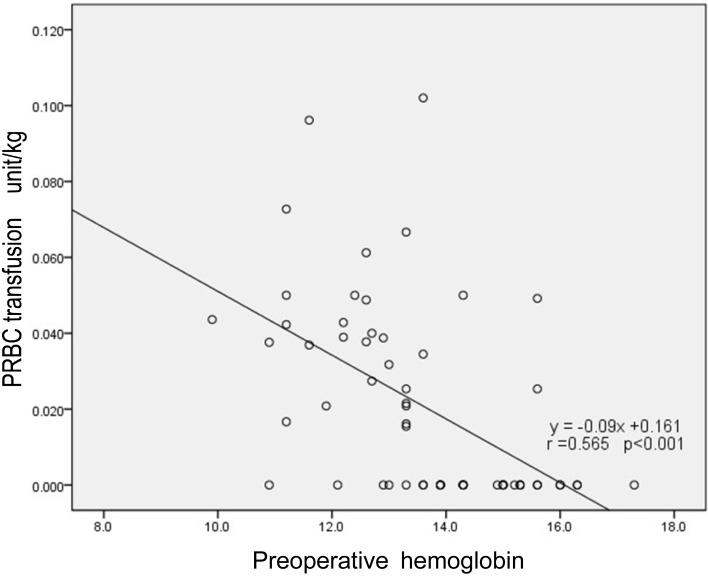
Eighty-five patients were reviewed. The A-line group reported a higher number of failed CH (P = 0.005). A significant correlation was found between preoperative hemoglobin and intraoperative packed red blood cell transfusion (r = 0.525; P < 0.001). In the EV1000 group, the mean arterial pressure (MAP) was significantly lower 2 h after CH (P = 0.014), and the cardiac index significantly decreased 1 h after CH (P = 0.001) and 2 h after CH (P = 0.007). Moreover, venous oxygen saturation (ScVO) decreased significantly at both 1 h (P = 0.002) and 2 h after CH (P = 0.029); however, these values were within normal limits.
CONCLUSION
The EV1000 group reported a lower failure rate of CH than the A-line group. However, EV1000/FloTrac monitoring did not present with any specific advantage over the conventional arterial line monitoring when CH was performed with the same protocol and same mean blood pressure. Preoperative anemia treatment will be helpful to decrease intraoperative transfusion. Furthermore, ScVO monitoring did not present with sufficient benefits over the risk and cost.
背景
控制性低血压(CH)可提供更好的手术环境并缩短手术时间。然而,存在一些与器官低灌注相关的风险。EV1000/FloTrac系统无需插入肺动脉导管即可提供连续的心输出量监测。本研究调查了该设备在CH下双颌手术中的疗效。
方法
我们回顾性分析了2010年至2015年间接受双颌手术患者的病历。患者接受了以地氟醚为主的传统全身麻醉;CH通过瑞芬太尼输注进行,并使用有创桡动脉压力监测器或EV1000/FloTrac系统进行监测。根据所使用的监测方法,我们将患者分为两组,即A线组和EV1000组,并比较研究变量。
结果
共回顾了85例患者。A线组报告的CH失败次数更多(P = 0.005)。术前血红蛋白与术中浓缩红细胞输注之间存在显著相关性(r = 0.525;P < 0.001)。在EV1000组中,CH后2小时平均动脉压(MAP)显著降低(P = 0.014),心指数在CH后1小时(P = 0.001)和CH后2小时(P = 0.007)显著下降。此外,静脉血氧饱和度(ScVO)在CH后1小时(P = 0.002)和2小时(P = 0.029)均显著降低;然而,这些值均在正常范围内。
结论
EV1000组报告的CH失败率低于A线组。然而,当以相同方案和相同平均血压进行CH时,与传统动脉导管监测相比,EV1000/FloTrac监测没有显示出任何特定优势。术前贫血治疗有助于减少术中输血。此外,ScVO监测在风险和成本方面没有显示出足够的益处。

 Zotero 插件