Department of Nuclear Medicine and Molecular Imaging , University of Groningen, University Medical Center Groningen , Hanzeplein 1 , P.O. Box 30001, 9713 GZ Groningen , The Netherlands.
Clinical Neurosciences Research Laboratory , Health Research Institute of Santiago de Compostela (IDIS) , Santiago de Compostela 15706 , Spain.
ACS Chem Neurosci. 2020 Feb 19;11(4):648-658. doi: 10.1021/acschemneuro.9b00682. Epub 2020 Feb 3.
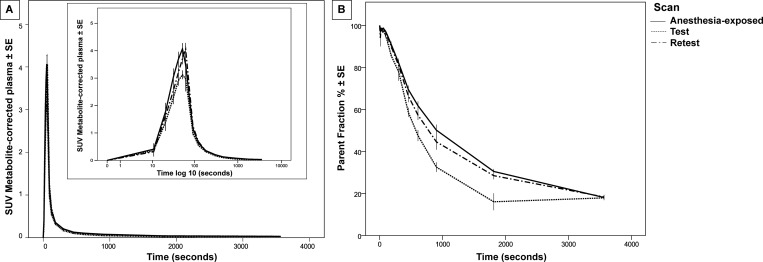
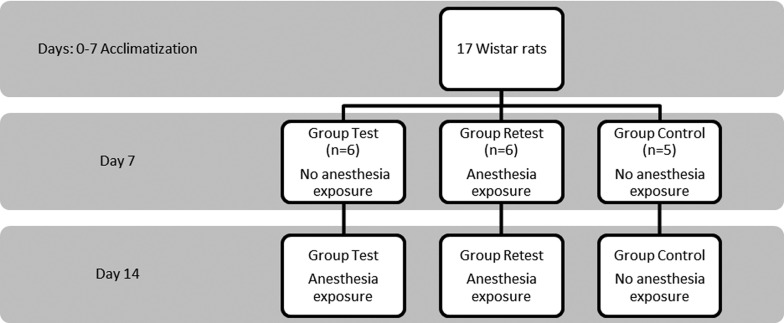
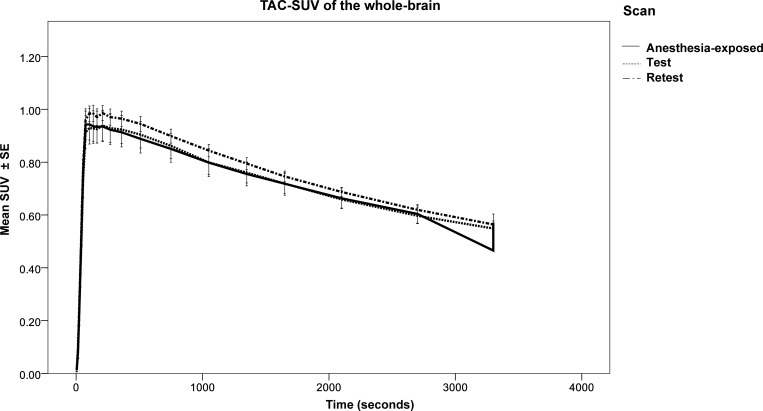
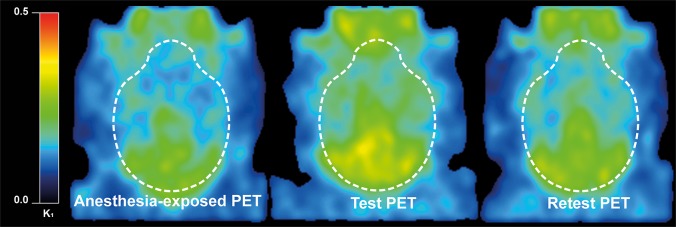
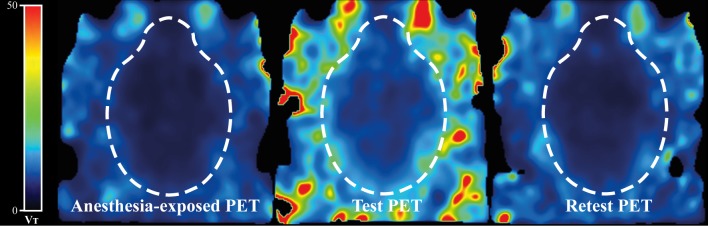
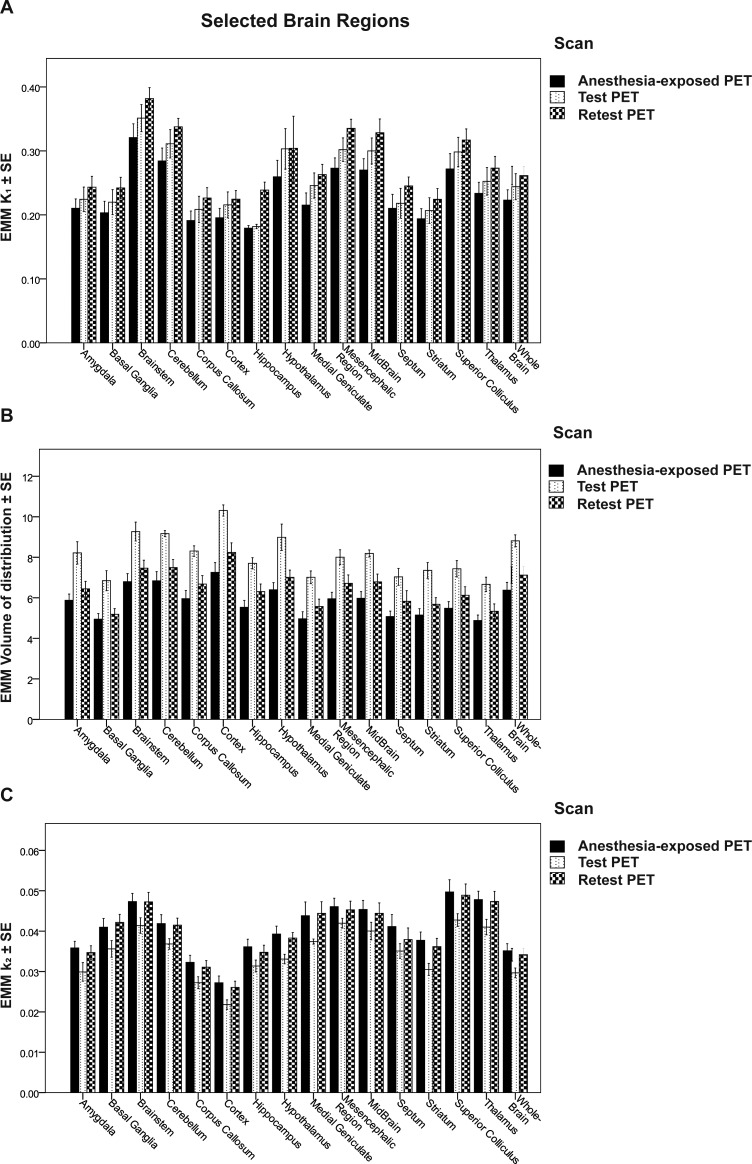
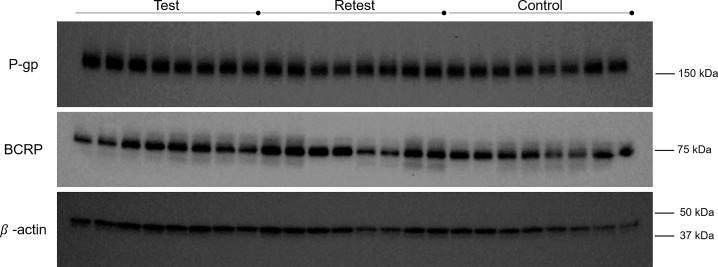
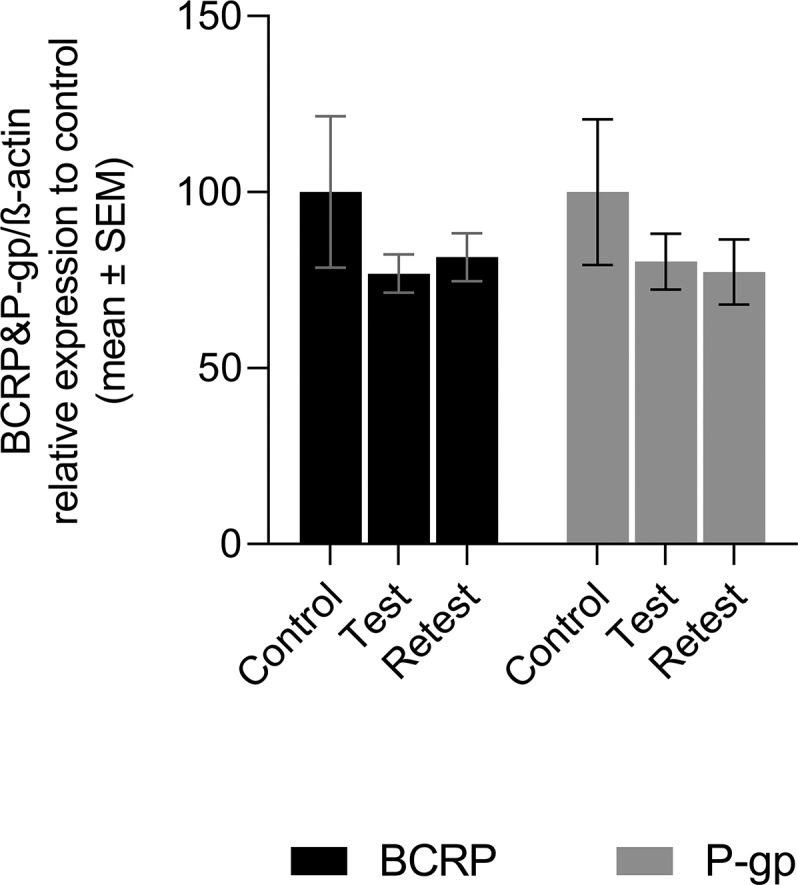
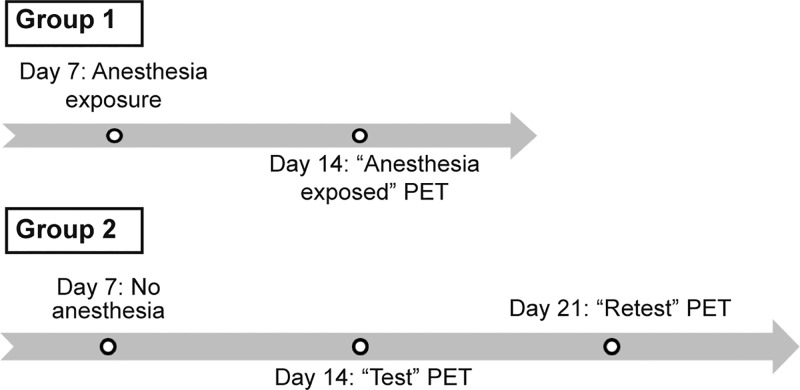
In longitudinal PET studies, animals are repeatedly anesthetized which may affect the repeatability of PET measurements. The aim of this study was to assess the effect of anesthesia on the P-gp function as well as the reproducibility of [F]MC225 PET scans. Thus, dynamic PET scans with blood sampling were conducted in 13 Wistar rats. Seven animals were exposed to isoflurane anesthesia 1 week before the PET scan ("Anesthesia-exposed" PET). A second group of six animals was used to evaluate the reproducibility of measurements of P-gp function at the blood-brain barrier (BBB) with [F]MC225. In this group, two PET scans were made with a 1 week interval ("Test" and "Retest" PET). Pharmacokinetic parameters were calculated using compartmental models and metabolite-corrected plasma as an input function. "Anesthesia-exposed" animals showed a 28% decrease in whole-brain volume of distribution () ( < 0.001) compared to "Test", where the animals were not previously anesthetized. The at "Retest" also decreased (19%) compared to "Test" ( < 0.001). The values in whole-brain were significantly increased by 18% in "Anesthesia-exposed" ( = 0.005) and by 15% in "Retest" ( = 0.008) compared to "Test". However, no significant differences were found in the influx rate constant , which is considered as the best parameter to measure the P-gp function. Moreover, Western Blot analysis did not find significant differences in the P-gp expression of animals not pre-exposed to anesthesia ("Test") or pre-exposed animals ("Retest"). To conclude, anesthesia may affect the brain distribution of [F]MC225 but it does not affect the P-gp expression or function.
在纵向 PET 研究中,动物会被反复麻醉,这可能会影响 PET 测量的可重复性。本研究的目的是评估麻醉对 P-糖蛋白(P-gp)功能以及 [F]MC225 PET 扫描可重复性的影响。因此,在 13 只 Wistar 大鼠中进行了动态 PET 扫描和采血。7 只动物在 PET 扫描前一周暴露于异氟烷麻醉下(“麻醉暴露”PET)。第二组 6 只动物用于评估 [F]MC225 测量血脑屏障(BBB)上 P-gp 功能的重复性。在这组中,两次 PET 扫描相隔 1 周(“测试”和“复测”PET)进行。使用房室模型和代谢物校正的血浆作为输入函数计算药代动力学参数。与未进行麻醉的“测试”相比,“麻醉暴露”动物的全脑分布容积()降低了 28%(<0.001)。与“测试”相比,“复测”的 也降低了 19%(<0.001)。与“测试”相比,“麻醉暴露”中的值增加了 18%(=0.005),“复测”中的值增加了 15%(=0.008)。然而,在流入速率常数 方面没有发现显著差异,该参数被认为是测量 P-gp 功能的最佳参数。此外,Western Blot 分析未发现未预先暴露于麻醉的动物(“测试”)或预先暴露于麻醉的动物(“复测”)的 P-gp 表达存在显著差异。总之,麻醉可能会影响 [F]MC225 在大脑中的分布,但不会影响 P-gp 的表达或功能。