Linus Pauling Institute, Department of Biochemistry and Biophysics, Oregon State University, 307 Linus Pauling Science Center, Corvallis, OR 97331, USA.
Bayer Consumer Care AG, 4002 Basel, Switzerland.
Nutrients. 2020 Jan 16;12(1):236. doi: 10.3390/nu12010236.
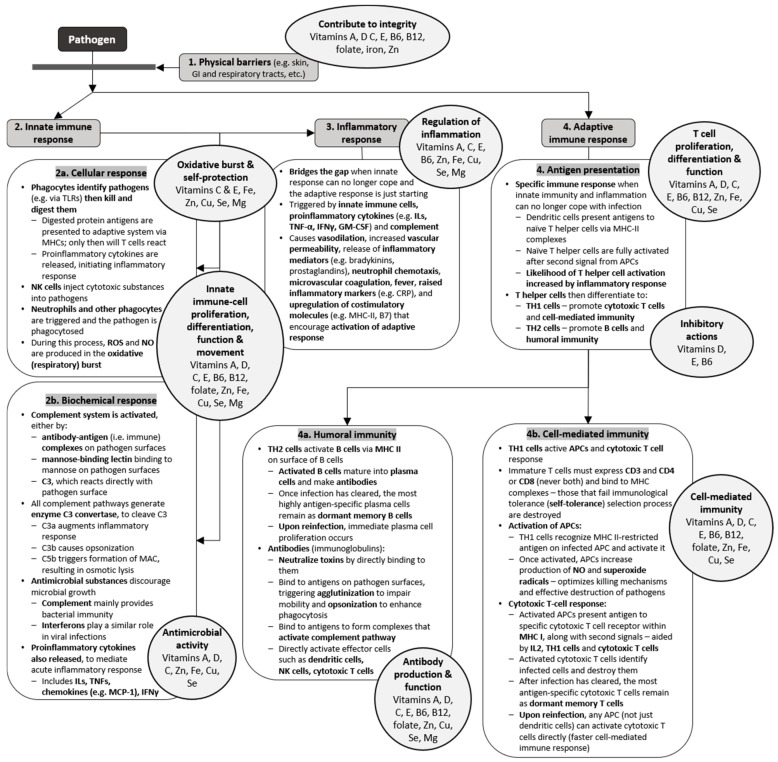
Immune support by micronutrients is historically based on vitamin C deficiency and supplementation in scurvy in early times. It has since been established that the complex, integrated immune system needs multiple specific micronutrients, including vitamins A, D, C, E, B6, and B12, folate, zinc, iron, copper, and selenium, which play vital, often synergistic roles at every stage of the immune response. Adequate amounts are essential to ensure the proper function of physical barriers and immune cells; however, daily micronutrient intakes necessary to support immune function may be higher than current recommended dietary allowances. Certain populations have inadequate dietary micronutrient intakes, and situations with increased requirements (e.g., infection, stress, and pollution) further decrease stores within the body. Several micronutrients may be deficient, and even marginal deficiency may impair immunity. Although contradictory data exist, available evidence indicates that supplementation with multiple micronutrients with immune-supporting roles may modulate immune function and reduce the risk of infection. Micronutrients with the strongest evidence for immune support are vitamins C and D and zinc. Better design of human clinical studies addressing dosage and combinations of micronutrients in different populations are required to substantiate the benefits of micronutrient supplementation against infection.
免疫支持的微量营养素在历史上是基于早期坏血病中维生素 C 缺乏和补充。此后已经确定,复杂的、综合的免疫系统需要多种特定的微量营养素,包括维生素 A、D、C、E、B6 和 B12、叶酸、锌、铁、铜和硒,它们在免疫反应的每个阶段都起着至关重要的、往往是协同的作用。充足的量对于确保身体屏障和免疫细胞的正常功能是必不可少的;然而,支持免疫功能所需的每日微量营养素摄入量可能高于目前推荐的膳食摄入量。某些人群的饮食中微量营养素摄入不足,而需求增加的情况(例如感染、压力和污染)会进一步减少体内的储存量。一些微量营养素可能不足,即使是边缘缺乏也会损害免疫功能。尽管存在相互矛盾的数据,但现有证据表明,补充具有免疫支持作用的多种微量营养素可能会调节免疫功能并降低感染的风险。具有最强免疫支持证据的微量营养素是维生素 C 和 D 以及锌。需要更好地设计针对不同人群的微量营养素剂量和组合的人体临床研究,以证实补充微量营养素对抗感染的益处。