Zhang Xiaoming, Ferrante Marco, Wan Fanghao, Yang Nianwan, Lövei Gábor L
State Key Laboratory for Biology of Plant Diseases and Insect Pests, Institute of Plant Protection, Chinese Academy of Agricultural Sciences, Beijing 100193, China.
State Key Laboratory for Conservation and Utilization of Bio-Resources in Yunnan, College of Plant Protection, Yunnan Agricultural University, Kunming 650201, China.
Insects. 2020 Jan 17;11(1):57. doi: 10.3390/insects11010057.
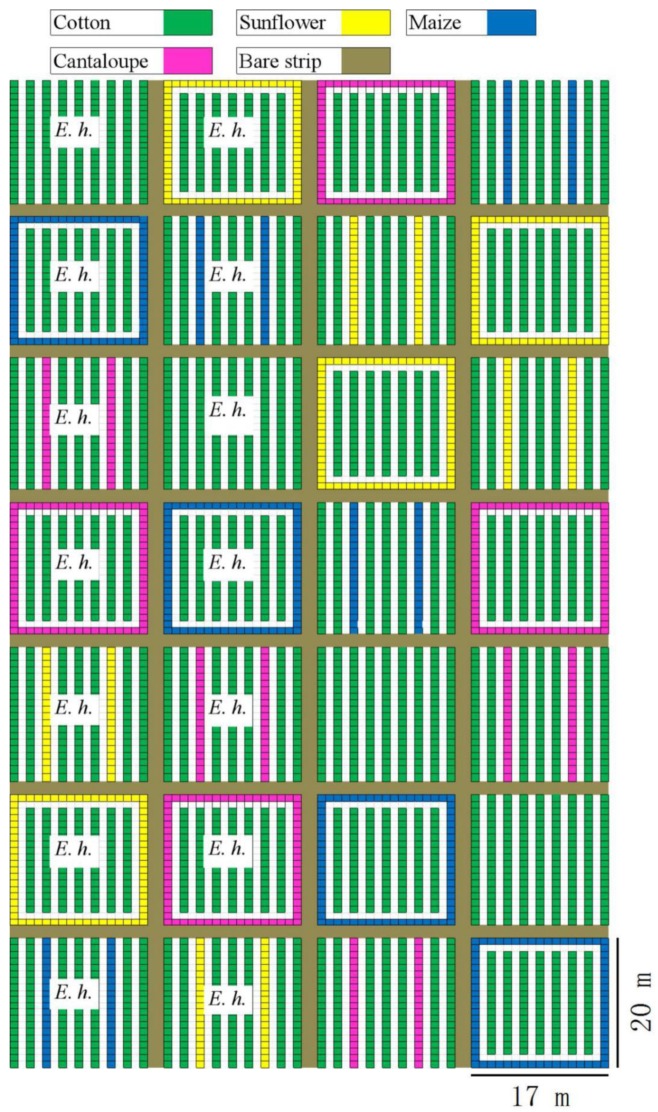
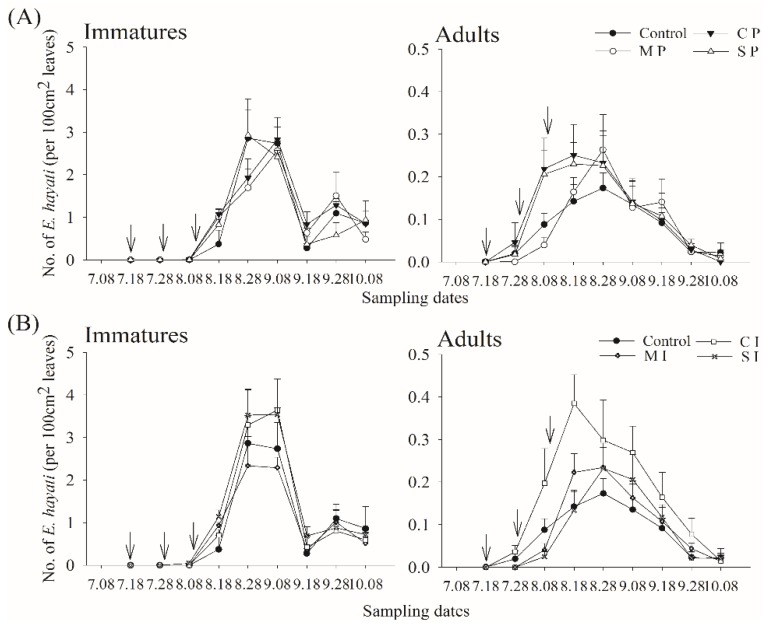
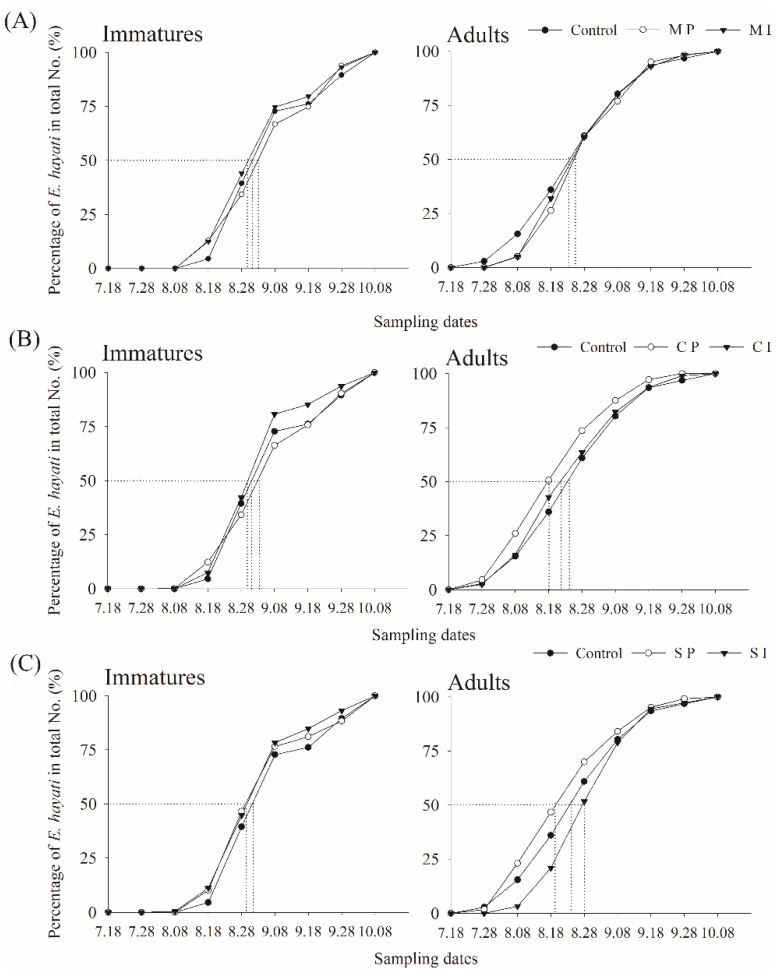
The whitefly, (Gennadius) cryptic species Mediterranean (MED), is a destructive insect pest worldwide. In order to contribute to controlling by non-chemical methods, we examined the possibility of using a combination of trap/barrier crops and a parasitoid natural enemy in cotton. We performed field experiments using cantaloupe () and sunflower () as trap crops and maize () as a barrier crop combined with periodic releases of the parasitoid in Hebei Province, Northern China. All treatments significantly reduced immature whitefly densities. Parasitism rate was significantly higher in cotton plots intercropped with sunflower and with perimeter-planted cantaloupe. Adult whitefly density was negatively related to parasitoid abundance and was significantly lower in cotton plots intercropped with maize than in the control plots. Intercropping was more effective than perimeter-planting at reducing densities and increasing yield. Parasitoid dispersal was not hampered by barrier crops, indicating that the two methods of control are compatible. These results contribute to the development of integrated pest management methods against this important pest.
烟粉虱,隐种地中海烟粉虱(Gennadius),是一种在全球范围内具有破坏性的害虫。为了通过非化学方法助力防治烟粉虱,我们研究了在棉花种植中结合使用诱集/屏障作物和寄生性天敌的可能性。我们在中国北方河北省进行了田间试验,使用哈密瓜()和向日葵()作为诱集作物,玉米()作为屏障作物,并定期释放寄生蜂。所有处理均显著降低了未成熟烟粉虱的密度。在与向日葵间作以及周边种植哈密瓜的棉田中,寄生率显著更高。成虫烟粉虱密度与寄生蜂数量呈负相关,并且与玉米间作的棉田中的成虫烟粉虱密度显著低于对照田。间作在降低烟粉虱密度和提高产量方面比周边种植更有效。屏障作物并未阻碍寄生蜂的扩散,这表明这两种防治方法是兼容的。这些结果有助于开发针对这种重要害虫的综合虫害管理方法。