College of Horticulture, South China Agricultural University, Guangzhou 510642, China.
Institute of Fruit Tree Research, Guangdong Academy of Agricultural Sciences, Key Laboratory of South Subtropical Fruit Biology and Genetic Resource Utilization & Guangdong Province Key Laboratory of Tropical and Subtropical Fruit Tree Research, Guangzhou 510640, China.
Molecules. 2020 Jan 17;25(2):396. doi: 10.3390/molecules25020396.
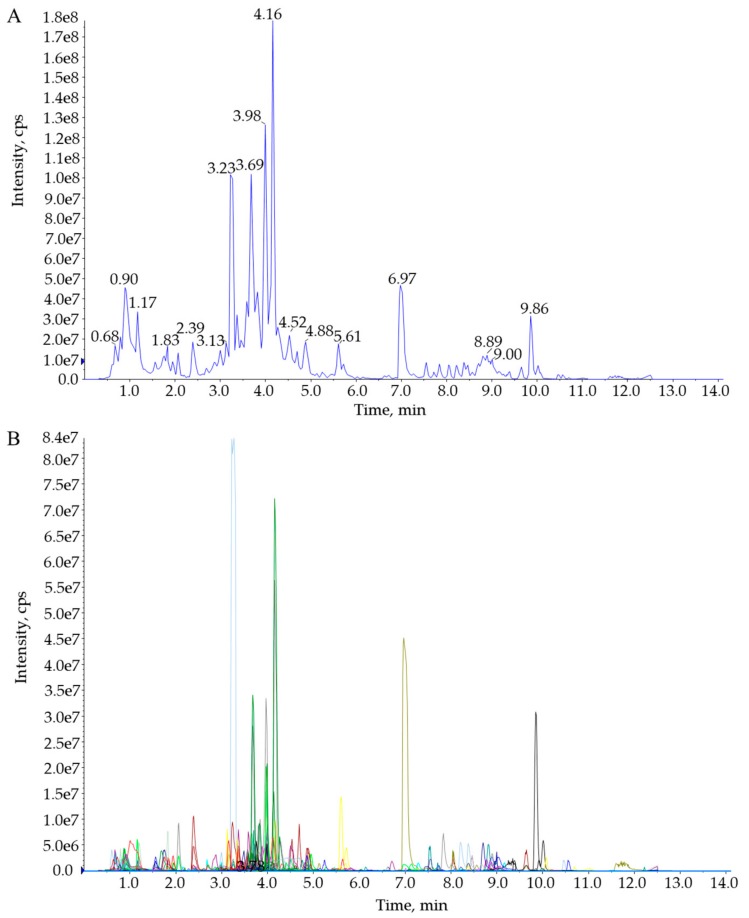
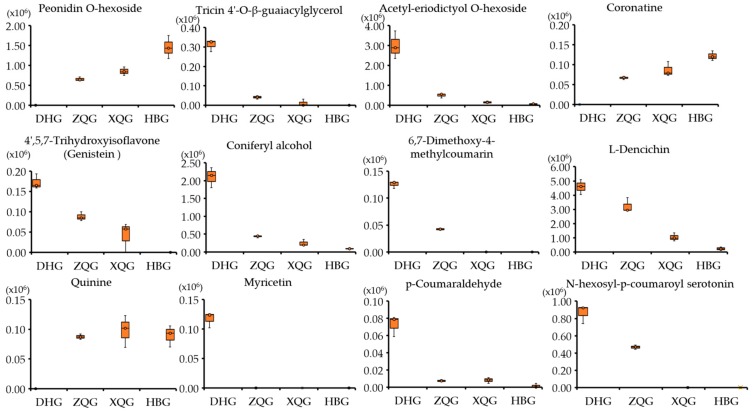
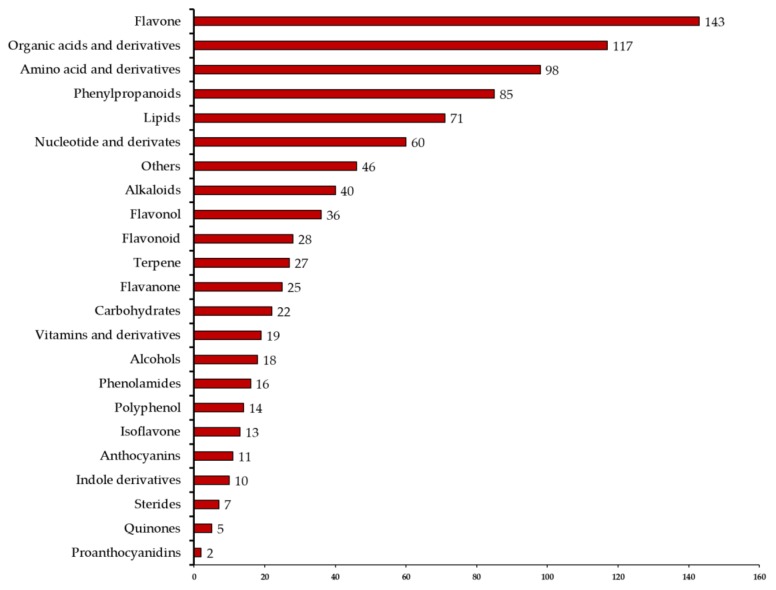
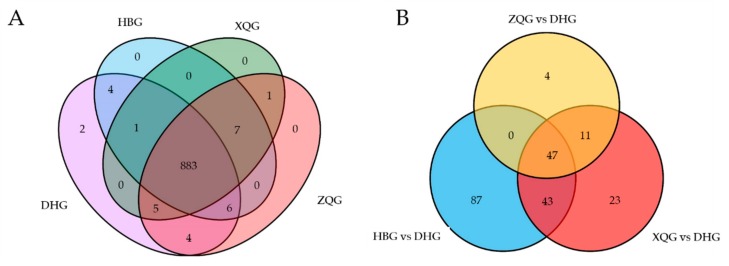
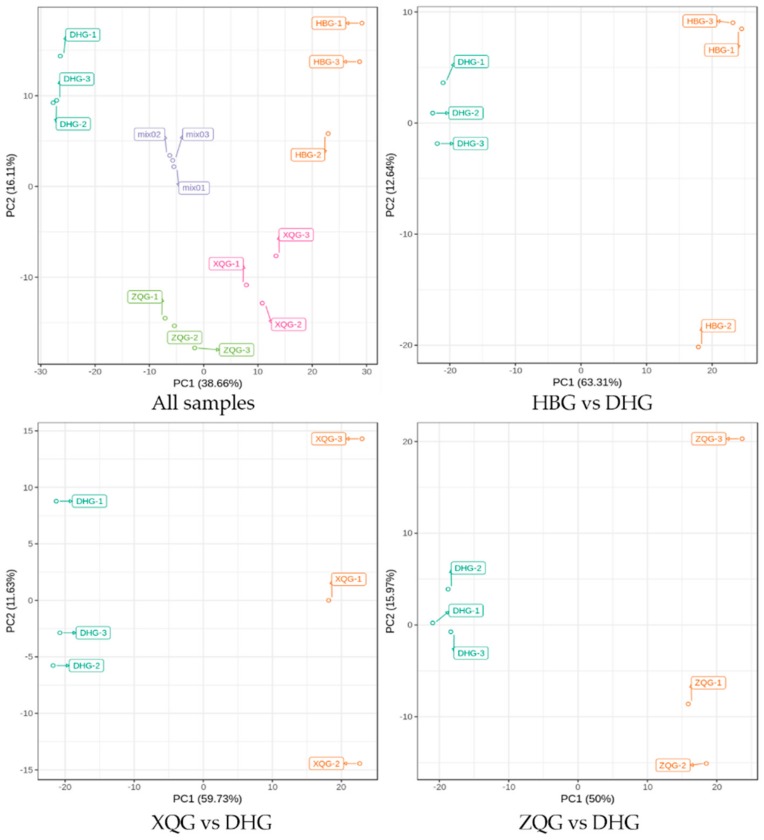
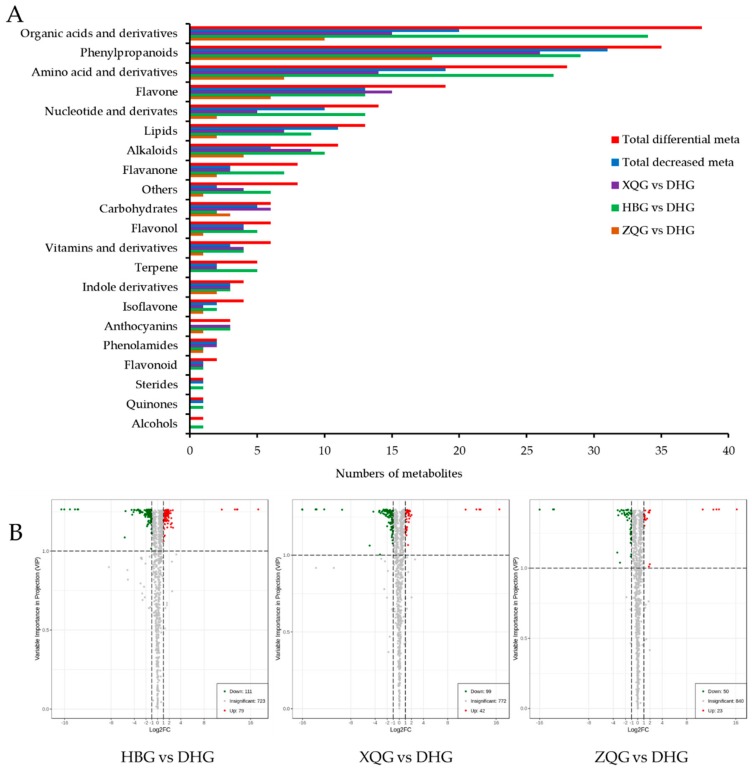
Citrus is a globally consumed fruit with great popularity. Mandarin ( cv. 'Shatangju') is a local variety, and its planting area and yield are the greatest regarding fruit tree planting in Guangdong Province, China. However, its resistance to Huanglongbing (HLB) is weak. After infection by HLB, the fruits cannot develop normally. In this study, four kinds of fruits were classified as HBG, XQG, ZQG, and DHG, according to the color of their peels. The metabolomes of the three abnormally colored groups (HBG, XQG, and ZQG) and the normally colored group (DHG) were compared using a UPLC-QQQ-MS-based metabolomics approach. In total, 913 metabolites were identified and classified into 23 different categories, including phenylpropanoids and flavonoids; among them, 215 (HBG, 177; XQG, 124; and ZQG, 62) metabolites showed differential accumulation in the three comparison groups (HBG/XQG/ZQG versus DHG). A total of 2 unique metabolites, -caffeoyl maltotriose and myricetin were detected only in DHG samples. When comparing HBG with DHG, there were 109 decreased and 68 increased metabolites; comparing XQG with DHG, there were 88 decreased and 36 increased metabolites; comparing ZQG with DHG, 41 metabolites were decreased, and 21 metabolites were increased. Metabolic pathway enrichment analysis of these differential metabolites showed significant enrichment of the "phenylpropanoid biosynthesis" pathway in all comparison groups. The hierarchical cluster analysis of the differential metabolites of the four groups showed a clear grouping patterns. The relative contents of three phenylpropanoids, four flavonoids, two alkaloids, one anthocyanin, and two other metabolites were significantly different between each comparison group. This study might provide fundamental insight for the isolation and identification of functional compounds from the peels of citrus fruit infected with HLB and for in-depth research on the effect of HLB on the formation of fruits pigment and the development of HLB-resistant citrus varieties.
柑橘是一种在全球范围内广泛消费的水果,非常受欢迎。椪柑(cv.'Shatangju')是当地的一个品种,其种植面积和产量在中国广东省的果树种植中是最大的。然而,它对黄龙病(HLB)的抵抗力较弱。感染 HLB 后,果实无法正常发育。在这项研究中,根据果皮颜色,将四种果实分为 HBG、XQG、ZQG 和 DHG。采用 UPLC-QQQ-MS 代谢组学方法比较了三组异常着色果实(HBG、XQG 和 ZQG)和正常着色果实(DHG)的代谢组。共鉴定出 913 种代谢物,并分为 23 个不同类别,包括苯丙素类和类黄酮;其中,215 种(HBG177;XQG124;ZQG62)代谢物在三组比较组(HBG/XQG/ZQG 与 DHG)中表现出差异积累。共检测到 2 种独特的代谢物——咖啡酰麦芽三糖和杨梅素,仅在 DHG 样品中检出。当比较 HBG 与 DHG 时,有 109 种减少和 68 种增加的代谢物;比较 XQG 与 DHG 时,有 88 种减少和 36 种增加的代谢物;比较 ZQG 与 DHG 时,有 41 种代谢物减少,21 种代谢物增加。对这些差异代谢物的代谢途径富集分析显示,所有比较组中“苯丙素生物合成”途径均显著富集。对四组差异代谢物的层次聚类分析显示出明显的分组模式。比较组之间三种苯丙素类、四种类黄酮类、两种生物碱类、一种花色苷类和两种其他代谢物的相对含量存在显著差异。本研究可能为从感染 HLB 的柑橘果皮中分离和鉴定功能化合物以及深入研究 HLB 对果实色素形成和 HLB 抗性柑橘品种发展的影响提供基础见解。