Lee Dong-Yeong, Park Young-Jin, Song Myung-Geun, Kim Deok Ryong, Zada Sahib, Kim Dong-Hee
Department of Orthopaedic Surgery, Armed Forces Daegu Hospital, Gyeongsan 38427, Korea.
Department of Medicine, Gyeongsang National University School of Medicine, Jinju 52727, Korea.
Antioxidants (Basel). 2020 Jan 19;9(1):83. doi: 10.3390/antiox9010083.
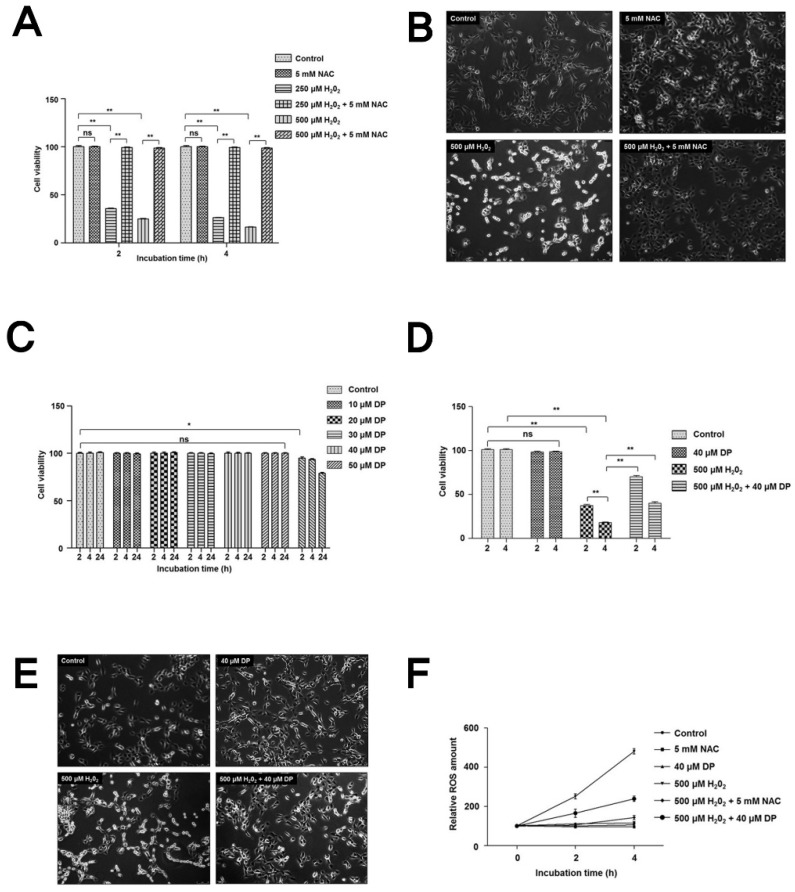
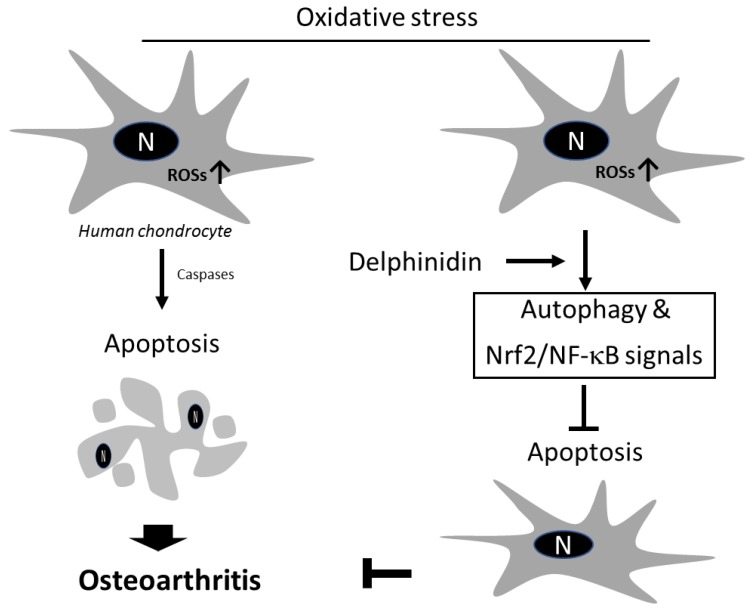
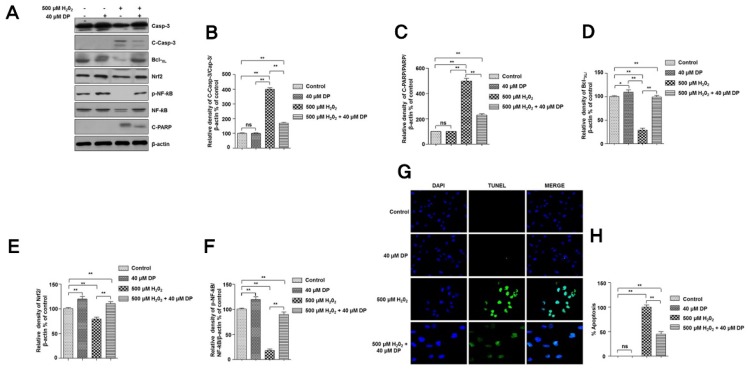
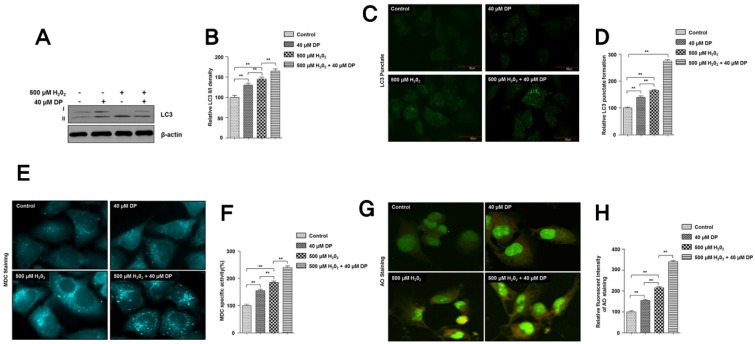
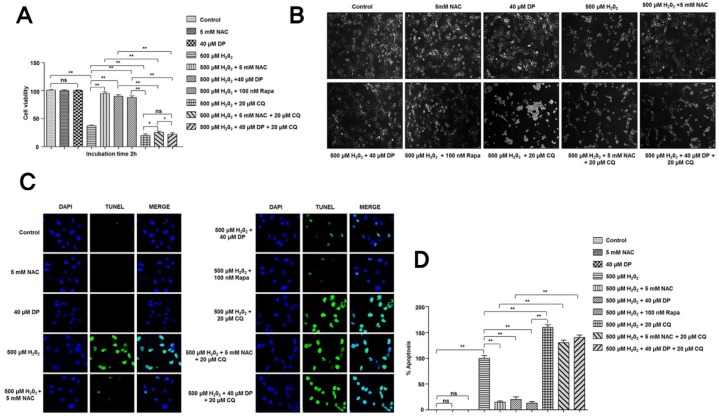
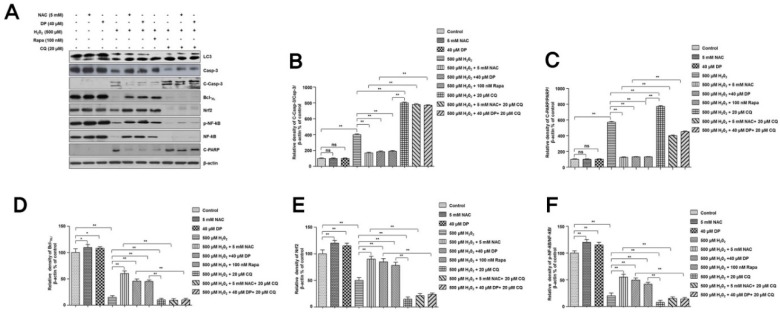
Antioxidant enzymes are decreased in osteoarthritis (OA) patients, implying the role of oxidative stress in osteoarthritis pathogenesis. The aim of this study was to evaluate the cytoprotective effects of delphinidin, a potent antioxidant, in human chondrocytes and the underlying mechanisms. The cytoprotective mechanism induced by delphinidin against oxidative stress (HO) in human chondrocytes was investigated. Cell viability and death were evaluated using proapoptotic and antiapoptotic markers such as cleaved caspase-3 (c-caspase-3), cleaved poly(ADP-ribose) polymerase -acetylcysteine (c-PARP), Bcl-X, and transcription factors associated with redox and inflammation regulation, including nuclear factor kappa B (NF-κB) and nuclear factor (erythroid-derived 2)-like 2 (Nrf2). Induction of autophagy was assessed by formation of LC3-II and autophagosome-(LC3 punctate, monodansylcadaverine (MDC) and acridine orange staining) in the presence or absence of an autophagy inhibitor. Treatment with delphinidin itself at concentration below 50 µM for 24 h did not affect viability of chondrocytes. Delphinidin inhibited reactive oxygen species (ROS)-induced apoptosis by significantly decreasing apoptosis markers such as c-caspase-3 and c-PARP while increasing antiapoptotic marker Bcl-X and antioxidant response NF-κB and Nrf2 pathways. Delphinidin also activated cytoprotective autophagy to protect chondrocytes during oxidative stresses. Activation of autophagy with autophagy inducer rapamycin also inhibited ROS-induced cell death and decreased proapoptotic proteins but increased antiapoptotic protein Bcl-X, NF-κB, and Nrf2. Delphinidin can protect chondrocytes against HO-induced apoptosis via activation of Nrf2 and NF-κB and protective autophagy. Thus, it can inhibit OA with protection of chondrocytes. Delphinidin can protect chondrocytes against HO-induced ROS with maintenance of homeostasis and redox. These results suggest that delphinidin could be used to protect chondrocytes against age-related oxidative stress and other oxidative stresses in the treatment of OA. Thus, delphinidin may play a critical role in preventing the development and progression of OA.
抗氧化酶在骨关节炎(OA)患者中减少,这意味着氧化应激在骨关节炎发病机制中起作用。本研究的目的是评估强效抗氧化剂飞燕草素对人软骨细胞的细胞保护作用及其潜在机制。研究了飞燕草素诱导的人软骨细胞抗氧化应激(HO)的细胞保护机制。使用促凋亡和抗凋亡标志物,如裂解的半胱天冬酶-3(c-半胱天冬酶-3)、裂解的聚(ADP-核糖)聚合酶-乙酰半胱氨酸(c-PARP)、Bcl-X,以及与氧化还原和炎症调节相关的转录因子,包括核因子κB(NF-κB)和核因子(红细胞衍生2)样2(Nrf2),来评估细胞活力和死亡情况。在有或没有自噬抑制剂的情况下,通过LC3-II的形成和自噬体(LC3点状、单丹磺酰尸胺(MDC)和吖啶橙染色)来评估自噬的诱导情况。浓度低于50μM的飞燕草素本身处理24小时不影响软骨细胞的活力。飞燕草素通过显著降低c-半胱天冬酶-3和c-PARP等凋亡标志物,同时增加抗凋亡标志物Bcl-X以及抗氧化反应NF-κB和Nrf2途径,抑制活性氧(ROS)诱导的细胞凋亡。飞燕草素还激活细胞保护自噬,以在氧化应激期间保护软骨细胞。用自噬诱导剂雷帕霉素激活自噬也抑制了ROS诱导的细胞死亡,减少了促凋亡蛋白,但增加了抗凋亡蛋白Bcl-X、NF-κB和Nrf2。飞燕草素可通过激活Nrf2和NF-κB以及保护性自噬来保护软骨细胞免受HO诱导的凋亡。因此,它可以通过保护软骨细胞来抑制OA。飞燕草素可以通过维持体内平衡和氧化还原状态来保护软骨细胞免受HO诱导的ROS损伤。这些结果表明,飞燕草素可用于在OA治疗中保护软骨细胞免受与年龄相关的氧化应激和其他氧化应激的影响。因此,飞燕草素可能在预防OA的发生和发展中起关键作用。