Graduate School of Life and Environmental Sciences, Kyoto Prefectural University, Kyoto 606-8522, Japan.
Ajinomoto Co., Inc., Kanagawa 210-8681, Japan.
Nutrients. 2020 Jan 19;12(1):261. doi: 10.3390/nu12010261.
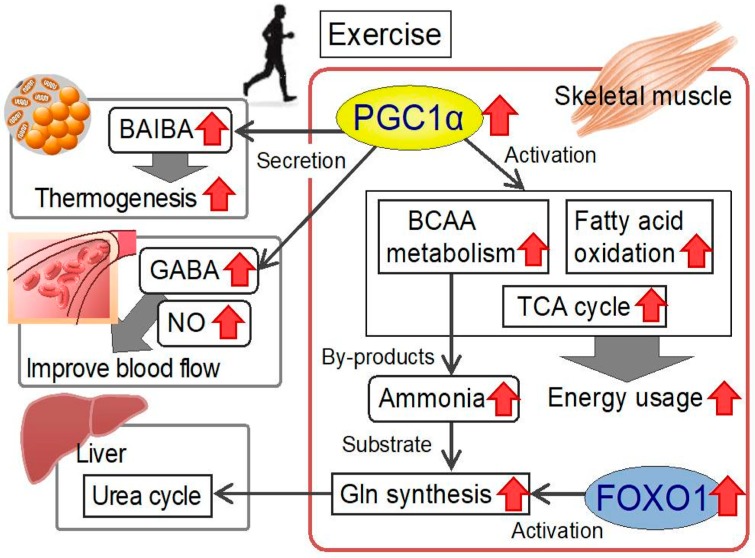
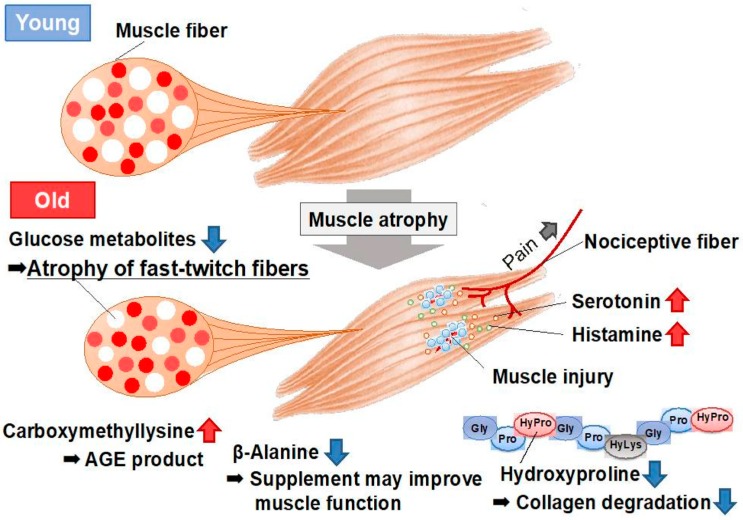
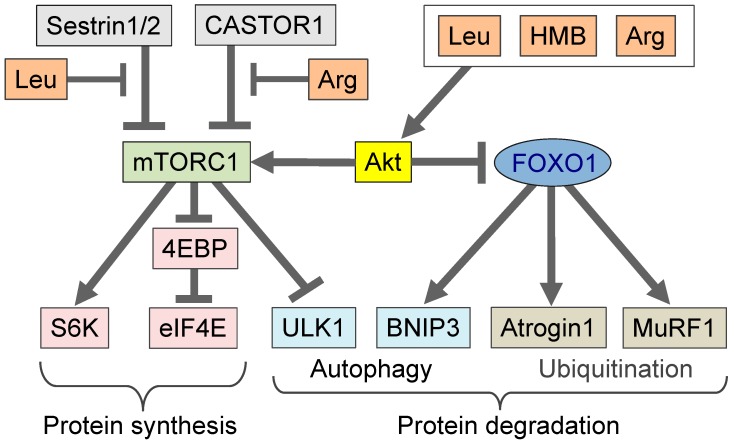
Amino acids are components of proteins that also exist free-form in the body; their functions can be divided into (1) nutritional, (2) sensory, and (3) biological regulatory roles. The skeletal muscle, which is the largest organ in the human body, representing ~40% of the total body weight, plays important roles in exercise, energy expenditure, and glucose/amino acid usage-processes that are modulated by various amino acids and their metabolites. In this review, we address the metabolism and function of amino acids in the skeletal muscle. The expression of PGC1, a transcriptional coactivator, is increased in the skeletal muscle during exercise. PGC1 activates branched-chain amino acid (BCAA) metabolism and is used for energy in the tricarboxylic acid (TCA) cycle. Leucine, a BCAA, and its metabolite, -hydroxy--methylbutyrate (HMB), both activate mammalian target of rapamycin complex 1 (mTORC1) and increase protein synthesis, but the mechanisms of activation appear to be different. The metabolite of valine (another BCAA), -aminoisobutyric acid (BAIBA), is increased by exercise, is secreted by the skeletal muscle, and acts on other tissues, such as white adipose tissue, to increase energy expenditure. In addition, several amino acid-related molecules reportedly activate skeletal muscle function. Oral 5-aminolevulinic acid (ALA) supplementation can protect against mild hyperglycemia and help prevent type 2 diabetes. -alanine levels are decreased in the skeletal muscles of aged mice. -alanine supplementation increased the physical performance and improved the executive function induced by endurance exercise in middle-aged individuals. Further studies focusing on the effects of amino acids and their metabolites on skeletal muscle function will provide data essential for the production of food supplements for older adults, athletes, and individuals with metabolic diseases.
氨基酸是蛋白质的组成部分,也以游离形式存在于体内;其功能可分为(1)营养,(2)感官,和(3)生物调节作用。人体最大的器官——骨骼肌,占体重的~40%,在运动、能量消耗和葡萄糖/氨基酸利用中发挥重要作用——这些过程受到各种氨基酸及其代谢物的调节。在这篇综述中,我们讨论了氨基酸在骨骼肌中的代谢和功能。运动过程中,转录共激活因子 PGC1 在骨骼肌中的表达增加。PGC1 激活支链氨基酸(BCAA)代谢,并用于三羧酸(TCA)循环中的能量。亮氨酸,一种 BCAA,及其代谢物 -羟基 - - 甲基丁酸(HMB),都能激活哺乳动物雷帕霉素靶蛋白复合物 1(mTORC1)并增加蛋白质合成,但激活机制似乎不同。缬氨酸(另一种 BCAA)的代谢物 - 氨基异丁酸(BAIBA)在运动中增加,由骨骼肌分泌,并作用于其他组织,如白色脂肪组织,以增加能量消耗。此外,有报道称几种与氨基酸相关的分子能激活骨骼肌功能。口服 5-氨基乙酰丙酸(ALA)补充剂可以预防轻度高血糖,有助于预防 2 型糖尿病。年老小鼠的骨骼肌中 -丙氨酸水平降低。-丙氨酸补充剂可提高中年个体耐力运动引起的身体表现和执行功能。进一步研究集中在氨基酸及其代谢物对骨骼肌功能的影响,将为老年人、运动员和代谢疾病患者的食品补充剂生产提供必要的数据。