Fudan University Shanghai Cancer Center and Institutes of Biomedical Sciences, Shanghai Medical College, Fudan University, Shanghai, 200032, China.
Department of Colorectal Surgery, Fudan University Shanghai Cancer Center, Shanghai Medical College, Fudan University, Shanghai, 200032, China.
Mol Cancer. 2020 Jan 21;19(1):11. doi: 10.1186/s12943-019-1122-z.
Hypoxic tumors are refractory to DNA damage drugs. However, the underlying mechanism has yet to be elucidated. We aimed to identify lncRNAs that upregulated under hypoxia and their effects on colorectal cancer (CRC).
CRC cells were treated with 1% O to identify lncRNAs that upregulated under hypoxia. We integrated these lncRNAs with RNA-seq of 4 paired CRC tissues and TCGA data to get candidate lncRNAs. Multiple in vitro and in vivo assays were used to explore the role of LUCAT1 in CRC.
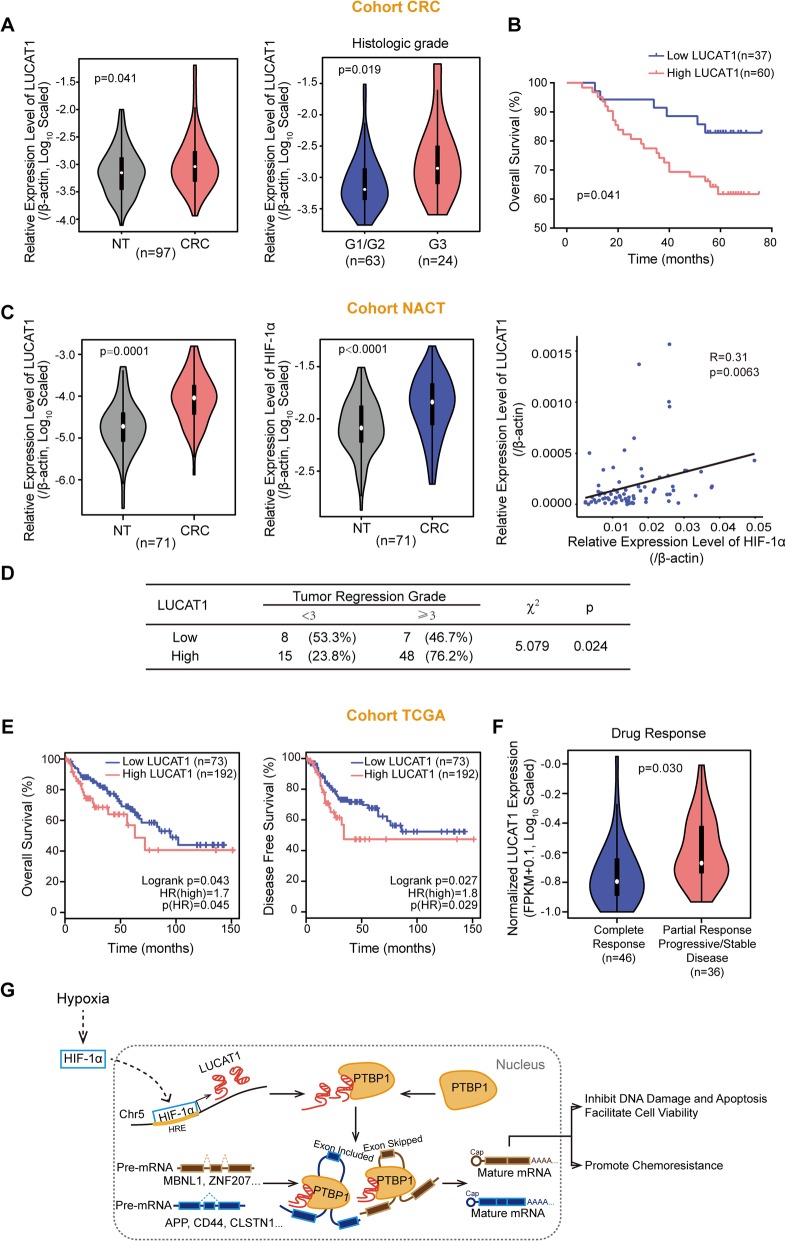
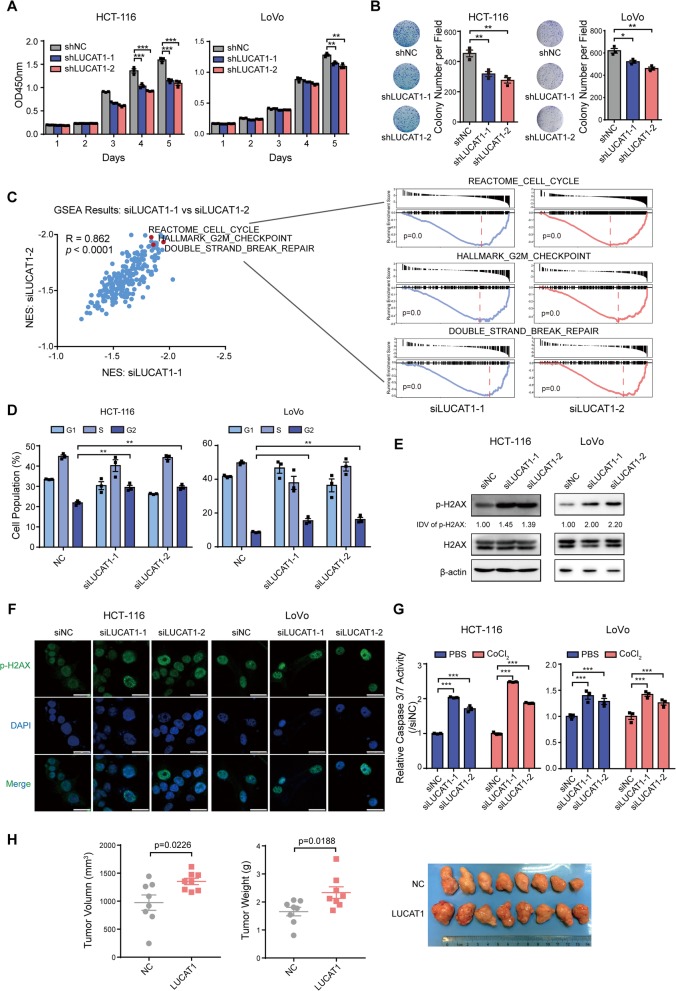
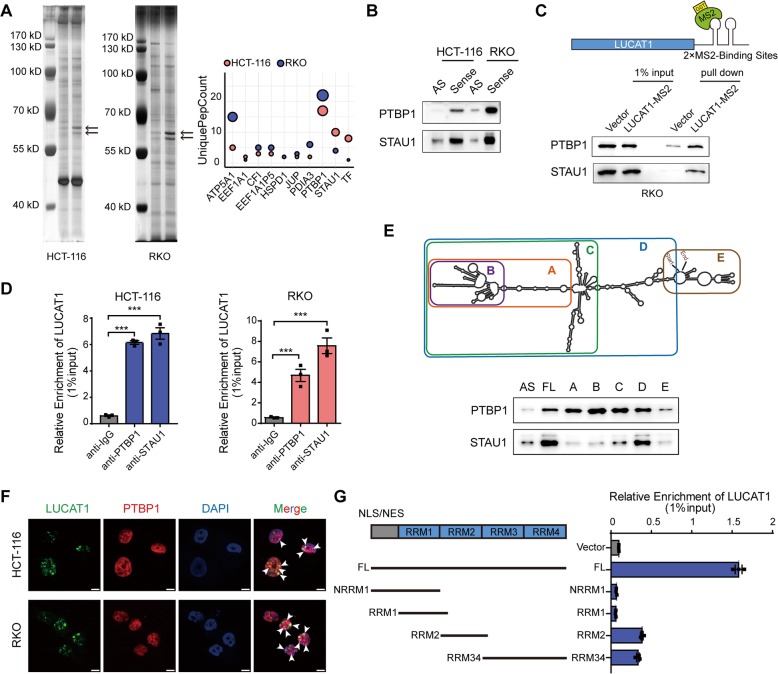
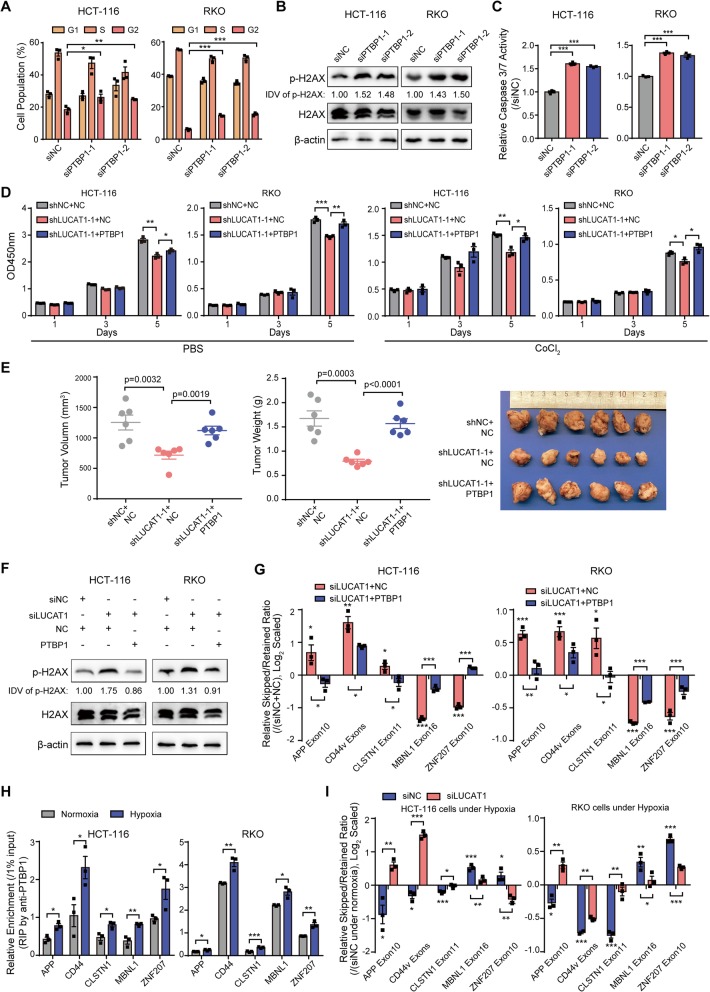
We identified a hypoxia-induced lncRNA LUCAT1 that facilitated the growth of CRC cells and contributed to drug resistance of CRC cells both in vitro and in vivo. Mechanically, LUCAT1 interacts with polypyrimidine tract binding protein 1 (PTBP1) in CRC cells, facilitates the association of a set of DNA damage related genes with PTBP1, thus resulting in altered alternative splicing of these genes. Moreover, ectopic expression of PTBP1 in CRC cells with knockdown of LUCAT1 abrogated the effects induced by LUCAT1 knockdown. Chemotherapeutics drug combined with LUCAT1 knockdown via antisense oligonucleotides (ASO) would get a better outcome in vivo, compared with group treated with chemotherapeutic drug only. Notably, LUCAT1 is upregulated in CRC tissues, compared to adjacent normal tissues; and CRC patients with higher LUCAT1 have a worse prognosis and poorly responded to chemotherapy in the clinic.
Our data suggested CRC cells utilizes LUCAT1 to develop resistance to DNA damage drugs, and disrupting the LUCAT1/PTBP1 axis might be a promising therapeutic strategy for refractory hypoxic tumors.
缺氧肿瘤对 DNA 损伤药物有抗性。然而,其潜在机制尚未阐明。我们旨在鉴定在缺氧下上调的 lncRNA 及其对结直肠癌(CRC)的影响。
用 1% O 处理 CRC 细胞以鉴定在缺氧下上调的 lncRNA。我们将这些 lncRNA 与 4 对 CRC 组织的 RNA-seq 和 TCGA 数据整合,以获得候选 lncRNA。多种体外和体内实验用于研究 LUCAT1 在 CRC 中的作用。
我们鉴定了一种缺氧诱导的 lncRNA LUCAT1,它促进 CRC 细胞的生长,并在体外和体内均有助于 CRC 细胞的耐药性。在机制上,LUCAT1 在 CRC 细胞中与多嘧啶 tract 结合蛋白 1(PTBP1)相互作用,促进一组与 DNA 损伤相关的基因与 PTBP1 的结合,从而导致这些基因的可变剪接改变。此外,在敲低 LUCAT1 的 CRC 细胞中异位表达 PTBP1 可消除 LUCAT1 敲低引起的作用。与仅用化疗药物治疗的组相比,用反义寡核苷酸(ASO)通过 LUCAT1 敲低联合化疗药物在体内会产生更好的效果。值得注意的是,与相邻正常组织相比,CRC 组织中 LUCAT1 上调;并且在临床上,CRC 患者中 LUCAT1 水平较高者预后较差,对化疗反应不佳。
我们的数据表明 CRC 细胞利用 LUCAT1 来对 DNA 损伤药物产生耐药性,破坏 LUCAT1/PTBP1 轴可能是治疗难治性缺氧肿瘤的有前途的治疗策略。