Research Unit Analytical Pathology, Helmholtz Zentrum München, Oberschleißheim, Germany.
Department of Surgery, Klinikum rechts der Isar, TUM, Munich, Germany.
J Cachexia Sarcopenia Muscle. 2020 Feb;11(1):226-240. doi: 10.1002/jcsm.12498. Epub 2019 Nov 13.
Cachexia is the direct cause of at least 20% of cancer-associated deaths. Muscle wasting in skeletal muscle results in weakness, immobility, and death secondary to impaired respiratory muscle function. Muscle proteins are massively degraded in cachexia; nevertheless, the molecular mechanisms related to this process are poorly understood. Previous studies have reported conflicting results regarding the amino acid abundances in cachectic skeletal muscle tissues. There is a clear need to identify the molecular processes of muscle metabolism in the context of cachexia, especially how different types of molecules are involved in the muscle wasting process.
New in situ -omics techniques were used to produce a more comprehensive picture of amino acid metabolism in cachectic muscles by determining the quantities of amino acids, proteins, and cellular metabolites. Using matrix-assisted laser desorption/ionization (MALDI) mass spectrometry imaging, we determined the in situ concentrations of amino acids and proteins, as well as energy and other cellular metabolites, in skeletal muscle tissues from genetic mouse cancer models (n = 21) and from patients with cancer (n = 6). Combined results from three individual MALDI mass spectrometry imaging methods were obtained and interpreted. Immunohistochemistry staining for mitochondrial proteins and myosin heavy chain expression, digital image analysis, and transmission electron microscopy complemented the MALDI mass spectrometry imaging results.
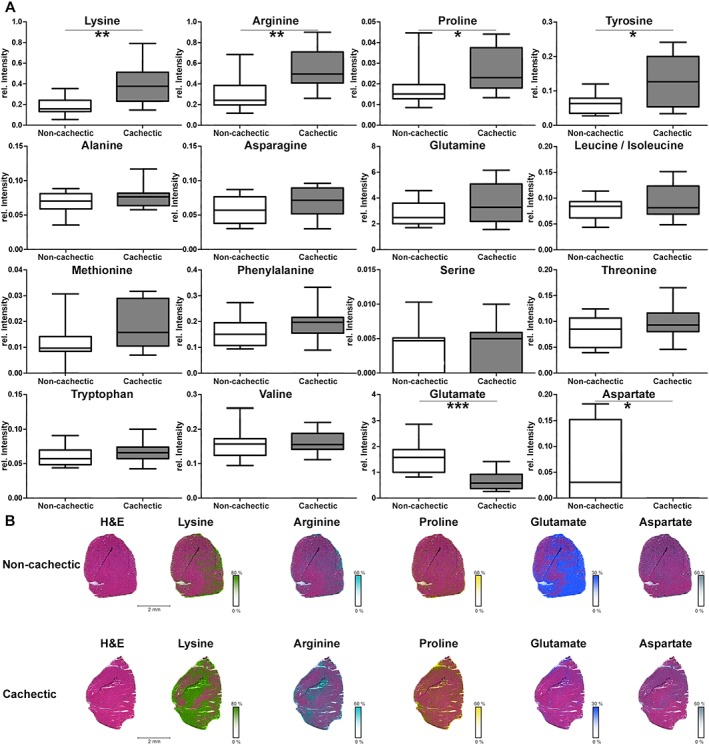
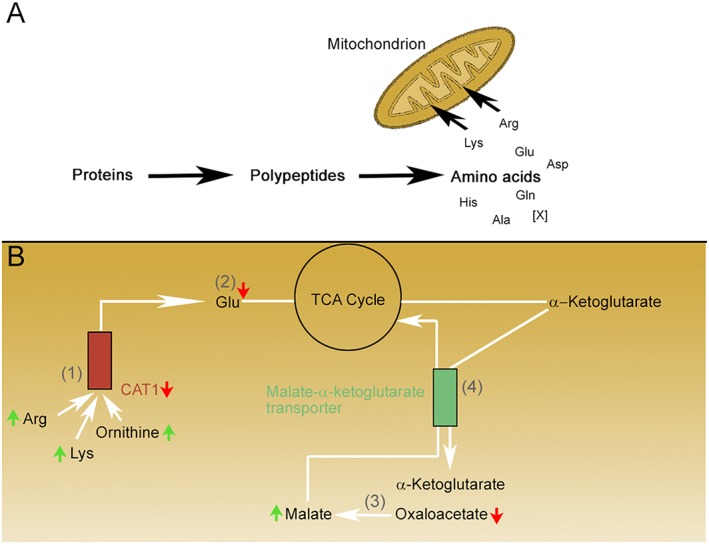
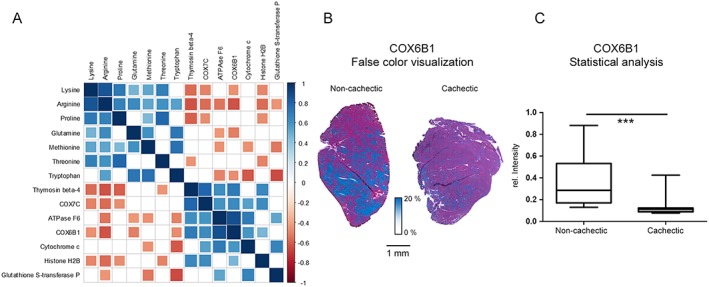
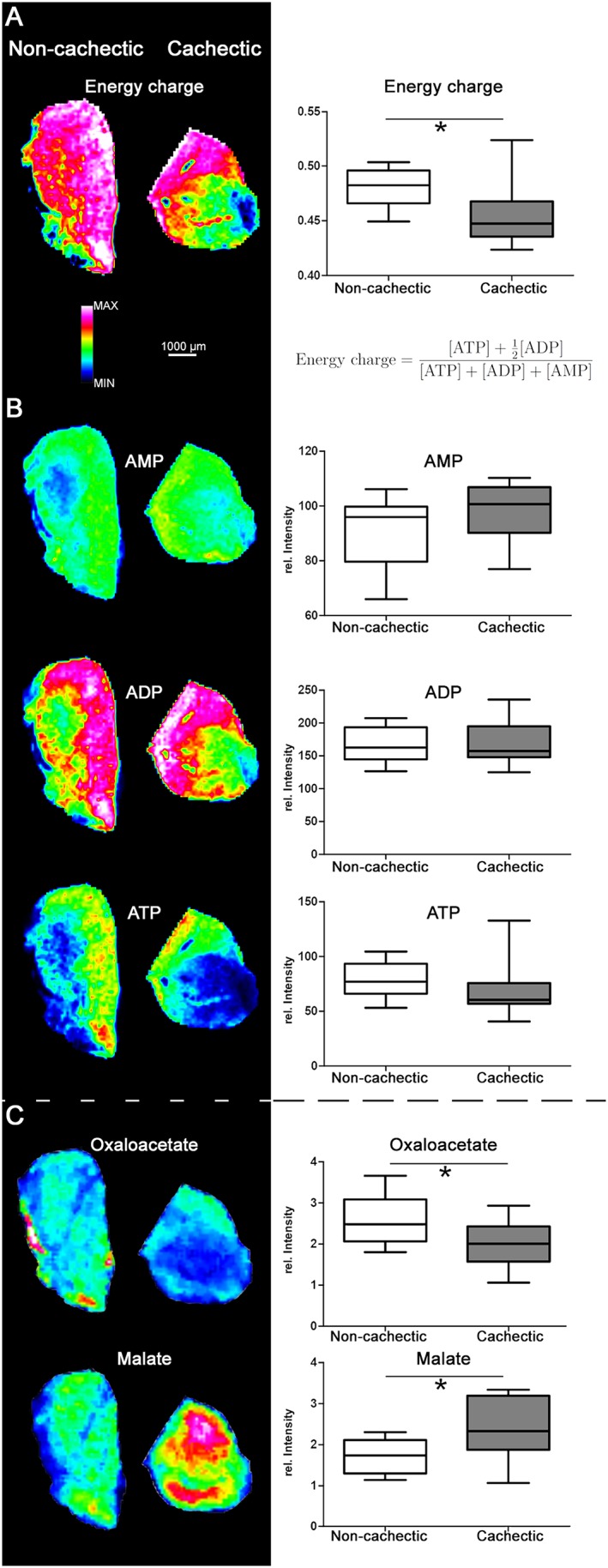
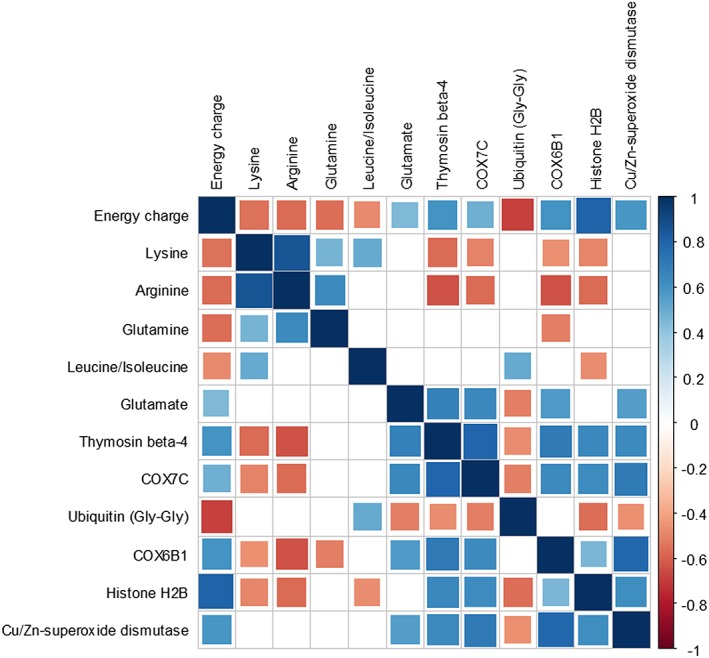
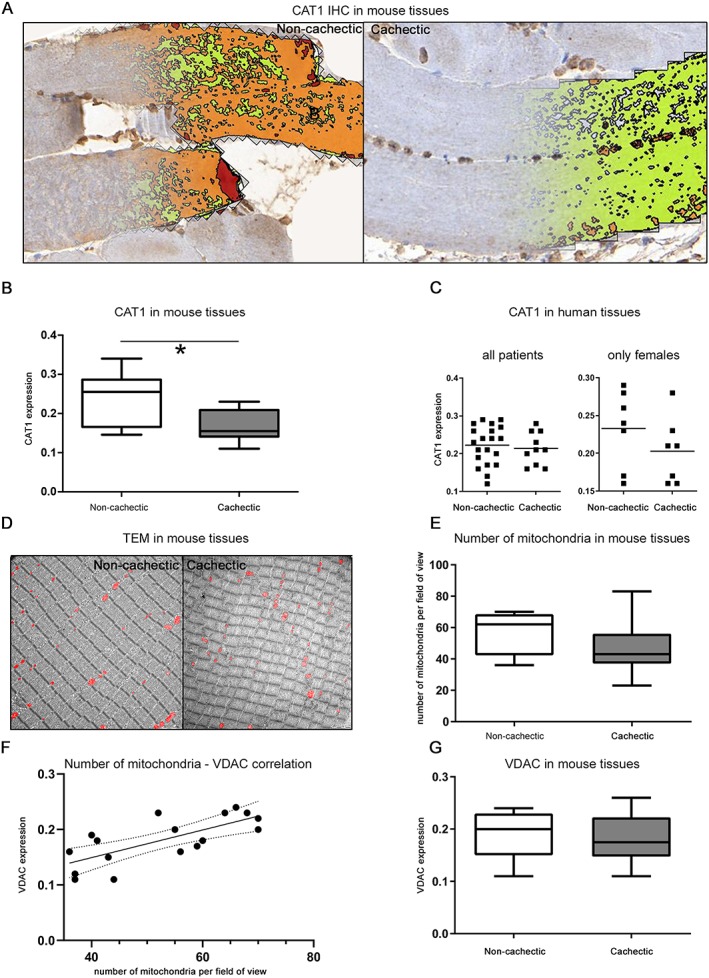
Metabolic derangements in cachectic mouse muscle tissues were detected, with significantly increased quantities of lysine, arginine, proline, and tyrosine (P = 0.0037, P = 0.0048, P = 0.0430, and P = 0.0357, respectively) and significantly reduced quantities of glutamate and aspartate (P = 0.0008 and P = 0.0124). Human skeletal muscle tissues revealed similar tendencies. A majority of altered amino acids were released by the breakdown of proteins involved in oxidative phosphorylation. Decreased energy charge was observed in cachectic muscle tissues (P = 0.0101), which was related to the breakdown of specific proteins. Additionally, expression of the cationic amino acid transporter CAT1 was significantly decreased in the mitochondria of cachectic mouse muscles (P = 0.0133); this decrease may play an important role in the alterations of cationic amino acid metabolism and decreased quantity of glutamate observed in cachexia.
Our results suggest that mitochondrial dysfunction has a substantial influence on amino acid metabolism in cachectic skeletal muscles, which appears to be triggered by diminished CAT1 expression, as well as the degradation of mitochondrial proteins. These findings provide new insights into the pathobiochemistry of muscle wasting.
恶病质是导致至少 20%癌症相关死亡的直接原因。骨骼肌的肌肉消耗导致呼吸肌功能受损,进而导致虚弱、活动受限和死亡。恶病质患者的肌肉蛋白大量降解;然而,与这一过程相关的分子机制还知之甚少。先前的研究报告了恶病质骨骼肌组织中氨基酸丰度的相互矛盾的结果。因此,需要明确确定恶病质背景下的肌肉代谢的分子过程,特别是不同类型的分子如何参与肌肉消耗过程。
新的原位组学技术用于通过确定氨基酸、蛋白质和细胞代谢物的数量来更全面地描绘恶病质肌肉中的氨基酸代谢。我们使用基质辅助激光解吸/电离(MALDI)质谱成像技术,测定了遗传小鼠癌症模型(n=21)和癌症患者(n=6)的骨骼肌组织中氨基酸和蛋白质以及能量和其他细胞代谢物的原位浓度。获得并解释了三种单独的 MALDI 质谱成像方法的综合结果。线粒体蛋白和肌球蛋白重链表达的免疫组织化学染色、数字图像分析和透射电子显微镜补充了 MALDI 质谱成像结果。
在恶病质的小鼠肌肉组织中检测到代谢紊乱,赖氨酸、精氨酸、脯氨酸和酪氨酸的含量显著增加(P=0.0037、P=0.0048、P=0.0430 和 P=0.0357,分别),谷氨酸和天冬氨酸的含量显著降低(P=0.0008 和 P=0.0124)。人类骨骼肌组织也显示出类似的趋势。大多数改变的氨基酸是由参与氧化磷酸化的蛋白质分解产生的。在恶病质的肌肉组织中观察到能量电荷减少(P=0.0101),这与特定蛋白质的分解有关。此外,阳离子氨基酸转运蛋白 CAT1 在恶病质小鼠肌肉的线粒体中的表达显著降低(P=0.0133);这种减少可能在阳离子氨基酸代谢的改变和恶病质中观察到的谷氨酸含量减少中起重要作用。
我们的结果表明,线粒体功能障碍对恶病质骨骼肌中的氨基酸代谢有重大影响,这似乎是由 CAT1 表达减少以及线粒体蛋白降解触发的。这些发现为肌肉消耗的病理生物化学提供了新的见解。