CU Museum of Natural History/Department of Anthropology, CU 218, Boulder, CO, 80309, USA.
Department of Archaeology, Max Planck Institute for the Science of Human History, 10 Kahlaische Str., Jena, 07745, Germany.
Sci Rep. 2020 Jan 22;10(1):1001. doi: 10.1038/s41598-020-57735-y.
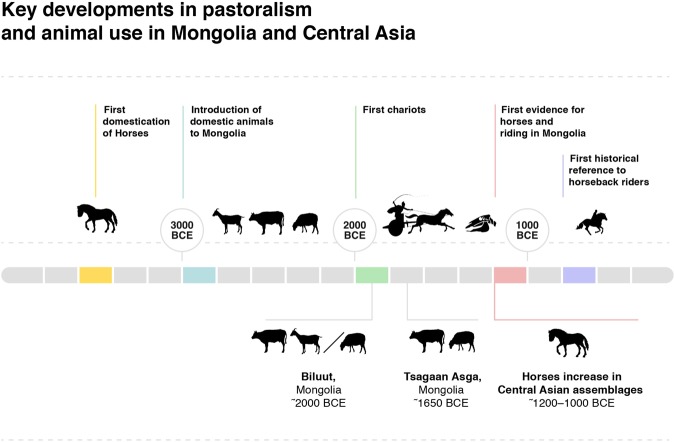
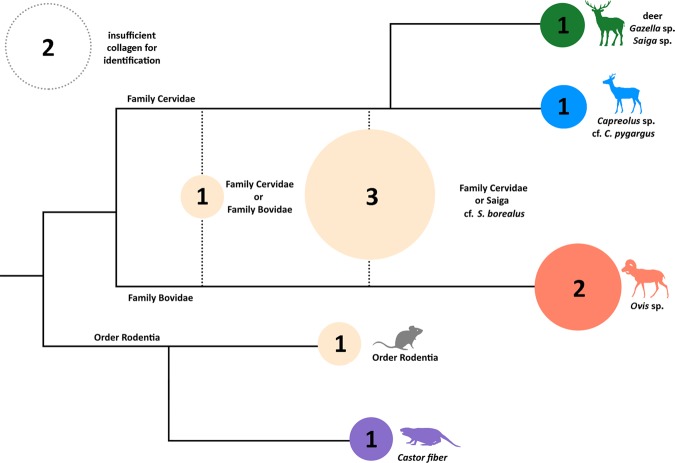
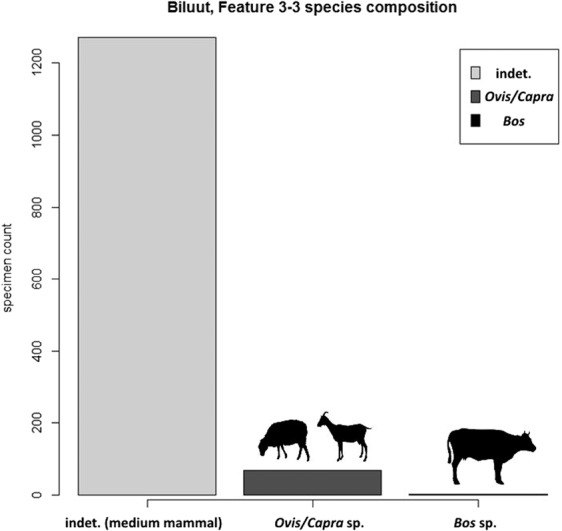
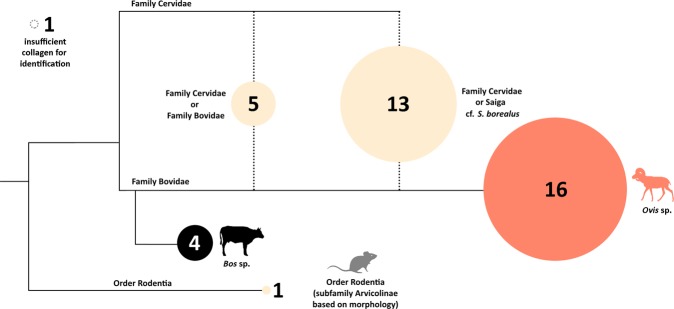
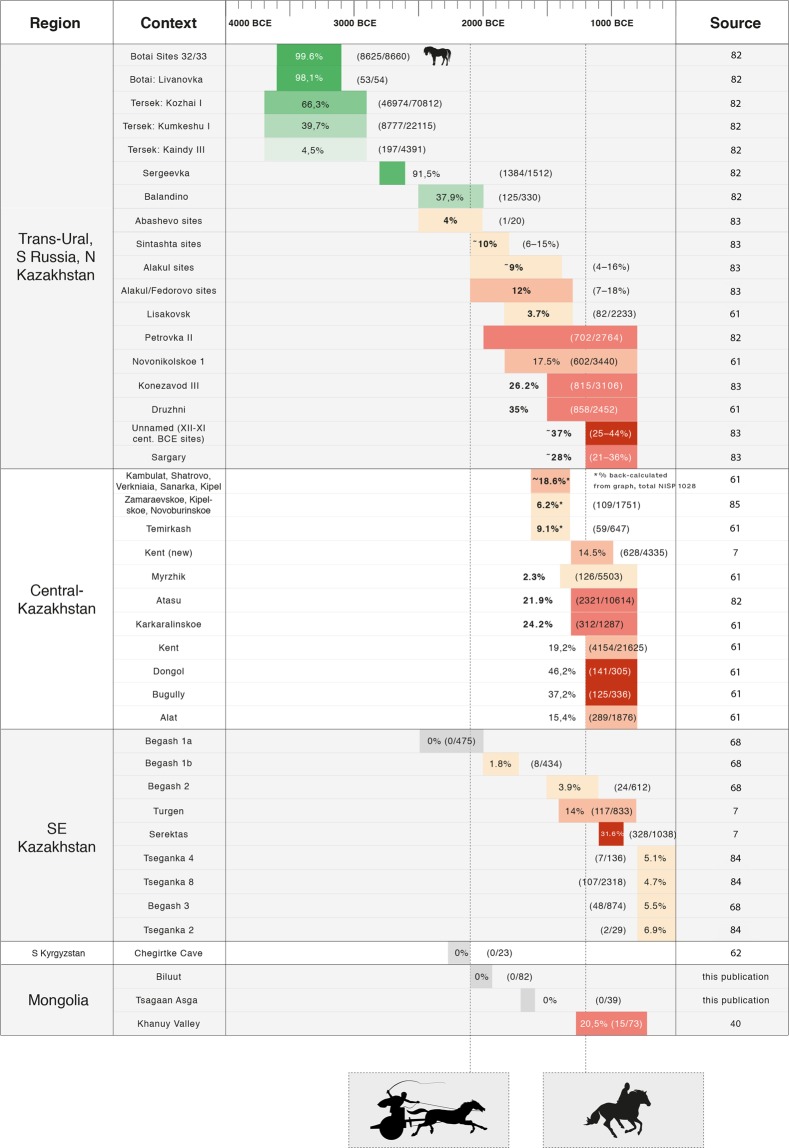
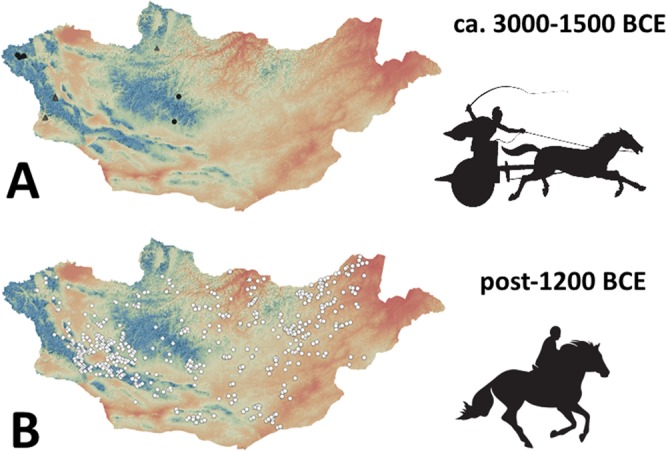
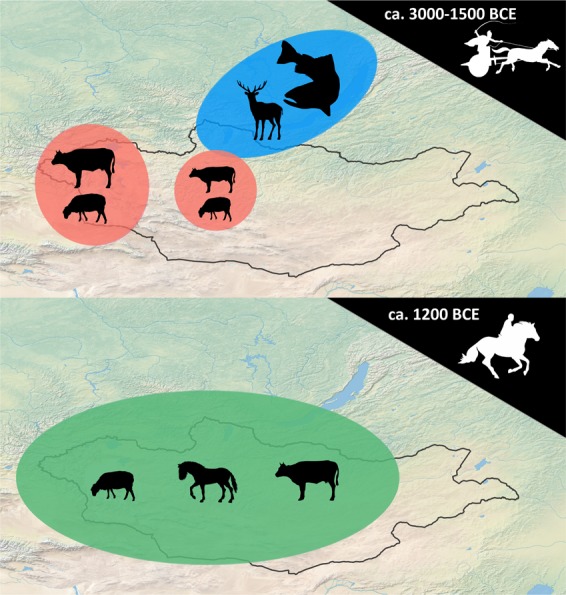
While classic models for the emergence of pastoral groups in Inner Asia describe mounted, horse-borne herders sweeping across the Eurasian Steppes during the Early or Middle Bronze Age (ca. 3000-1500 BCE), the actual economic basis of many early pastoral societies in the region is poorly characterized. In this paper, we use collagen mass fingerprinting and ancient DNA analysis of some of the first stratified and directly dated archaeofaunal assemblages from Mongolia's early pastoral cultures to undertake species identifications of this rare and highly fragmented material. Our results provide evidence for livestock-based, herding subsistence in Mongolia during the late 3rd and early 2nd millennia BCE. We observe no evidence for dietary exploitation of horses prior to the late Bronze Age, ca. 1200 BCE - at which point horses come to dominate ritual assemblages, play a key role in pastoral diets, and greatly influence pastoral mobility. In combination with the broader archaeofaunal record of Inner Asia, our analysis supports models for widespread changes in herding ecology linked to the innovation of horseback riding in Central Asia in the final 2nd millennium BCE. Such a framework can explain key broad-scale patterns in the movement of people, ideas, and material culture in Eurasian prehistory.
虽然内亚洲草原部落出现的经典模式描述了在青铜时代早期或中期(约公元前 3000-1500 年),骑马、骑马的牧民席卷欧亚大草原,但该地区许多早期游牧社会的实际经济基础描述得很差。在本文中,我们使用胶原质量指纹图谱和蒙古早期游牧文化中一些最早分层和直接定年的考古动物群的古代 DNA 分析,对这种罕见且高度分散的材料进行物种鉴定。我们的结果为公元前 3 世纪末和 2 世纪初蒙古以牲畜为基础的畜牧业提供了证据。我们没有观察到在公元前 1200 年左右的青铜时代晚期之前对马进行饮食开发的证据——此时马开始主导仪式组合,在游牧饮食中发挥关键作用,并极大地影响了游牧流动性。结合内亚洲更广泛的动物群记录,我们的分析支持了与中亚马背上的创新相关的广泛的畜牧业生态变化模型,这发生在公元前 2000 年末。这样的框架可以解释欧亚史前人类、思想和物质文化大规模迁移的关键模式。